
Truss and Rigging Safety Checklist for Stage Lighting Setups
A practical pre-rig checklist for hanging truss and moving lights safely at Bay Area corporate events, from load ratings to inspection sign-off.
Truss and rigging safety is the checklist of load calculations, hardware inspections, and sign-offs that keep hanging lighting rigs from becoming a falling hazard at a live event. Get it wrong and you're not looking at a blown fuse, you're looking at a few hundred pounds of aluminum and moving heads coming down over a stage full of people. This guide walks through what actually needs checking before you send anything into the air, from ground-supported towers up through motor-driven flying truss.
Most Bay Area venues that host corporate events, whether it's a hotel ballroom in downtown San Francisco or a tech campus atrium in San Jose, have their own rigging plot requirements and will ask for a certificate of insurance and sometimes an engineer's stamp before you touch a beam. Don't treat that as bureaucracy. It's the same reason commercial aviation has pre-flight checklists: the failure modes are rare, but they're catastrophic when they happen.
1. Know Your Load Ratings Before You Touch a Beam
Every piece of truss has a working load limit (WLL) rated by span, and it drops fast as the span increases. A 12-inch box truss might carry 1,000 lbs at a 10-foot span but only 400 lbs at 30 feet. Before you hang a single fixture, add up the total weight: moving heads typically run 25-40 lbs each, par cans 8-12 lbs, and don't forget cable weight, which adds up over long runs.
Always work with a safety factor of at least 8:1 for entertainment rigging (the industry standard set by ANSI E1.1). That means if your calculated load is 500 lbs, your rigging hardware needs to be rated for 4,000 lbs of breaking strength minimum. Never estimate. Pull the manufacturer's load chart for your specific truss model and span, because generic "truss is strong" assumptions are exactly how accidents happen.
2. Inspect Hardware Before Every Rig, Not Just Once a Season
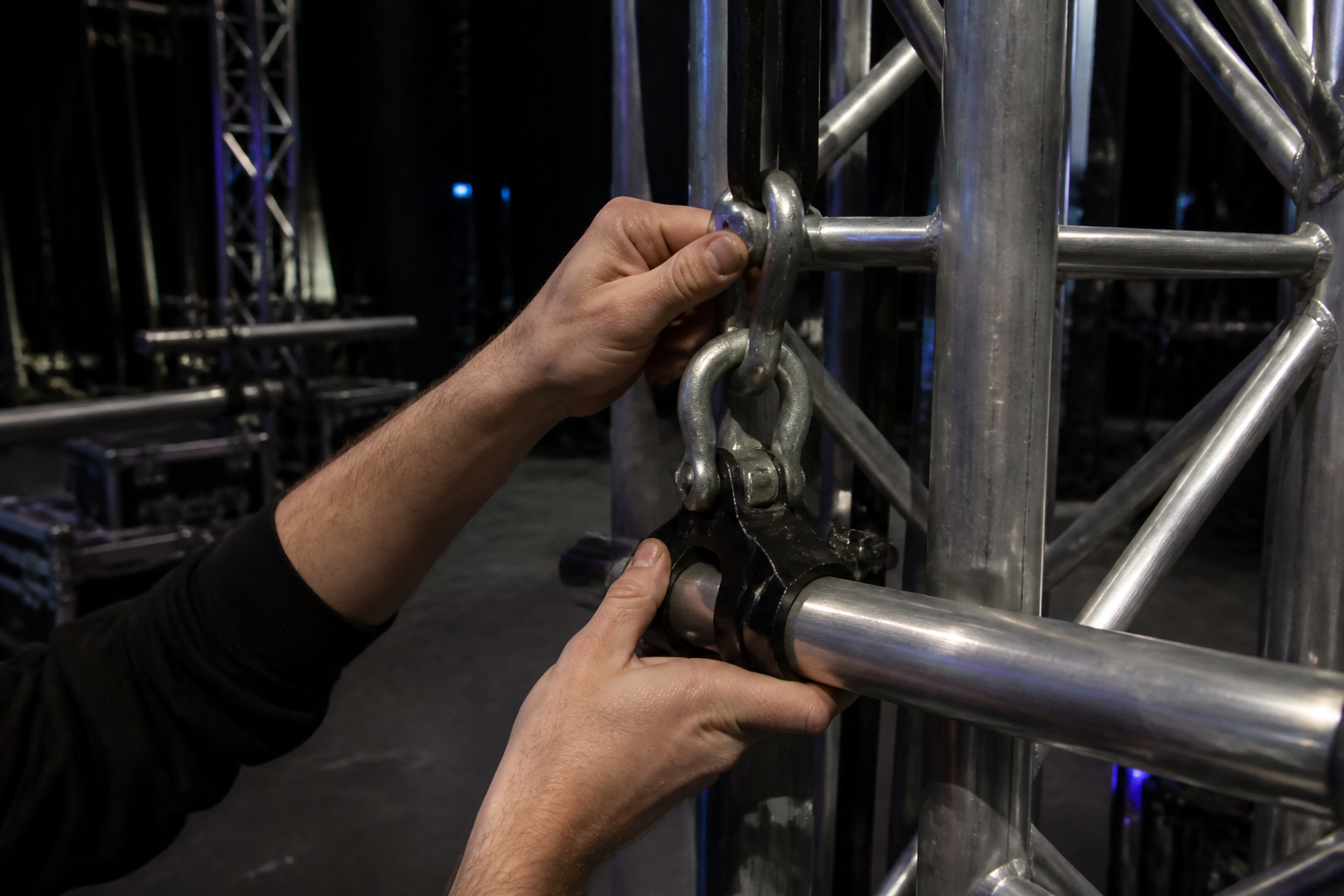
Shackles, clamps, and steel cable (also called "safety" or "safe-ties") wear out, and the wear isn't always visible from a quick glance. Before every load-in, check every shackle for a bent pin, cracked body, or a pin that doesn't thread all the way. Retire anything questionable immediately. It costs $15 to replace a shackle and considerably more to explain why one failed.
Truss clamps (the couplers that connect truss to motors or ground support towers) need the same scrutiny. Check that the jaw closes fully around the truss chord and that the wing nut or bolt tightens without stripping. On motor-driven rigs, verify the chain hoist's load chain isn't kinked, twisted, or rusted, and confirm the motor's own rated capacity exceeds your calculated load with room to spare.
- Shackles and connectors: inspect for deformation, corrosion, and correct pin engagement before every use.
- Safety cables: every hanging fixture and every truss-to-truss connection needs an independent secondary safety, rated to hold the full weight if the primary connection fails.
- Ground support bases: check that outrigger legs are locked and that base plates sit on level, load-bearing floor, not carpet over a raised platform.
- Motors and hoists: confirm load chain condition and that the unit's rated capacity, not just its physical size, matches your calculated load.
A rigger from Local 16 (the Bay Area's IATSE stagehand union) once put it simply during a venue walkthrough: "the rig you don't double-check is the one that finds you at the worst possible moment." That's not superstition, it's why every professional call sheet includes a rigging inspection line item before house lights ever come up.
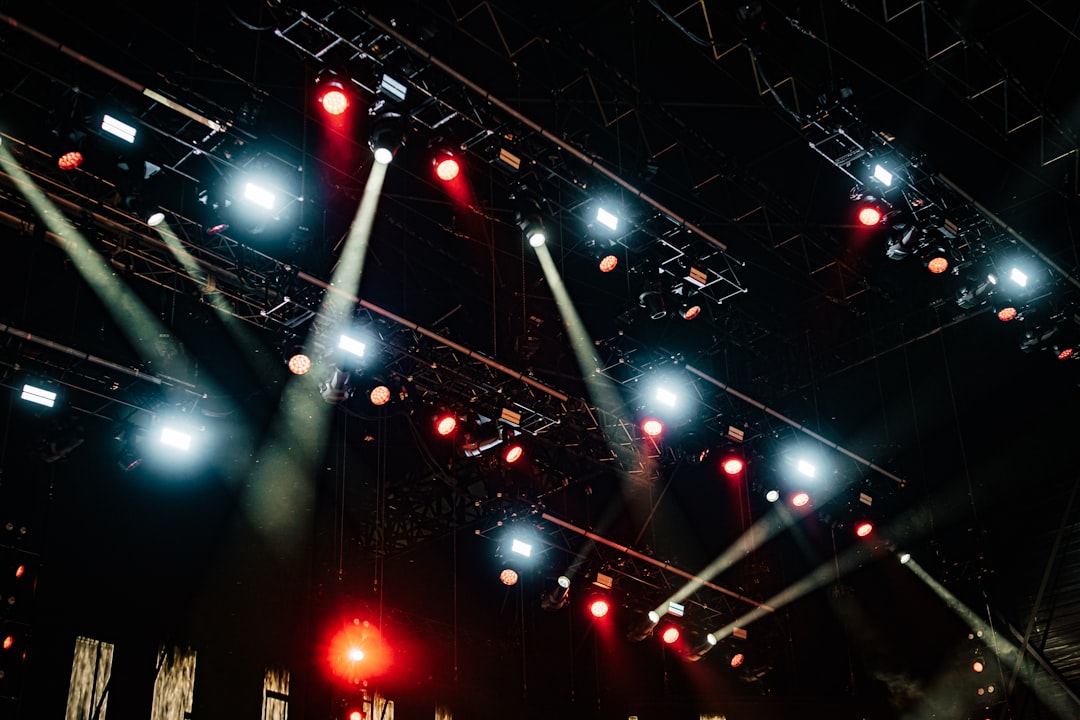
3. Ground Support vs Motor-Flown Rigs: Choosing the Right Method
Not every event needs a motor-flown truss system, and honestly, most corporate events in the Bay Area don't. Ground support towers, where truss sits on top of vertical support legs rather than hanging from a venue's ceiling rigging points, work fine for events under 20 feet of hang height and where you control the base footprint. They're faster to set up, don't require venue engineering approval for ceiling attachment, and are the default choice for our portable stage rentals.
Motor-flown rigs make sense when you need a lighting truss to hang independent of the stage deck, when ceiling height allows a cleaner sightline, or when the venue's rigging points are already engineered for it (hotel ballrooms in downtown San Francisco often have this built in). The tradeoff is complexity: motor-flown rigs need certified riggers, a documented rigging plot showing every point load, and sign-off from the venue's technical director before anything goes up.
For either method, check wind exposure if you're outdoors. A gust that seems minor at ground level generates enormous lateral force on a truss with fixtures, banners, or fabric attached at height. Most outdoor rigging guidelines call for evacuating and lowering rigs above 20-25 mph sustained wind, and lighter ground support setups should come down even earlier. If you're planning an outdoor stage in a Bay Area location known for wind (Ocean Beach, anywhere near the Bay itself), build a wind action plan into your rigging plot from day one, not as an afterthought.
4. Weight Distribution and Point Loading
Even when your total load is well within the truss's rated capacity, how that weight is distributed across the span matters just as much as the total. A single 200 lb moving head hung dead-center on a 20-foot span puts far more stress on that section than the same 200 lbs spread across four fixtures at even intervals. This is called point loading, and it's one of the most common calculation mistakes on rigs put together by crews without formal rigging training.
The fix is straightforward: distribute fixtures evenly across the truss span whenever the design allows it, and when you can't (say, a single followspot needs to sit at a specific point for sightlines), recalculate the truss's rated capacity at that specific point rather than assuming the average load rating applies. Manufacturer load charts typically list point-load derating factors for exactly this scenario.
Also account for dynamic loads, not just static weight. A moving head that pans and tilts introduces small vibration and momentum shifts into the truss. It's minor compared to the static weight, but professional rigging plots build in a margin for it rather than calculating to the exact rated limit. This is part of why the 8:1 safety factor mentioned earlier isn't excessive, it's covering real-world variables that a spreadsheet calculation alone won't catch.
5. Documentation, Sign-Off, and Who's Actually Qualified
A rigging plot is the diagram that shows every hang point, its calculated load, the hardware used, and the safety factor applied. For anything beyond simple ground support, most venues and insurers require one before they'll approve the install, and for good reason: it's the paper trail that shows the math was actually done, not eyeballed.
Certification matters here too. In the entertainment industry, "qualified rigger" isn't just a job title, it typically means ETCP certification (Entertainment Technician Certification Program) for anyone designing or supervising a motor-flown rig above a certain load or height. Ground support and simple truss work doesn't always require ETCP certification, but it still demands someone experienced enough to read a load chart correctly and know when to call in a certified rigger instead of guessing.
Before any show, walk through this sign-off sequence:
- Rigging plot reviewed and approved by venue technical staff (for flown rigs) or site supervisor (for ground support)
- All hardware inspected and logged, with any rejected components replaced before load-in
- Load calculations double-checked by a second person, not just the person who did the initial math
- Secondary safety cables installed on every hang point and every fixture
- Final visual walk-through of the completed rig before house lights or audience access
Skipping the second-person check is one of the most common shortcuts crews take under time pressure, and it's also where math errors slip through. A second set of eyes costs five minutes and catches mistakes that a rushed calculation misses.
6. Why Rigging Safety Belongs in Your Vendor Selection, Not Just Your Checklist
Here's something event planners often miss: rigging safety isn't just a technical checklist, it's a vendor selection criterion. When you're comparing AV production companies for a corporate event, ask directly how they handle rigging plots, who on their crew is ETCP certified, and whether they carry insurance that specifically covers overhead rigging (general liability policies don't always include it).
This matters just as much when you're deciding between a full flown lighting truss and a simpler setup. If your event doesn't need moving heads suspended over a crowd, a well-designed ground support rig paired with our stage lighting rental packages gets you the same visual impact without the added engineering and cost. We cover this tradeoff in more detail in our guide to moving head vs par lights, which is worth reading alongside this checklist if you're still finalizing your fixture plan.
If you're also sizing a stage for the event, our portable stage sizing and pricing guide walks through how stage height and deck footprint affect what kind of rigging method makes sense in the first place. The two decisions (stage size and rigging method) aren't independent; a taller stage deck changes your available hang height and can push you from ground support into a motor-flown design.
Whatever route you take, the underlying principle stays the same: rigging safety is not a box you check once and forget. It's a discipline applied at every load-in, on every show, by people who know when to say no to a rig that doesn't check out.
Frequently Asked Questions
What safety factor do I need for stage rigging hardware?
Entertainment rigging standard (ANSI E1.1) calls for a minimum 8:1 safety factor, meaning your hardware's rated breaking strength should be at least 8 times your calculated working load. A 500 lb load needs hardware rated to roughly 4,000 lbs of breaking strength. This margin covers dynamic loads, hardware wear, and calculation uncertainty that a bare static-weight number doesn't capture.
Do I need a certified rigger for every event?
Not always. Ground support towers and simple truss setups under about 20 feet typically don't require ETCP certification, though they still need someone experienced enough to read load charts correctly. Motor-flown rigs, rigs above a certain height, or anything hanging over an audience area almost always require an ETCP-certified rigger and a documented rigging plot approved by the venue.
How much weight can standard box truss hold?
It depends entirely on span and truss size, not a single number. A 12-inch box truss might hold 1,000 lbs at a 10-foot span but drop to 400 lbs or less at 30 feet. Always check the manufacturer's specific load chart for your truss model and span rather than relying on a rule of thumb.
What wind speed is unsafe for outdoor rigging?
Most outdoor rigging guidelines call for lowering or evacuating rigs once sustained winds reach 20-25 mph, and lighter ground support setups should come down earlier than that. Build a wind action plan into your rigging plot before the event, especially at Bay Area outdoor venues known for gusty conditions.
What's the difference between ground support and motor-flown rigging?
Ground support truss sits on vertical legs and doesn't attach to the venue's ceiling, making it faster to set up and free of venue engineering approval. Motor-flown rigs hang from a venue's rigging points using chain hoists, offering cleaner sightlines but requiring certified riggers, a rigging plot, and venue sign-off before installation.