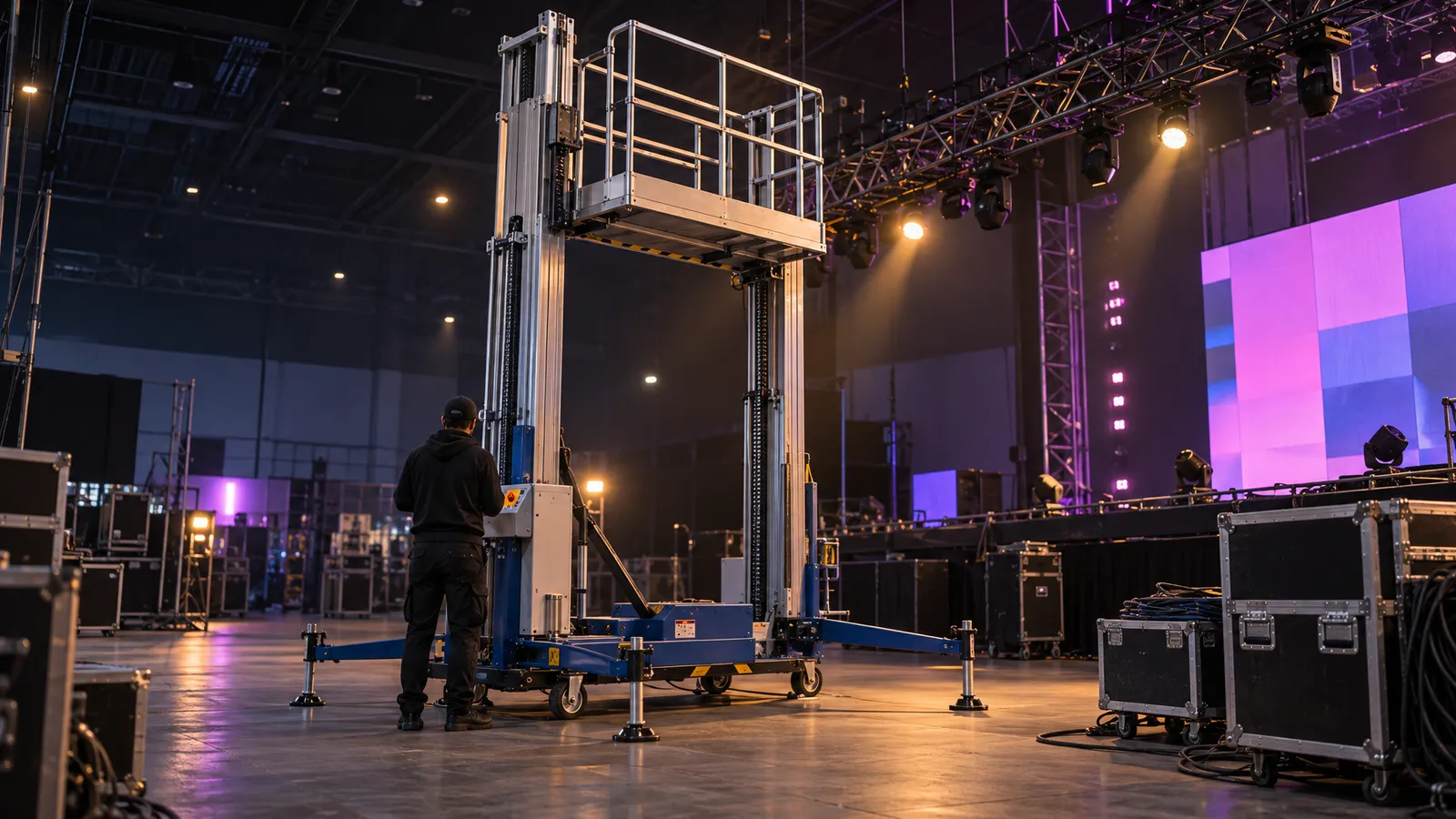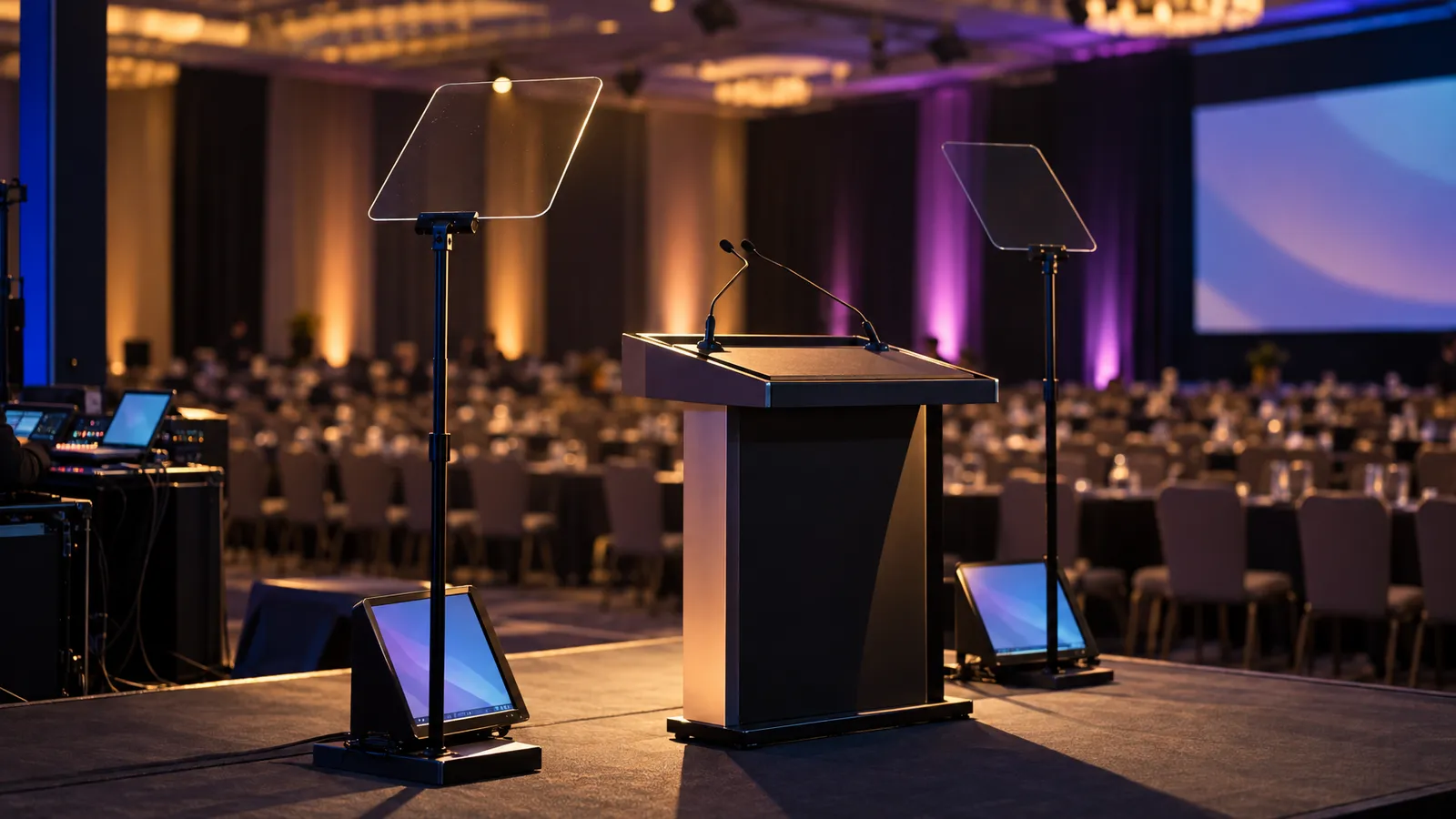
Why the Supplier Matters More Than the Gear List
Most planners start vendor research with a spec sheet: how many speakers, how big a screen, how many moving heads. That's the wrong first question. Two suppliers can list the same fixture names and deliver wildly different results on event day, because the gear is only half of what you're renting. The other half is the crew who patches it, the truck that shows up on time, and the backup plan when a fixture fails during load-in.
A Bay Area market with dozens of AV vendors means price alone won't tell you who's reliable. The supplier that quotes $200 less might also be the one who shows up short a cable, sends an unstaffed truck, or has no answer when your ballroom's power drop turns out to be 20 feet from where the contract assumed. Every one of those failures happens after the contract is signed, when it is hardest to change course.
This guide walks through the six things that actually separate a dependable AV supplier from a risky one: who is accountable for the gear, staffing and technician experience, insurance and liability coverage, response time on load-in day, contract terms, and how they handle the plan when something breaks. None of this shows up on a price quote. All of it shows up at 6pm on event day if you didn't ask.
Ask Who Is Accountable for the Gear
The single most revealing question you can ask a supplier is who answers for the equipment from the moment it is quoted to the moment it is packed out. You want one company that confirms the exact models on your quote, tests each unit before it leaves for your venue, and takes responsibility for the fix if something fails, rather than a chain of hand-offs where nobody is sure whose problem a dead fixture is.
Ask specifics about the gear on your quote, whether that's LED Par Cans and 380W Beam Moving Head units or a full Portable Stage Platform and Aluminum H-Frame Truss system. Which exact models will arrive? Is every unit powered up and checked before delivery? Which cases run heavy, which fixtures need time to warm up, and what is the backup plan if a specific unit acts up? A confident answer with specifics is a good sign. A vague answer is a flag.
Availability is the other half of this conversation. Ask the supplier to confirm in writing that the models on your quote are held for your date once you approve it, and what they will offer if a unit becomes unavailable before the event.
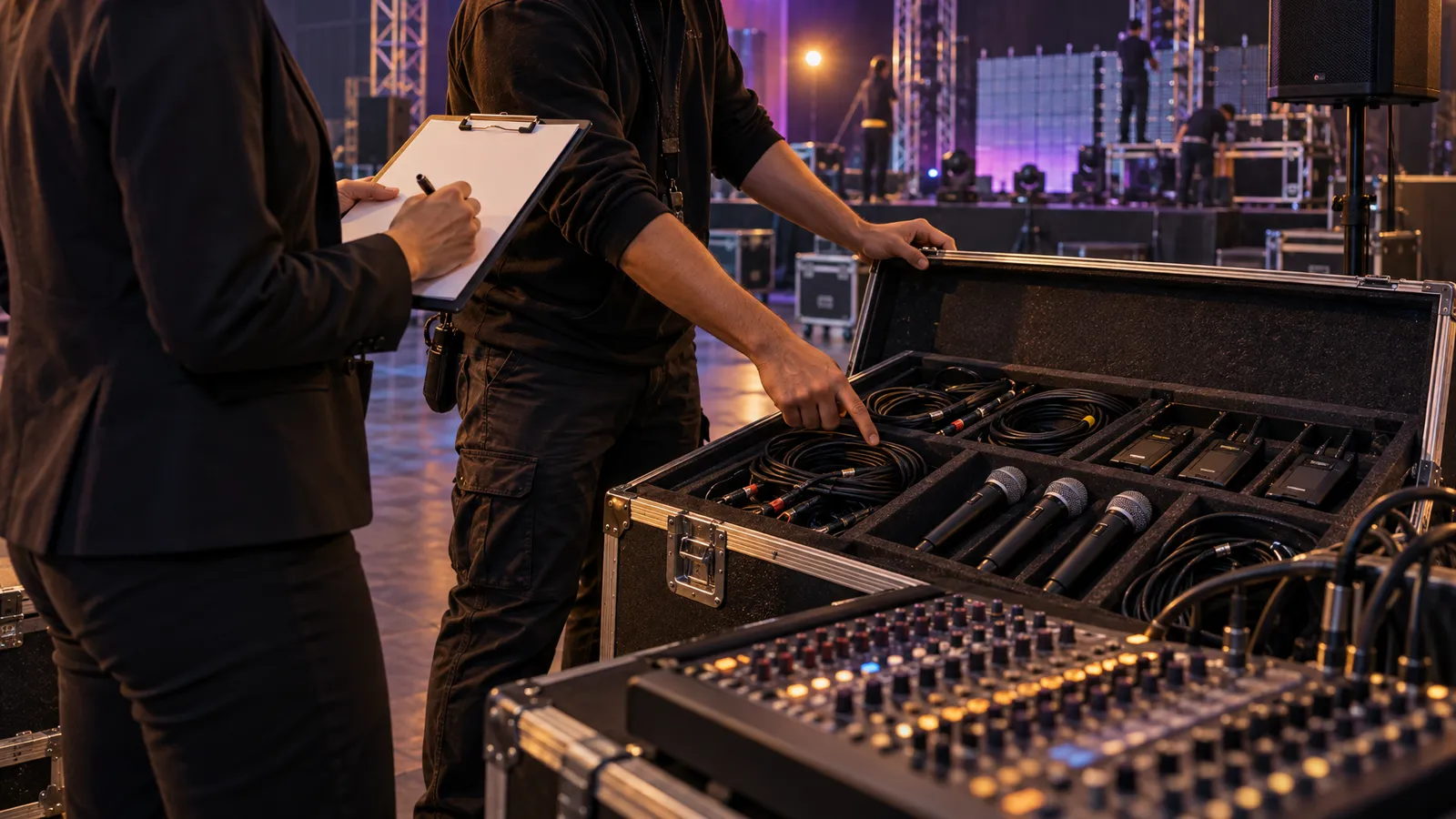
A technician who knows the fleet handles setup faster and catches problems before doors open, photo: Frankie Cordoba / Unsplash.
Staffing: Who's Actually Running Your Gear?
A rental quote that doesn't mention staffing is a quote for a delivery, not a production. Complex gear like a Lighting Control Console, a multi-panel P1.9–3.9 LED Rental Screen, or a rigged truss system with moving lights isn't something you hand to an event coordinator and walk away from. It needs a technician who's operated that specific category of gear before, ideally the exact model.
Ask your supplier three staffing questions before signing anything. First, is a technician present for the full event, or just for drop-off and pickup? Drop-off-only service is fine for a single Bluetooth Speaker System at a small gathering. It's a real risk for a rigged lighting package or an LED wall running content cues through a show.
Second, how many years has the assigned technician worked with this equipment category? A crew member who mainly handles audio shouldn't be your only support on a lighting rig with moving heads and a console, and vice versa. Third, what's the escalation plan if the on-site tech hits something they can't fix? A supplier with bench depth has someone answering the phone and, if needed, driving out a replacement part or unit. If one person is running your whole event, ask what their backup arrangement is.
Our guide to AV rental insurance and liability covers the related question of who's covered if a staffed setup goes wrong, which is worth reading alongside this one before you sign a contract.
Insurance, Contracts, and the Fine Print
Every legitimate AV supplier should hand you a certificate of insurance without hesitation, and most venues require one before they'll allow load-in at all. Ask for proof of general liability coverage and confirm the venue is listed as an additional insured if that's required. If a supplier hesitates or says "we'll figure that out later," treat it as a serious warning sign. Venues have turned away vendors at the loading dock over missing paperwork, and that's not a problem you want discovered the morning of your event.
Read the contract's damage and cancellation clauses carefully. Who's liable if a fixture is damaged during setup versus during the event itself? What's the cancellation window, and does it scale with how close to the date you cancel? Some suppliers charge full price inside 14 days of the event; others use a sliding scale. Neither is wrong, but you need to know which one you signed before you need it.
Also check what happens if equipment fails mid-event. A supplier with spare units and on-site staff can often swap a failed fixture, like a COB Front Light or a Followspot Light, from a spare in the truck within minutes. A supplier with no technician present may need hours to arrange a fix, if they can at all. Ask this directly during your quote call: "If a piece of gear fails at 7pm during my event, what happens next?" The answer tells you more about the supplier than their entire equipment list.
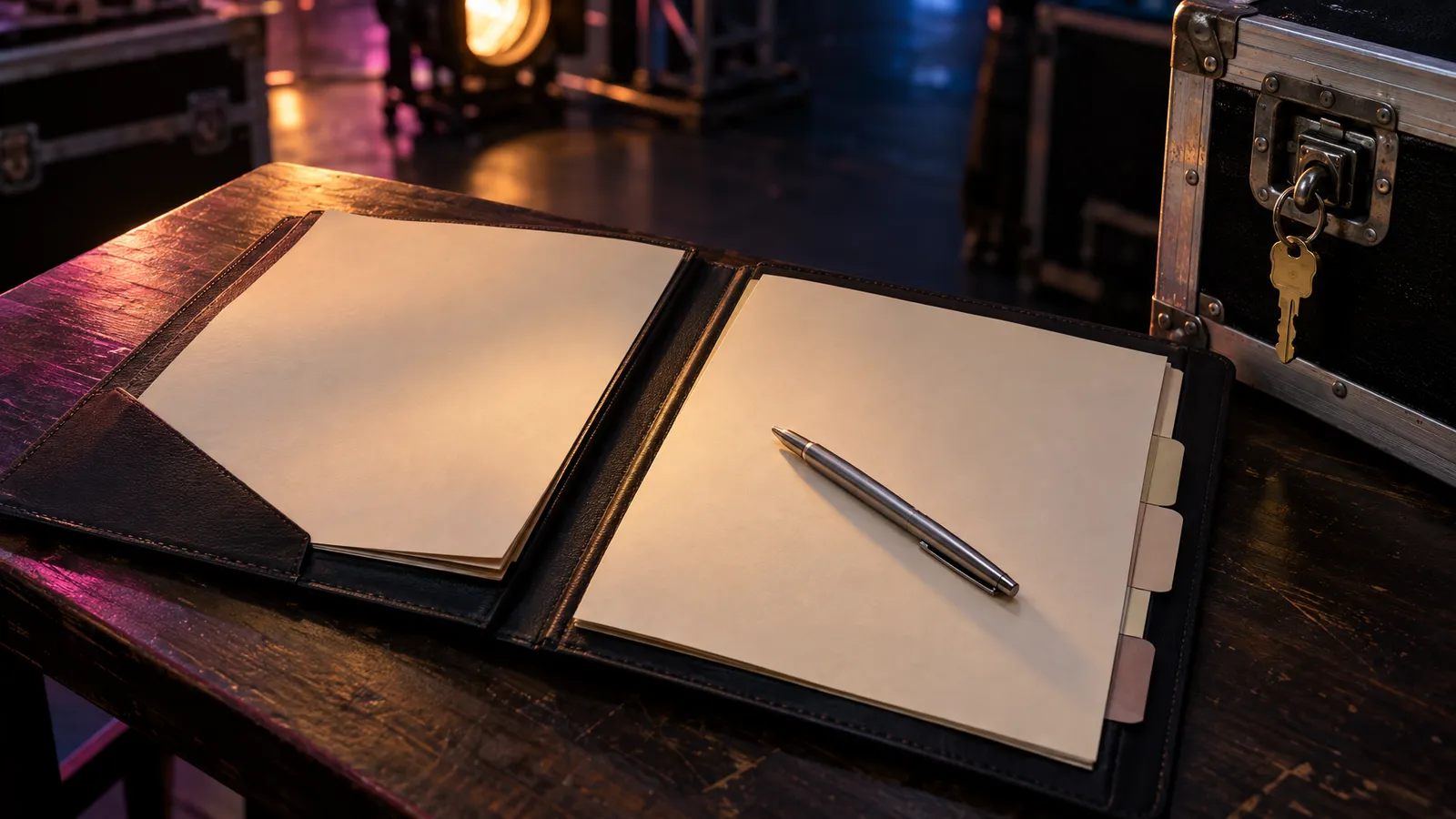
Read the damage and cancellation clauses before you sign, not after, photo: Jakub Żerdzicki / Unsplash.
Response Time and Load-In Logistics
Bay Area traffic and parking make load-in timing worth planning in detail. A supplier based in Fremont quoting a load-in at a San Francisco venue during a Tuesday afternoon rush needs a realistic buffer built into their schedule, not an optimistic one. Ask where the supplier is based and how many events they're running the same day as yours. A company juggling five deliveries across the Bay Area on your event date has less slack if one truck runs late.
Confirm load-in and load-out windows in writing, including what happens if the venue's freight elevator is down or loading dock access is delayed. A supplier who has worked your specific venue before is a real advantage. They already know if the stage door is narrower than the truss cases, or if the venue requires deliveries before 8am.
For anyone bringing in heavier structural gear, our truss and rigging safety checklist covers the load-in inspection points a serious supplier should already be handling without being asked. If your supplier can't answer basic questions about your specific venue's access, and hasn't asked you for a site walk-through or floor plan, that's usually a sign they're planning to figure it out on the day, at your expense.
A Quick Vendor Comparison Checklist
Use this list on your next three quote calls. A supplier that answers all six confidently, with specifics rather than generalities, has earned a real look. Ask each vendor:
- Which exact models are on my quote, and is each unit tested before delivery?
- Will a technician be on-site for the full event, or just for delivery and pickup?
- Can you provide a certificate of insurance naming my venue as additional insured?
- What's your plan if a fixture fails mid-event?
- What's the cancellation policy, and does it scale by how close to the date I cancel?
- Have you worked at my specific venue before, and do you know its load-in constraints?
Vague or deflecting answers on any of these are worth weighing against price. A quote that's 15% cheaper but can't confirm insurance or staffing isn't actually cheaper, it's a gamble with your event date attached. For a full equipment planning walkthrough, our AV event planning checklist covers the 8-week timeline that pairs with vendor selection, from first quote to strike. And if you're weighing specific gear categories, browsing the full rental equipment catalog before your call helps you ask sharper, more specific questions.
FAQ: Choosing an AV Equipment Supplier
How far in advance should I book an AV equipment supplier for a Bay Area event?
Start the conversation as soon as your date and venue are set. Equipment is subject to availability, and at VENEGEEST availability is confirmed for your date when you request a quote. Reaching out early also gives your supplier time to schedule a site walk-through of your venue.
What should an AV supplier confirm about the equipment before my event?
The exact models on your quote, that each unit is tested before it leaves for your venue, which spares travel with the order, and who fixes a failure on the day. Ask for those answers in writing during your first call, so you can compare suppliers on the same terms.
Do I need my own event insurance if my AV supplier already has coverage?
Your supplier's general liability policy responds to claims arising from their work, within its own terms, but it is not a policy for your event as a whole. Many venues require the event host to carry separate event insurance in addition to the vendor's certificate of insurance. Check your venue contract for exact requirements, since they vary by location.
What should I do if my AV supplier can't answer questions about my venue?
Ask for a site walk-through or request the venue's floor plan and loading dock specs before signing. A supplier unfamiliar with your venue isn't automatically a bad choice, but they should be proactive about gathering that information rather than planning to improvise on event day.
Is the cheapest AV quote usually the riskiest one?
Not always, but a quote significantly below competitors is worth extra scrutiny. Ask specifically about insurance, staffing, and how equipment failures are handled before comparing price. A lower price with no on-site technician and no backup plan carries more risk than a quote that costs more but covers both.