A Bay Area nonprofit gala is built on two competing demands: making volunteer presenters look confident in front of a room of donors and creating enough production polish to justify the ticket price. Development teams need AV that supports both the auctioneer's rapid-fire bidding cadence and the emotional weight of a scholarship-recipient video reveal. This checklist covers the speaker support, pledge displays, staging platforms, and atmospheric effects that turn a chicken-and-wine dinner into a fundraising evening. For the program itself, our award ceremony AV guide covers followspots and reveal cues in more depth.
Auctioneer Staging and Sightline Management
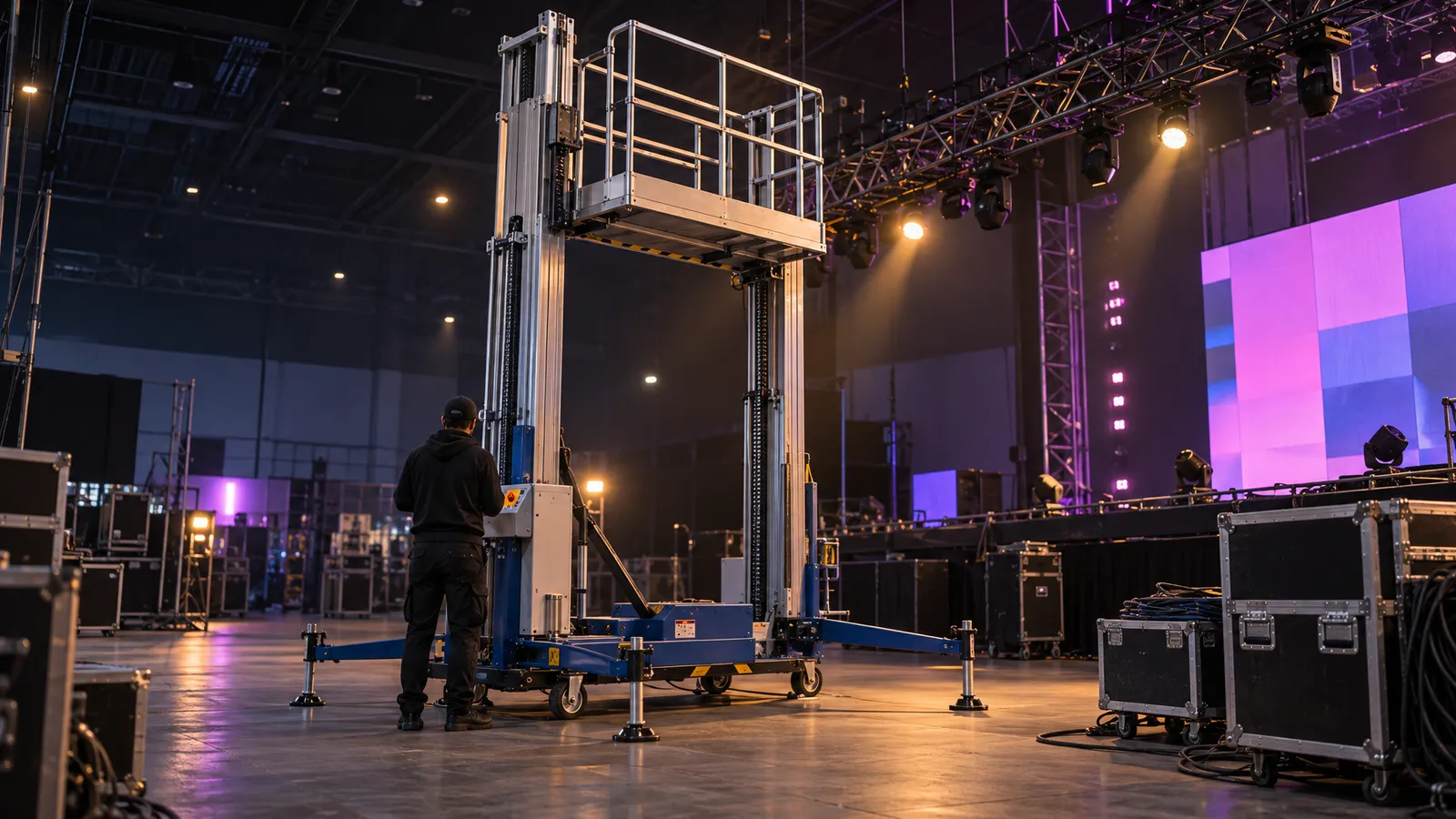
The live auction runs on sightlines. The auctioneer needs to see paddle raises in the back corners, and guests need to see the auctioneer. A podium on the ballroom floor sits at eye level with seated guests, so centerpieces and tall guests can block the view. Portable Stage Platforms put the auctioneer above the tables; they are modular, $30 each per day, and combine for any size. Confirm the deck height with us when you quote and check it from the back tables during your walk-through. Ask whether you need a ramp for award recipients using mobility aids, and plan it into the stage layout.
Manual followspots are an option for the paddle-raise portion. During a live-auction lot or fund-a-need, a Followspot Light operated from the back of the room can pick up bidders as they raise their paddles, which helps the auctioneer and the room see who is bidding. Our followspots are 330W to 440W manual units ($80 per day); how large and bright the beam is at a given table depends on the model and the distance, so give us your throw distance from the operator position to the stage and the farthest tables, and check the beam size in the room before the event.
- A stage section per presenter position—auctioneer, emcee, award presenter—with black skirting to hide cable runs and storage crates underneath.
- A taller stage for large rooms and a lower one for smaller breakout spaces; confirm the deck heights available when you quote.
- An accessible ramp on one side so honorees in wheelchairs or using walkers can reach the podium without navigating steps in front of the room.
- One followspot operator stationed at the audio mix position in the back, taking cues from the auctioneer via two-way radio; operator tracks paddle raises and lights up each bidder for 3–5 seconds.
- Gaff-taped spike marks on the stage deck so the emcee, auctioneer, and award presenter each return to the positions you rehearsed and soundchecked. Feedback depends on gain, microphone and speaker placement and the room, so marks help but don't replace a soundcheck from each position.
Speaker Support for First-Time Volunteer Presenters
Your program may include board members, donors or scholarship recipients who rarely speak to a large room. Plan the microphones around them. With a handheld wireless mic, the level drops if the speaker lowers it or turns away to gesture at the screen, so a quick reminder to keep it near the chin helps. A lavalier clips to a lapel or neckline and frees the hands, but it is not an automatic level control: the level still changes as the speaker turns their head, and clothing or jewelry brushing the capsule is audible. Which type suits which presenter is a judgment call; soundcheck each person with the mic they'll actually use. Confirm mic count when you quote; our Bluetooth Speaker System includes two mics, and additional wireless mics are available on request, subject to availability — contact us for a quote.
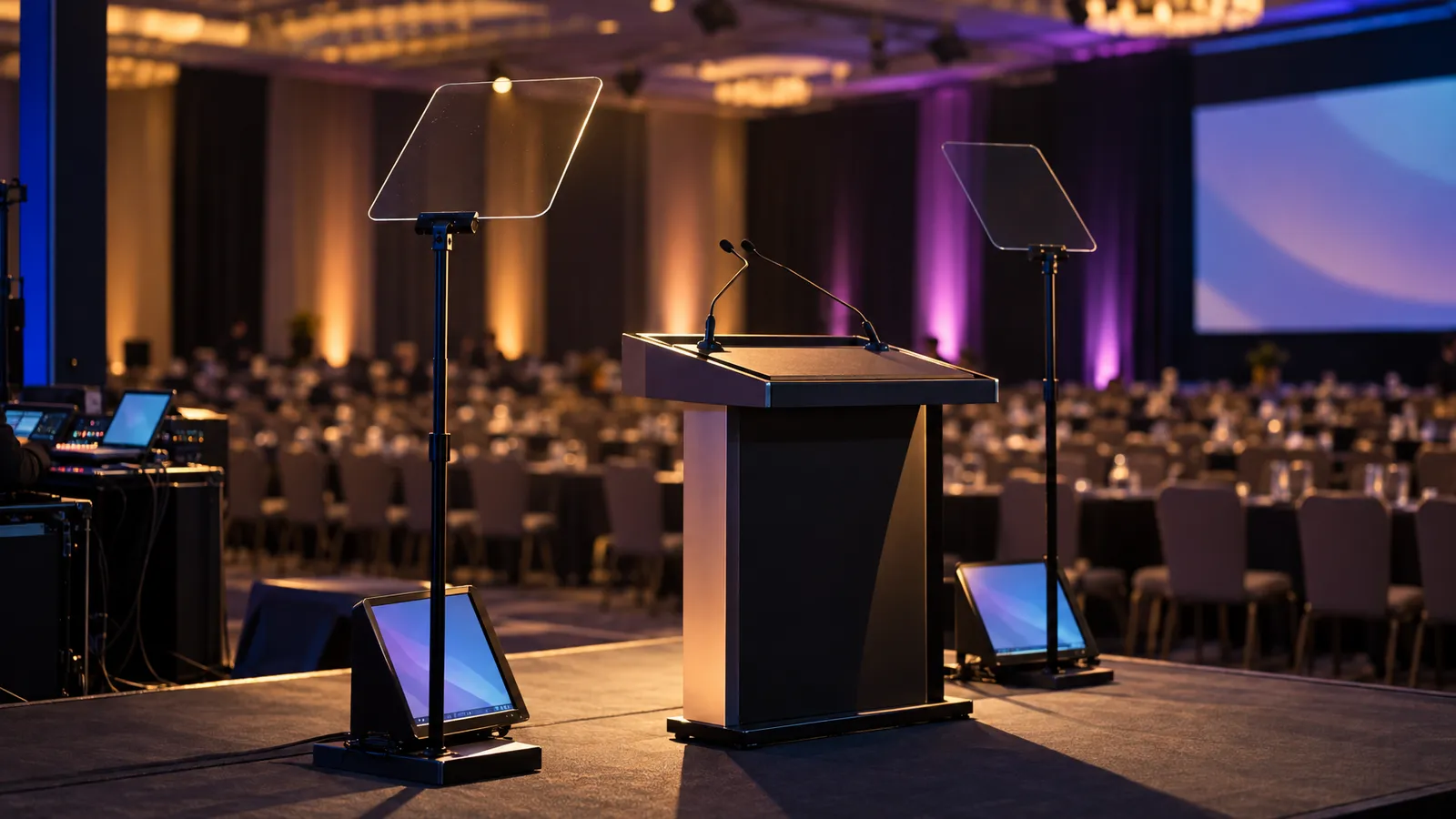
A confidence monitor is a display placed on the stage deck at the presenter's feet, angled up, running the same slide deck visible on the main screens. This setup lets the speaker glance down at bullet points without turning their back to the audience. One monitor stage-left and one stage-right gives the emcee and auctioneer each a dedicated screen. A 43-inch LED TV Display ($35 per day) is a practical confidence-monitor size.
- Lavalier wireless mic for presenters who prefer their hands free—board chair, executive director, honoree acceptance speeches—with fresh batteries installed before doors open and a backup transmitter on the tech table.
- Handheld wireless mic for the auctioneer and emcee, who move across the stage and need the visual authority of holding a microphone during rapid back-and-forth bidding.
- Two confidence monitors on low tripod stands at the downstage edge, each angled 30 degrees upward so the speaker sees slides without looking over their shoulder at the main screen.
- Mic check well before guest arrival with every scheduled speaker, so the audio engineer can set each voice's EQ and gain before the room fills.
- Backup microphone transmitter on the tech table with fresh batteries, labeled with gaff tape, so a dead mic mid-program can be swapped quickly.
How loud should the PA be for a 300-guest seated dinner?
Loud enough that speeches, videos and the live auction are clear at every table, and noticeably quieter during dinner service so guests can talk over the background music. Room size, shape, hard surfaces and the program all affect how many speakers you need and where they go; long rooms may call for additional fill speakers toward the back. Our Commercial PA Speakers are $200 each per day. Send us the room dimensions, guest count and run of show so the system is sized to your room, and walk the room during soundcheck to listen from the back tables.
Pledge-Tracker Screens and Auctioneer Cue Workflow
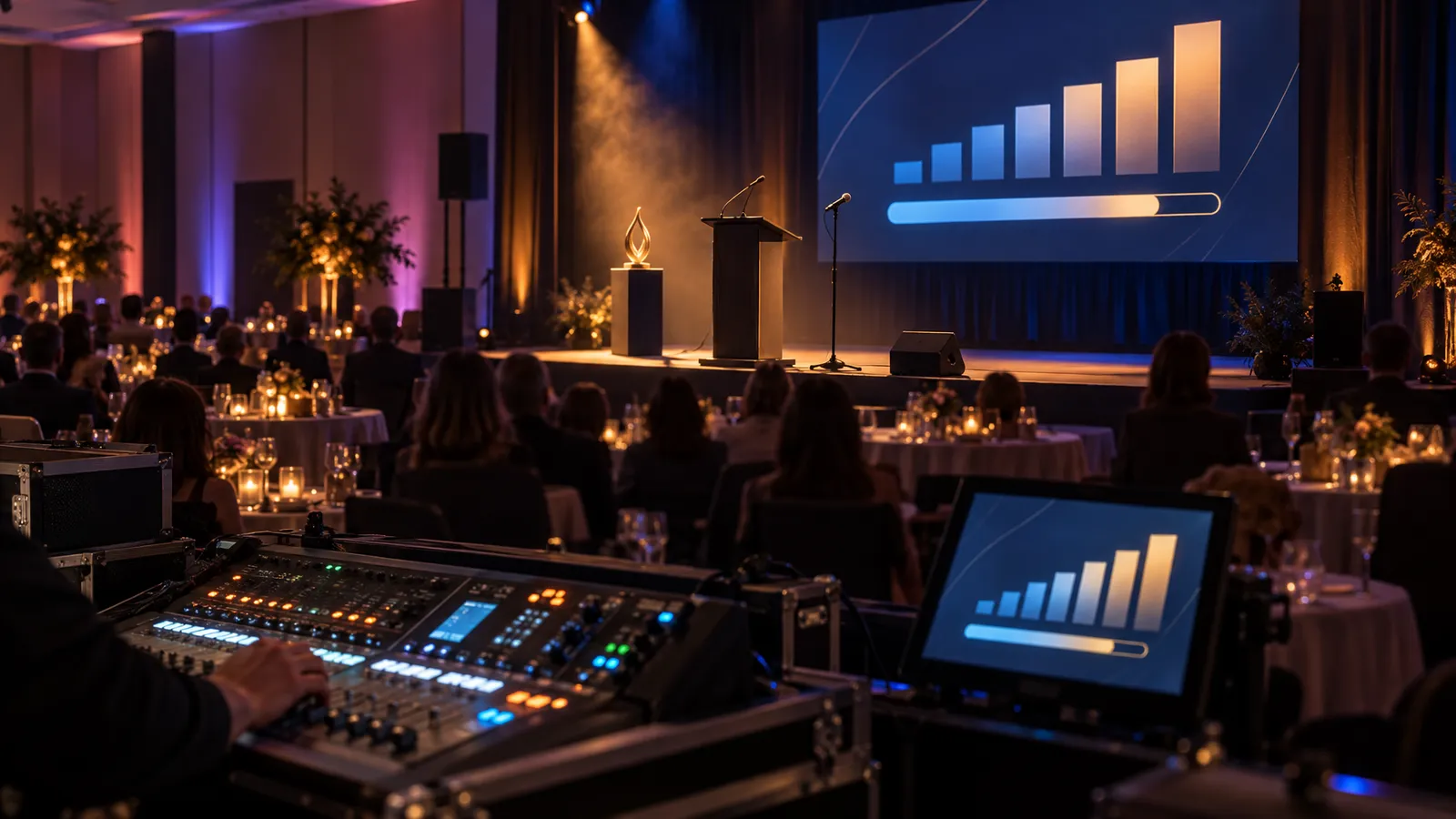
Live thermometer displays keep momentum high during paddle-raise moments. The screen shows the running total climbing toward the goal and updates in real time as the auctioneer calls out new pledges. Run the thermometer graphic on a pair of 85-inch displays flanking the stage, or on a P1.9–3.9 LED Rental Screen (from 12 m²). Whether the numbers read from the back depends on character size, screen size, pixel pitch and viewing distance, so build the thermometer with large figures and check a sample slide from the farthest table during setup.
The workflow requires coordination between the auctioneer, a spotter tallying bids, and the screen operator running the presentation. How the running total reaches the screen depends on your tools: some teams update the graphic by hand on the operator's laptop, others use the live display built into their fundraising platform. If you plan to connect a bidding platform to the screen, test that exact setup with the vendor before event day rather than assuming it works. Agree on cue words or a radio call so the operator knows when to advance. The goal is simple: the screen should keep pace with the auctioneer, which takes rehearsal.
- One LED rental screen (from 12 m²) or two 85-inch LED TV displays flanking the stage, each running the same thermometer feed so corner tables and balcony guests see the total.
- Laptop running presentation software with a dedicated operator seated next to the audio engineer, listening to the auctioneer on a headset mix so they catch every verbal cue for slide advance.
- A spotter stationed stage-right recording pledge amounts as the auctioneer acknowledges each paddle number, using whatever tracking method your team and fundraising platform support; confirm compatibility with any screen display in advance.
- A two-way radio link or agreed verbal cues so the operator knows when to advance without the auctioneer stopping to signal.
- Rehearsal run before doors with the auctioneer, spotter, and screen operator practicing the cue sequence for at least two mock paddle-raise rounds.
Room Ambiance: Brand-Color Uplighting and Award-Reveal Haze
Generic white ballroom walls do not communicate the nonprofit's mission. Uplighting in the organization's brand colors—ocean blue for a marine-conservation group, forest green for an environmental fund, warm amber for a housing nonprofit—transforms a hotel conference room into a branded environment. Wireless Battery Uplights spaced along the perimeter can wash walls and drapes in one hue; settle the spacing at the site visit. Our battery uplights are listed with a 12–15 hour battery and wireless DMX, so they don't need power runs to each fixture, which helps in venues where outlet access is limited; confirm the charge plan against your event length.
Atmospheric haze adds depth to award-reveal moments and scholarship-recipient video segments. Haze makes light beams visible in the air; a Haze Machine rents at $25 per day, and how much output a room needs depends on its size and ventilation, so test the actual unit in the room. Haze can set off smoke detectors, so it only runs with the venue's agreement. If the venue agrees, place the machine upstage. Venues with sensitive detection systems require advance coordination with facilities staff before any haze is run.
- Wireless battery uplights spaced along the walls, programmed to the nonprofit's brand color (RGB values provided by the development team) and with intensity stepped up from cocktails to dinner to program.
- Haze machine placed upstage; output adjusted so visibility remains clear but video-projection light beams gain definition.
- Haze started ahead of the program at low output and checked from the tables, so the effect stays a thin layer rather than a cloud that obscures the front rows; timing depends on the room and its ventilation.
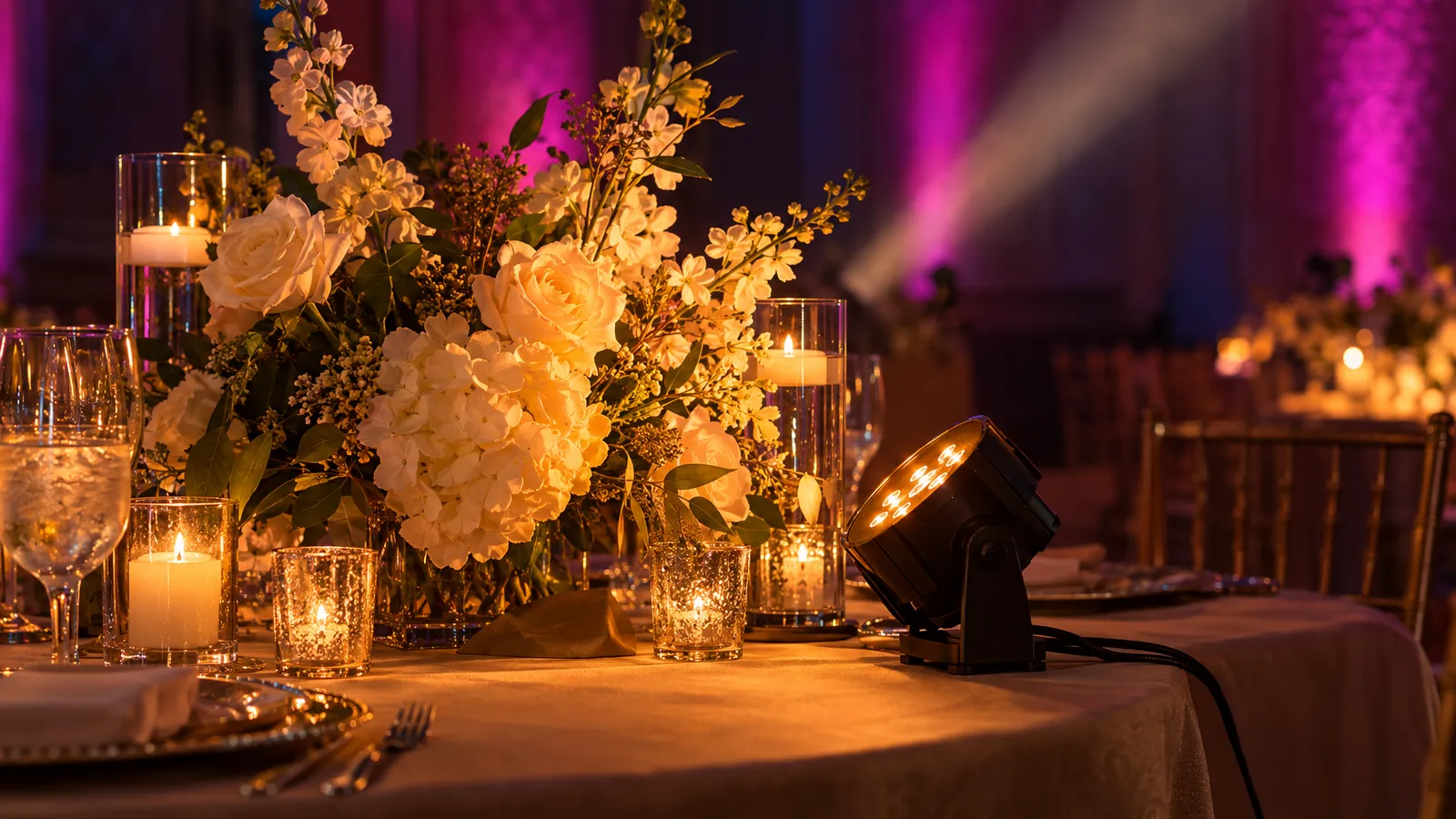
- Full-color LED par lights focused on centerpieces or floral installations, shifting from warm white during dinner to saturated color washes during dancing—creates a visual transition from formal program to celebration.
- Venue and fire-authority notification if haze will be used; some properties require a permit or advance notice before detectors are handled.
Award-Reveal Effects and Celebration Moments
The honoree announcement or scholarship-winner reveal deserves a moment that feels significant. A Confetti Cannon / Streamer Launcher loaded with metallic streamers in the nonprofit's brand colors can send a burst of ribbon over the stage as the recipient's name appears on the screen. Our range includes both manual and electric launchers; which one fits depends on the room, the ceiling and fixtures, and whether you want several units triggered together. Coordinate the launch timing with the screen operator so the confetti release aligns with the final beat of the reveal video soundtrack.
For organizations that want a cleaner post-event breakdown, consider a cold-spark or low-fog effect instead of confetti. A cold spark machine ($35 per day) throws a fountain of sparks from titanium or zirconium powder with little cleanup, but California treats that spark material as a dangerous firework, some cities ban the devices, and the sparks can still ignite nearby fabric, so it needs written approval from the venue and the local fire authority. A dry ice low-fog machine ($35 per day) makes a cloud that hugs the stage deck, which can frame a reveal on stage. Dry ice releases carbon dioxide gas as it makes the fog, so follow the machine's safety instructions on ventilation, keep it out of low enclosed spaces, get the venue's approval, and keep a clear, visible, accessible walking route to the podium rather than sending recipients through the fog.
- Electric launcher placement, loading and any rigging taken from the specific model's manual, rigged by a qualified crew and approved by the venue, with the launch cue synchronized to the video reveal.
- If volunteers will fire handheld confetti cannons for a goal-celebration moment, brief them on the model's instructions and aim direction, and confirm the venue allows it.
- Launch range, streamer size and clearance from chandeliers, lighting and HVAC checked against the launcher's specifications and the venue's ceiling during the site visit, with venue approval.
- Post-event cleanup kit with push brooms and shop-vacs if using confetti; some venues charge a cleaning surcharge for metallic debris left on carpets or in HVAC returns.
- Cold-spark fallback for venues with no-confetti policies, if the venue and fire marshal allow it.
FAQ: Fundraiser Gala & Charity Auction AV
How far in advance should we book AV for a 250-guest gala?
Once the date and venue are set, request a quote. Same-week delivery is available for most items, and availability is confirmed for your date when you request a quote. A 25% non-refundable deposit holds the reservation, the balance is due three business days before the event, and changes to the order need to reach us at least five business days before the event, so settle speaker positions, screen sightlines and power distribution before then.
Do we need a separate audio system for cocktail hour and the main program?
It depends on the two spaces. Whether one system can serve both, or the cocktail area needs its own, comes down to the room dimensions, how far apart the spaces are, where speakers can go and how the audio is routed, so confirm placement, routing and coverage with the supplier and soundcheck both spaces before guests arrive. One option to discuss for a pre-function space is the Bluetooth Speaker System (one controller, six speakers, two mics), which rents from $60 per day.
What is the typical AV budget for a 300-guest Bay Area nonprofit gala?
Build it from catalog day rates. LED Rental Screens start at $200 and 85-inch LED TVs at $95 each; Commercial PA Speakers are $200 each, Followspot Lights $80, Haze Machines $25 and Portable Stage Platforms $30 each. Delivery, setup and technicians are scoped and quoted to your event, and multi-item packages are quoted per project, so send your room size and run of show for a full quote. Some venues also require union stagehands for load-in and strike, which adds labor cost; ask the venue.
Can we use the venue's built-in projector and screen?
Only if you verify its native resolution and brightness first. A built-in projector that is fine for a small luncheon can be underpowered for a large gala, where ambient light from uplighting and chandeliers washes out the image. If the built-in projector is XGA resolution (1024×768), your HD video content will downscale and look soft. Confirm specs in writing and request a test screening; if the image looks dim or pixelated, bring in a brighter projector or LED displays, and check them in the room with the event lighting on.
What happens if a wireless mic fails during the live auction?
A prepared AV crew has a backup transmitter with fresh batteries on the tech table, pre-paired to the receiver and labeled. The swap is quick if the auctioneer can hand off the dead mic to a stagehand while continuing the lot with a corded handheld or a second wireless unit. A hardwired backup mic on a stand stage-left is good insurance; it is not ideal for an auctioneer who moves across the stage, but it keeps the program running if both wireless units drop. The key is the mic-check protocol well before doors—testing every transmitter under load, confirming battery voltage, and checking for interference on the frequencies your wireless system uses.