Cultural celebrations in the Bay Area — Lunar New Year banquets, Diwali galas, Cinco de Mayo celebrations, Eid dinners and heritage-month festivals — tend to ask for the same kinds of AV: lighting in a chosen color palette, staging that turns over between acts, sponsor recognition on a screen, and effects timed to award moments. This guide walks through that equipment for indoor banquets and outdoor festivals alike, with VENEGEEST's listed per-day rates where the catalog prices an item. VENEGEEST designs a custom setup around each celebration's program and venue, and equipment beyond the listed catalog is available on request, subject to availability, with a custom quote.
Color-Palette Lighting: Matching the Event's Colors
Many organizers pick a color palette for the evening — for example red and gold for a Lunar New Year banquet, or colors taken from the event's own banners, textiles and printed program. Settle the palette with the organizer early, because it drives every lighting cue. The practical challenge is making those colors look right in the venue, where house lights may be warm or mixed. Full-Color LED Par Lights (18-LED RGBW wash, $25/day) handle direct architectural washes and stage backlight; RGBW mixing lets you adjust a color without rebuilding the rig. Look at the colors in the room with the house lights at their event level before doors, and adjust the mix until they match what the organizer expects.
Wireless battery uplights handle perimeter columns and entryways where power drops aren't available or the venue won't allow cable runs across aisles. VENEGEEST's Wireless Battery Uplights are listed with a 12–15-hour battery and wireless DMX, so they can be controlled from the front-of-house position, and many of the catalog's variants are IP65-rated for damp outdoor sites. One simple way to program a banquet is three cues: arrival, dinner in the event's palette, and awards.
- RGBW uplights for ballroom columns — counted from the columns and wall runs you want to light, in the palette agreed with the organizer; wireless battery units where the venue prohibits floor power runs.
- Stage backlight in the event palette — LED wash fixtures on truss, color-matched to banners and textiles, programmed in three cues (arrival, program, awards).
- Architectural accent on entry archways — Full-Color LED Par Lights to frame doorways and photo backdrops, aimed so they don't spill onto the screen.
- Color check under the house lights — test the palette against the venue's house lights at event level before doors and adjust the mix by eye; for outdoor daytime events, check how the colors read in daylight on site.
- Firefly projection for ambient detail — a Firefly Projection Light ($20/day) projects a firefly effect onto ceilings and walls; try it with the room lit as it will be during cocktail hour to see how it sits alongside the stage and screen.
Performance Staging for Dragon Dance, Classical Indian Dance, and Mariachi
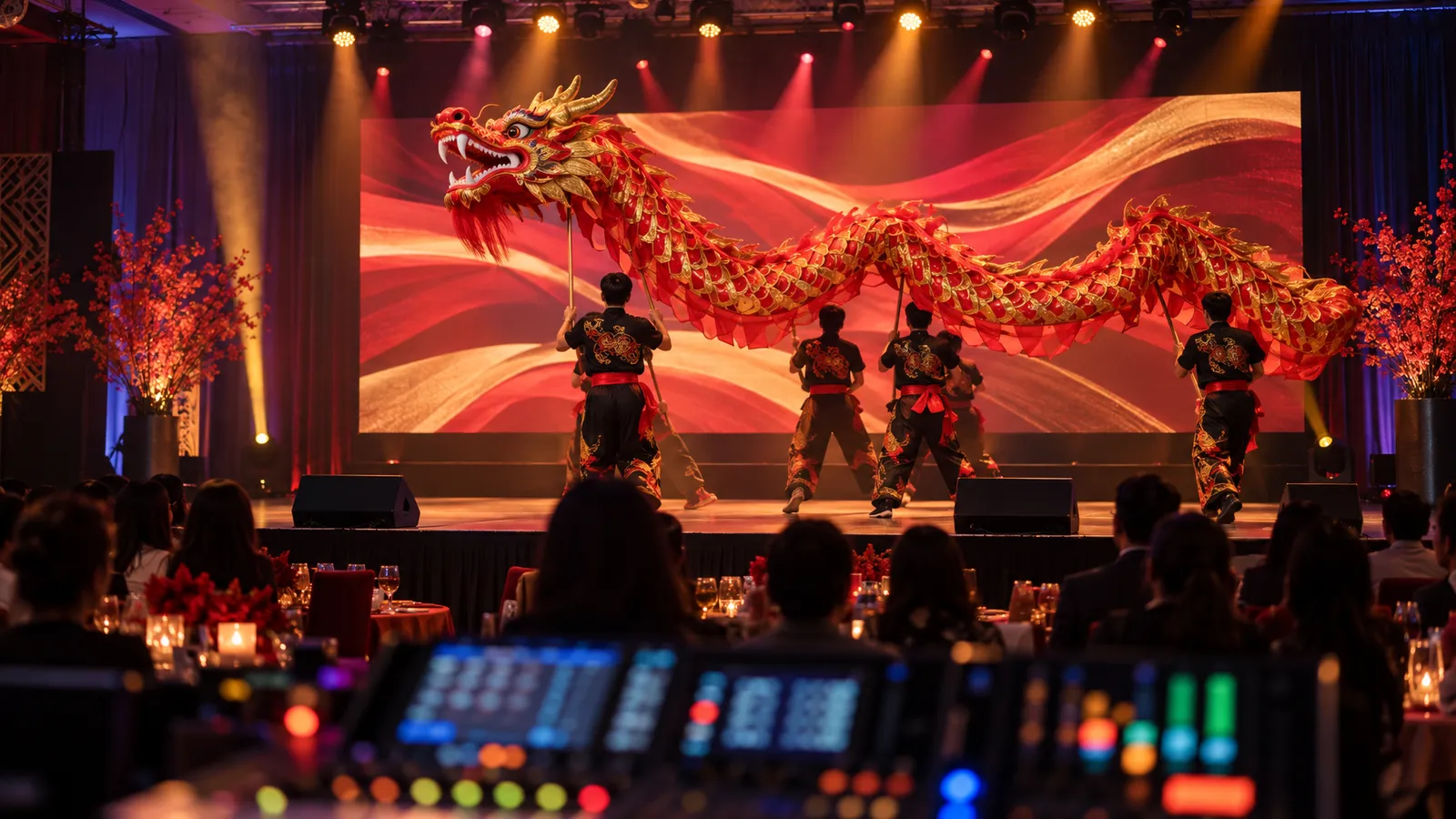
A heritage celebration program may include several cultural acts. A Lunar New Year gala might include a dragon dance, an instrumental trio and a youth lion-dance troupe; a Diwali event might combine a Bharatanatyam solo, a Bollywood group number and a keynote video; a Cinco de Mayo program might feature mariachi, with singers at the front and a brass section behind or beside them. Plan the lineup with the organizer, then choose staging you can reconfigure between acts and lighting that can change looks without moving fixtures mid-show.
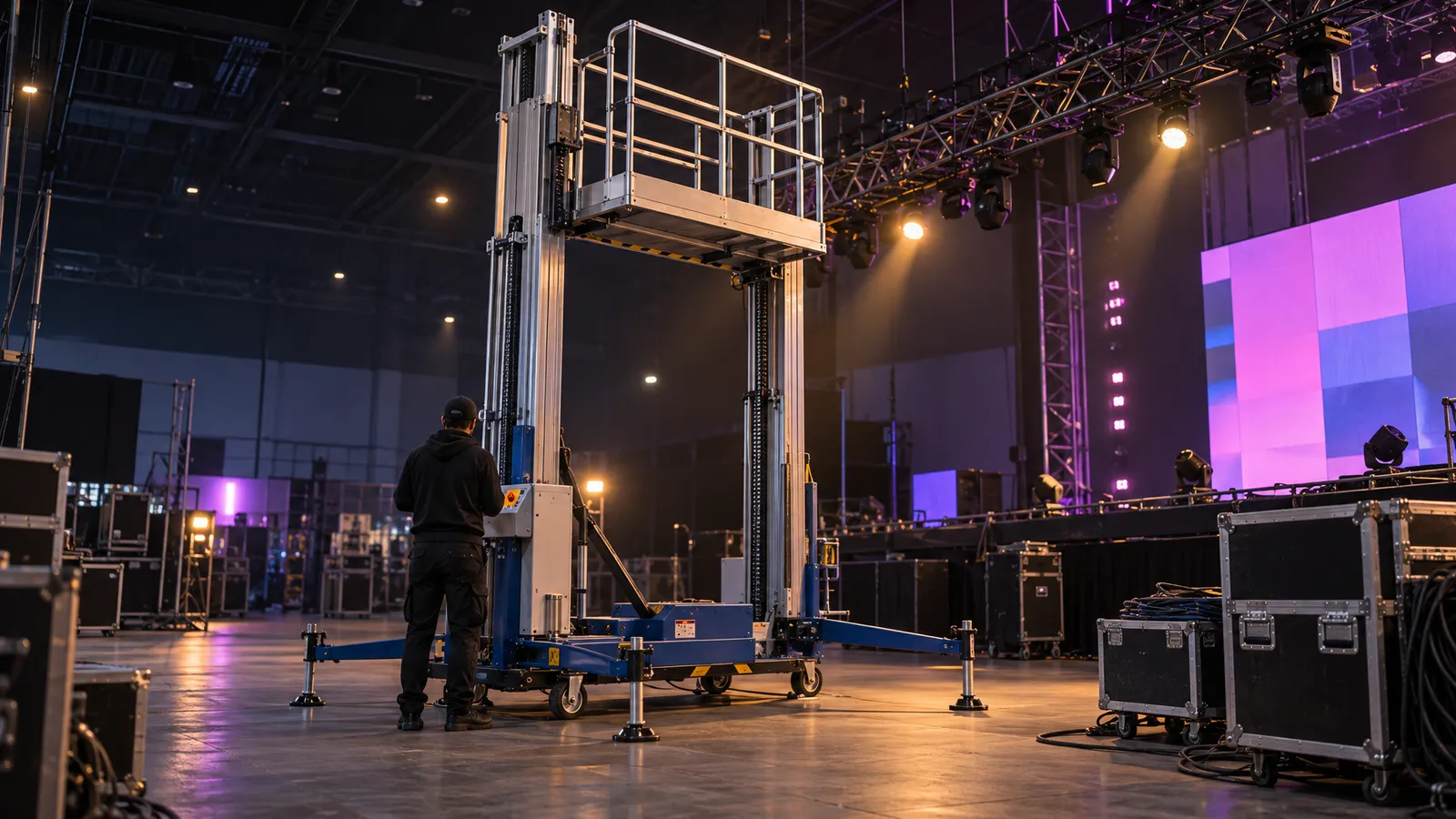
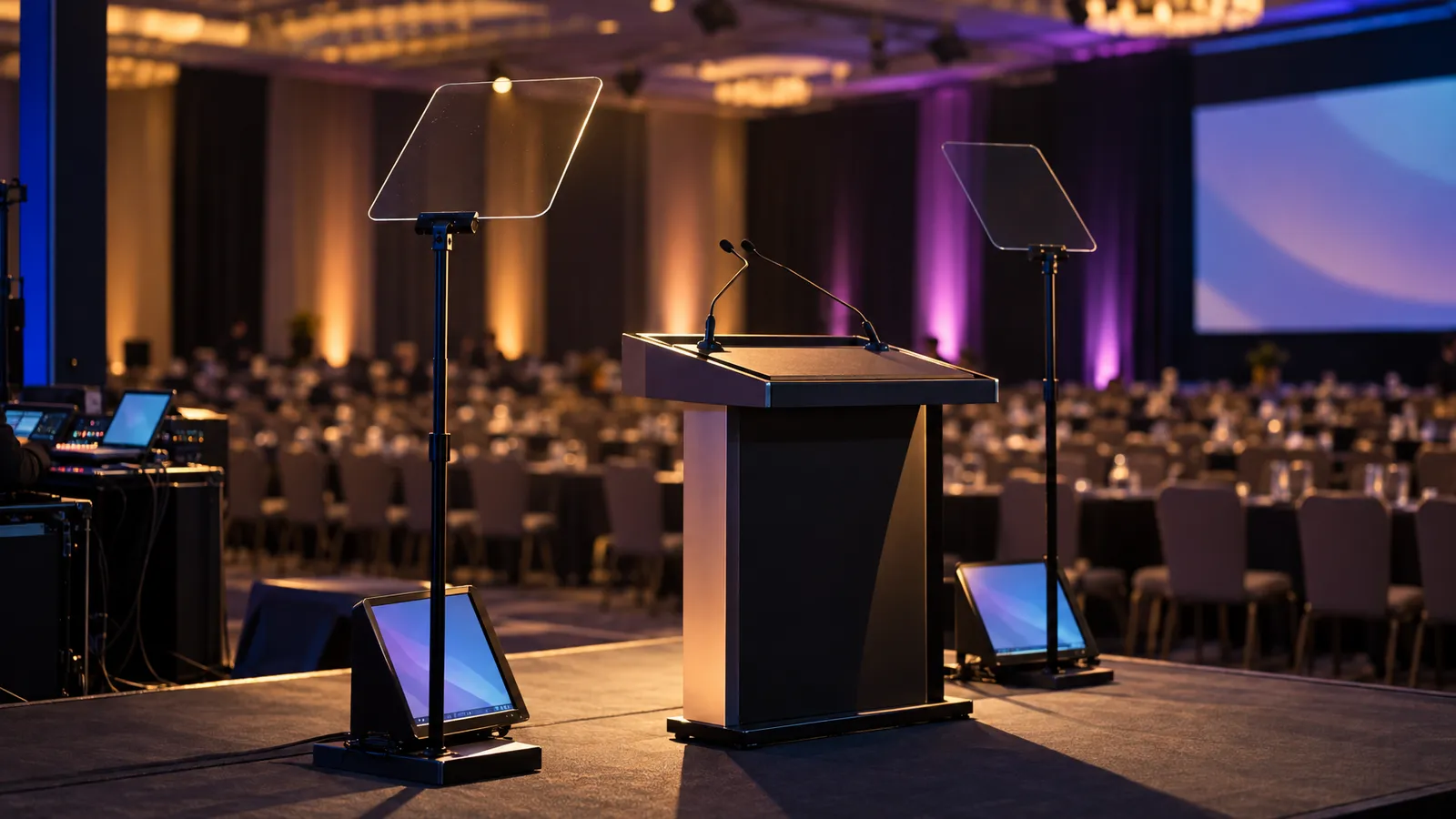
VENEGEEST's Portable Stage Platforms ($30/day per platform) are modular sections that combine to the footprint you need; multiple stage sizes and configurations are available, configured to the venue and your program on request. Choose the height from the room's measured sightlines, how performers get on and off, and the stage's rated setup, rather than from a rule of thumb. Leave wing space off each side for costume changes and for a dragon or lion troupe to enter and exit without tripping over monitor wedges. For a solo, a tight center special followed by a full-stage wash is one lighting idea; if you want that from one fixture type, check the spec details (provided on request) to see whether the specific LED Pixel-Wash Moving Head model you rent (the catalog lists it as a multi-cell RGBW wash with individual pixel control) can narrow enough for the special, or pair it with a separate spot or front light. For mariachi, a rear drape behind the stage helps control reflections off a hard back wall.
- Modular stage decks combined to the footprint and height the acts need; include stage-left and stage-right wing space for dragon-dance handlers and costume changes.
- Front wash + rear backlight for multi-act lighting — moving-head washes for color looks across the stage, with the beam angle of the rented model confirmed if you also need tight specials. A COB Front Light ($35/day) keeps faces lit for speeches.
- Monitors placed for the singers — floor wedges at the front for vocalists, with the stage layout planned around where the vocal mics pick up least (for a cardioid mic, directly behind it) and checked at soundcheck.
- Rear stage curtain or acoustic shell for instrumental acts in rooms with hard back walls; drape usually comes from the venue or a drape vendor.
- Quick-change lighting for act transitions — truss-mounted fixtures on DMX let the lighting operator cue the next look from front of house while stage crew swap props and move monitors.
How much stage depth do I need for a dragon dance with eight performers?
It depends on the troupe, the length of the dragon and its choreography, so ask the troupe for its minimum performance area before you size the stage. A long dragon weaving with several body sections needs far more length and depth than a lion-dance pair. If the stage can't give the troupe that room, ask whether it can perform on the open floor in front of the stage, or shorten the routine. For stage height, check sightlines from the back of the room with the audience as it will actually be — seated or standing — and confirm the height works for performer access and the stage's setup instructions.
LED Display for Sponsor Recognition, Keynote Video, and Community Awards
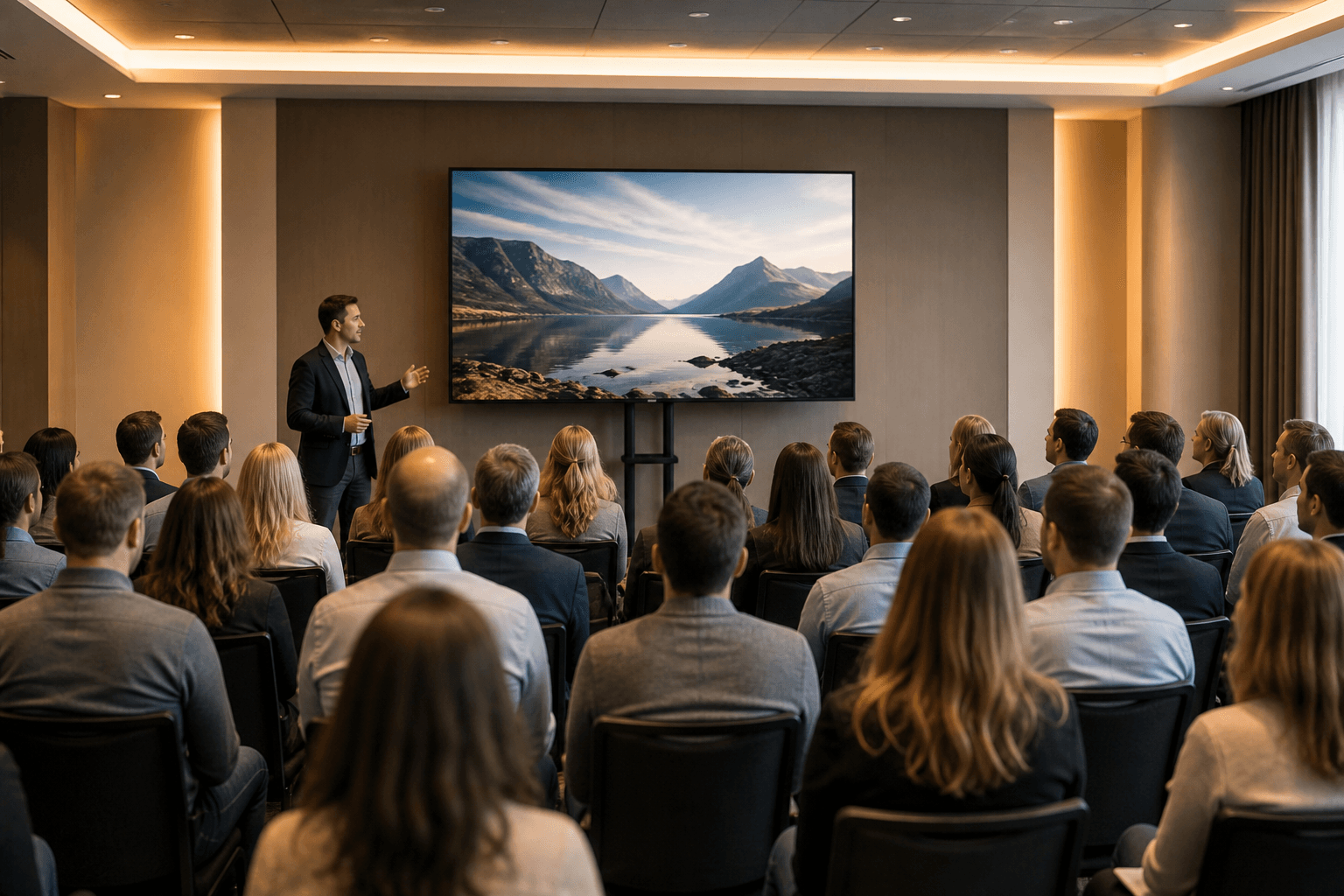
A gala program may put sponsor logos, a keynote speaker's slides and community-award videos on one screen: a short sponsor montage, a keynote with photo slides, and an award highlight reel before the honoree is announced. That workflow needs an LED Rental Screen large enough for the back row to read sponsor names and bright enough to hold up against the room's lighting. VENEGEEST's P1.9–3.9 LED Rental Screen (from $200/day) is listed as configurable from 12 m² to 48 m². Mount it high enough that seated guests don't lose the bottom of the image behind centerpieces.
For a first estimate of size, older AV practice divided the distance to the farthest viewer by six to get the image height for general content. The newer AVIXA DISCAS standard sizes the image from the content instead; in one worked example for HD content with 20-point text, the factor becomes five, which makes the image 20% taller. For a back row 80 feet away, that is roughly 13 feet of image height under the old rule and 16 feet under the DISCAS example. Treat both as starting points and run a legibility test with your actual sponsor slides from the back row. If the room can't take a screen that large, add repeat screens part-way back, such as LED TV Displays up to 120″ ($120/day). For sponsor timing, pick a per-logo duration, check it for readability from the back row, and multiply by the number of sponsors to see how long the loop runs.
- LED screen sized from the back-row distance for sponsor logos, keynote slides and award videos, mounted high enough that seated guests see the full frame.
- Live camera feed integration — an HDMI or SDI feed from a camera on the keynote speaker (a camera is available on request, subject to availability and quoted, or supplied by your video vendor), in a picture-in-picture layout with slides on the main frame and the live feed in a corner box.
- Sponsor logo deck with tested slide timing — static sponsor names or animated titles in the event palette, auto-advance or manual cue depending on program pacing; check readability from the back row at the timing you choose.
- Award-winner highlight reel synced to a cold-spark or confetti reveal — the video plays, and the effect fires on the final frame when the honoree's name appears.
- Screen-operator station at FOH with a preview monitor to cue the next slide or video without interrupting the live program, and talkback to the stage manager if the keynote runs long or skips slides.
Cold Spark, Confetti, and Award-Ceremony Reveals
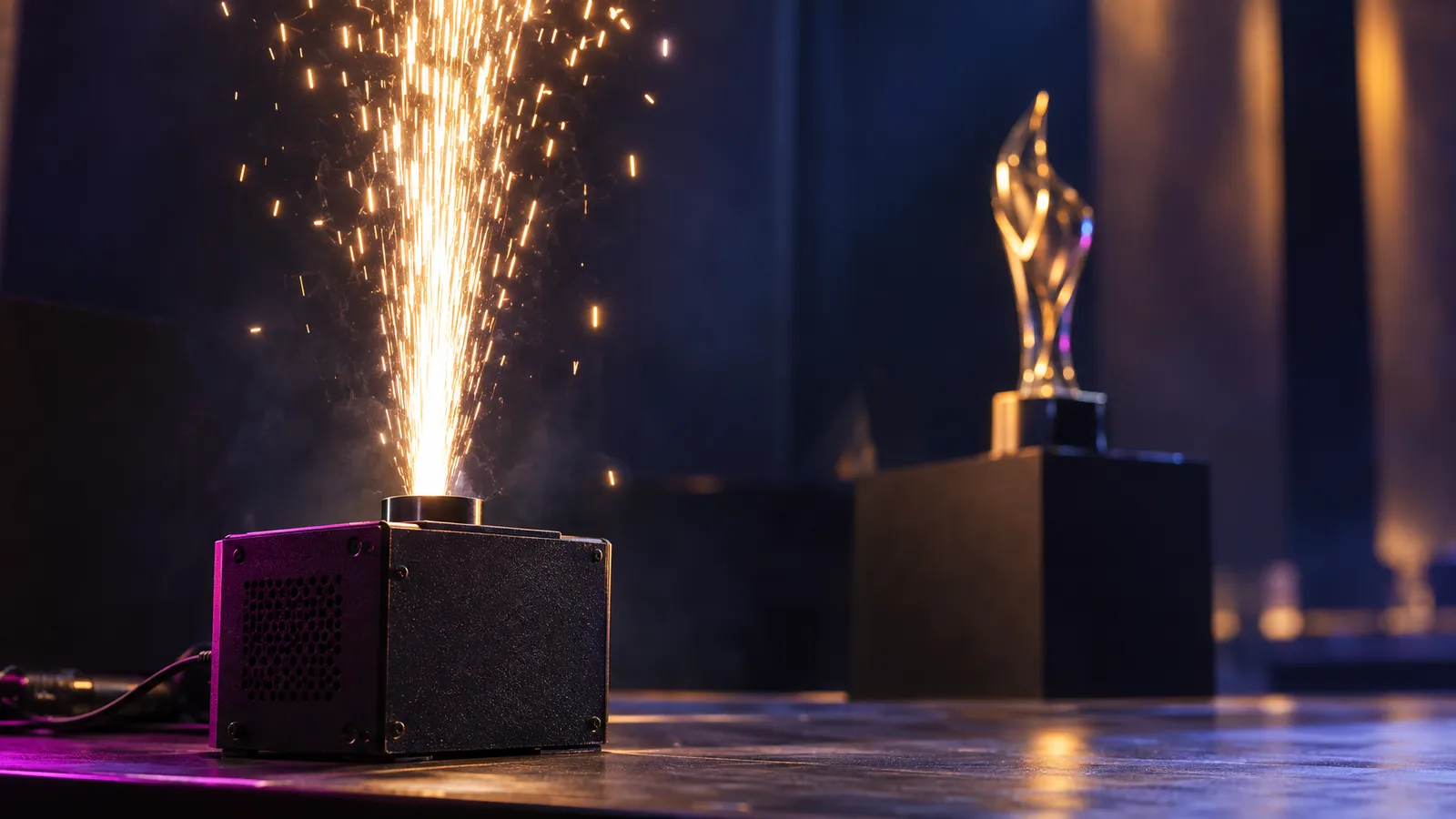
Some heritage galas include a community-awards segment — honoring business leaders, cultural educators or scholarship recipients. The reveal can layer screen graphics with stage effects: the award video fades out, the screen moves to a name card, and Cold Spark Machines ($35/day each) fire from stage-left and stage-right as the honoree walks on. Cold spark is not a free pass: California's Health and Safety Code §12505 lists fireworks containing zirconium, or titanium "except in particle size greater than 100-mesh," as dangerous fireworks — the Central County Fire Department notes that spark devices use powdered titanium or zirconium — and some fire authorities prohibit the devices. How the exact machine and its granules are classified is for the local fire authority to confirm. Confirm with the venue and the local fire authority before you build the reveal around it. When VENEGEEST's crew operates the effect, VENEGEEST holds the operating permits; if you rent the machines and operate them yourself, you carry that responsibility, including liability.
Confetti and streamer launchers are another option, including for outdoor festival moments. VENEGEEST's confetti and streamer launchers include manual confetti machines, electric confetti guns, a DMX 4-shot launcher and a 15 m ribbon launcher. Only the 4-shot launcher is listed as DMX; whether any other electric unit can be triggered remotely, and whether several units can be linked to fire together from front of house, depends on the exact model's control inputs and a compatible controller, so confirm that for the models you rent before planning a synchronized cue. Manual units need crew firing on a visual cue. Indoors or out, ask the venue first whether confetti and streamers are allowed and who is responsible for clearing them.
- Cold-spark machines for indoor award reveals — at stage edge, synchronized to the screen transition, with written venue approval and a check with the local fire authority.
- Confetti or streamer launchers for festival moments — a remotely triggered cue only where the exact models and controller support it (the catalog's 4-shot launcher is listed as DMX), otherwise manual units fired by crew on a visual cue, in colors agreed with the organizer.
- Timing sync with screen and audio cue — effects fire on the final frame of the award video or the last beat of the live performance; screen operator and effects operator confirm ready state on talkback before each reveal.
- Cleanup rules — ask the venue, or the park's permitting office for an outdoor site, whether confetti is permitted and what cleanup it requires.
Outdoor Festival vs. Indoor Banquet
Some organizations run a celebration twice: a daytime festival in a park and an evening banquet in a ballroom. The festival version can use battery uplights on pavilion posts, Commercial PA Speakers ($200/day) on stands or truss for speeches and lion-dance music, and portable staging set on a level, stable base. The banquet version can use corded pars on ballroom columns where outlets are close, more PA where the room needs it, and a stage with rear drape and monitor wedges. Both can use the same LED screen for sponsor recognition, but a daytime outdoor screen competes with sunlight, so confirm the panel's brightness rating for daylight use before you commit to it.
Outdoor festivals face wind, irrigation schedules and permit timelines. Check the City of Cupertino's special-event permit lead time and staking rules — or the equivalent for your city's parks — before planning outdoor rigging. Battery uplights avoid generator load for the lighting. Point outdoor speakers at the audience and away from neighboring picnic areas and homes. Indoor banquets avoid the weather but can bring fire-marshal requirements on aisle widths, exit visibility, flame-retardant certificates for stage fabric, and approval for any effect that produces smoke, haze or sparks.
- Battery-powered wireless uplights for outdoor festivals — on pavilion posts, listed at a 12–15-hour battery, wireless DMX control, no generator needed for the lighting; corded pars work indoors where venue power is close.
- Commercial PA speakers on stands or truss for outdoor speech and music, aimed at the audience and away from neighbors; indoor rooms may need more speakers for even coverage.
- LED screen placement outdoors — check the panel's brightness rating, look at the site's sun path for the event hours, and place or shade the screen so direct sun doesn't fall on its face where you can avoid it.
- Stage assembly on grass vs. ballroom floor — outdoor festivals use Portable Stage Platforms on a level, stable base; indoor banquets add rear drape to control acoustics.
- Permitting and fire-marshal approvals — check the city's special-event permit lead time and staking rules before planning outdoor rigging; indoors, ask the venue what it needs for stage drape and for any spark or confetti effect.
Rates above are per day and cover a 24-hour rental; delivery, setup and technicians are scoped and quoted to your event, and same-week delivery is available across the Bay Area for most items. For a general overview of what VENEGEEST rents in the city, see AV equipment rental in San Francisco.
FAQ: Cultural & Heritage Celebration AV
How many uplights do I need for a 600-guest banquet ballroom?
Count the columns, wall runs, doorways and photo backdrops you want to light rather than the guests, and walk the room with that list before you quote. Run them in the palette agreed with the organizer. Wireless battery units avoid floor power runs and tripping hazards; corded pars work where the venue provides outlets and you have time for cable management. The rig can run in a few cues — for example arrival, dinner and awards; the battery uplights are listed with wireless DMX, and for any corded fixtures confirm how they will be controlled from FOH.
What size LED screen works for sponsor logos at 80 feet?
As a starting estimate, the older rule of dividing the farthest viewing distance by six gives an image about 13 feet tall for an 80-foot back row; the AVIXA DISCAS worked example for HD content with 20-point text uses a factor of five, about 16 feet. Then test your actual sponsor slides for legibility from the back row. VENEGEEST's LED Rental Screen is listed from 12 m² to 48 m². If the room or budget can't take a wall that size, use a smaller main screen for the stage and add repeat screens part-way back, such as 120″ LED TV Displays, mounted high enough that seated guests see the full frame.
Can I use cold spark machines in a hotel ballroom without triggering smoke detectors?
Detector behaviour and fire rules vary, so confirm with the venue and the local fire marshal. California's Health and Safety Code §12505 lists fireworks containing zirconium, or titanium "except in particle size greater than 100-mesh," as dangerous fireworks, and some fire authorities (Central County Fire in Burlingame, Millbrae and Hillsborough, for example) prohibit the devices. Confirm with your venue well ahead, ask how it will classify and handle the exact machine, and provide the spark-machine spec details, which are provided on request. VENEGEEST holds the operating permits when its crew runs the effect; a client who rents and operates it carries that responsibility. Keep the spark zone clear of fabric, décor and guests.
How do I handle live mariachi sound without feedback from trumpet bleed?
Brass close to the vocal mics can bleed into them, so plan the stage around each mic's pickup pattern. A cardioid mic picks up most from the front and least from directly behind it, so arrange the singers, their mics and the trumpets so the brass sits in the mics' least-sensitive direction, and aim the vocal monitor wedges the same way. Keeping the main speakers in front of the stage line, aimed away from the mics, helps reduce feedback. In hard-walled rooms, a rear stage curtain can reduce reflections off the back wall. Then confirm the layout at soundcheck with the full ensemble playing and adjust positions if the brass still comes through the vocal mics.
What's the difference between battery uplights and AC uplights for a temple event?
VENEGEEST's battery uplights are listed with a 12–15-hour battery and wireless DMX for color control, and they remove power cables that would cross walkways — useful for temple halls, community centers and outdoor pavilions where power access is limited or the venue prohibits extension cords across aisles. Corded (AC) fixtures such as the Full-Color LED Par Light ($25/day) plug into standard outlets and run as long as the event does, but need outlets near each position and time for cable management. The choice comes down to venue power and how much cable routing the venue allows.