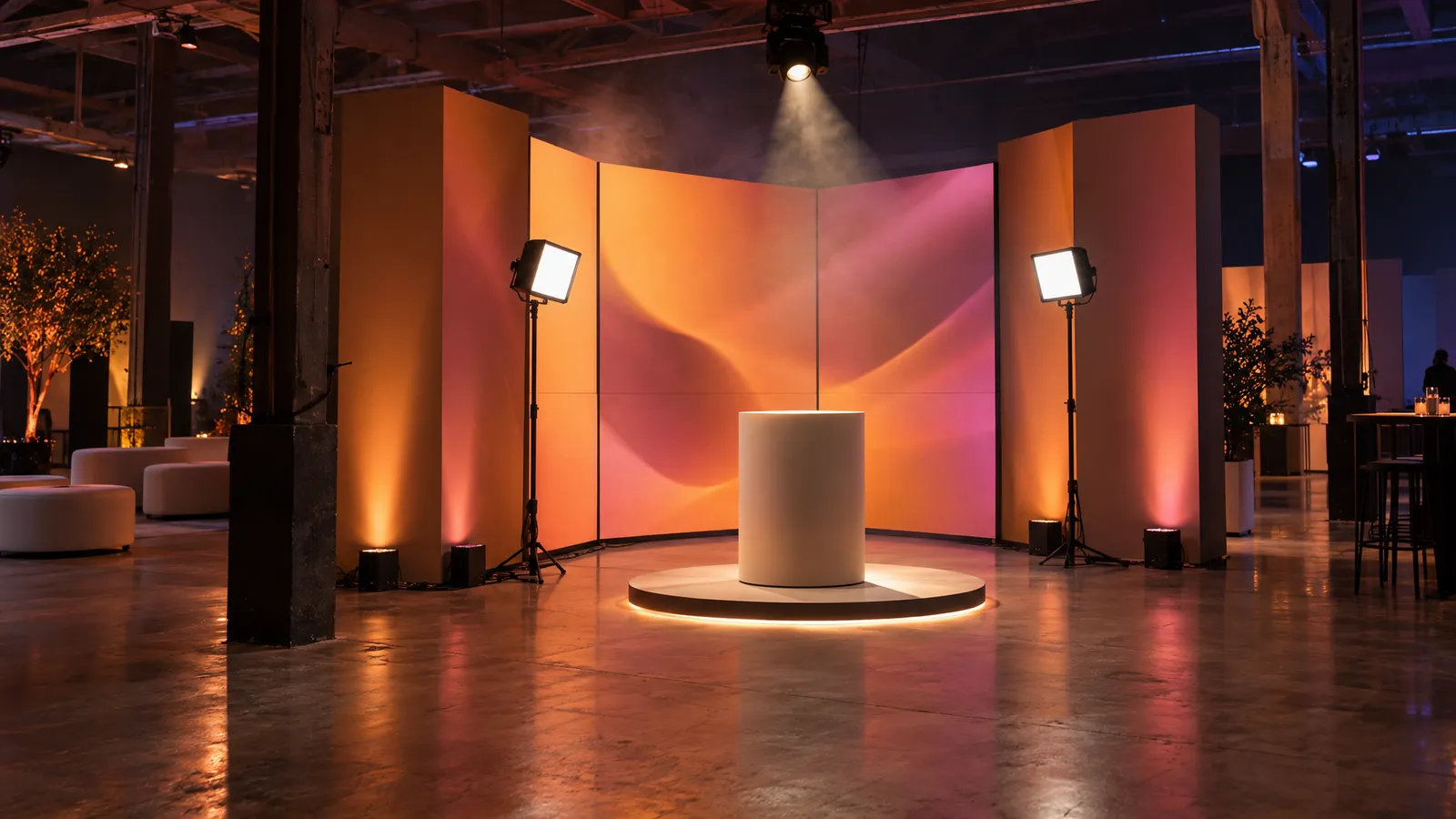
Brand activations and pop-up events in the Bay Area need lighting and display gear that turns retail corners, sidewalk footprints and event spaces into photo moments and product showcases. Whether you're running a three-day sneaker pop-up in Hayes Valley, a beverage sampling in a leased storefront, or a tech product demo at an outdoor plaza, the equipment checklist comes down to three outcomes: stopping foot traffic, creating shareable content, and keeping everything running when site power is questionable or nonexistent. This guide covers the LED walls, accent lighting, atmospheric effects and battery systems that brand teams can plan around for activations across San Francisco, Oakland and San Jose. If the activation centers on a single unveiling moment, our product launch and reveal production guide covers the reveal itself in more detail.
LED Walls and Digital Content Displays for Brand Messaging
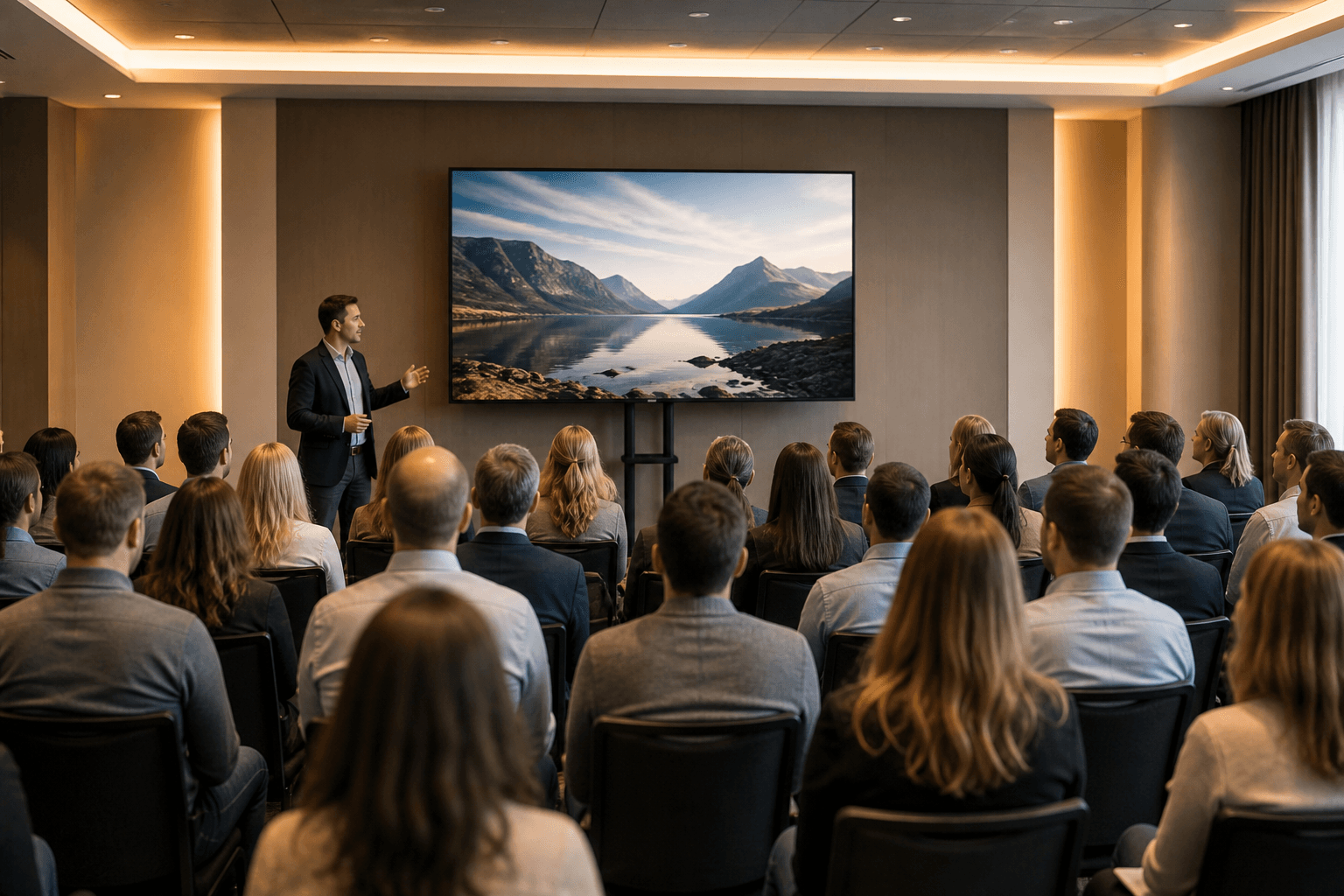
The centerpiece of most brand activations is the LED wall or digital display, and the spec to think through is pixel pitch against viewing distance. Planar, an LED display manufacturer, describes two measures. The first is Visual Acuity Distance: the distance at which a person with 20/20 vision can no longer distinguish individual pixels, calculated as the pixel pitch in millimeters times 3438, which works out to roughly 28 feet for a 2.5 mm pitch. The second is a shorthand "10x rule" (pitch in millimeters times ten gives an approximate distance in feet), and Planar's chart puts the Average Comfortable Viewing Distance for a 2.5 mm pitch at about 14 feet, while noting that what counts as acceptable is subjective. The practical point: at the close range of a product demo or a queue line, viewers will usually be well inside the acuity distance of any rental-grade pitch, so pixel structure may be visible. That doesn't rule a wall out; it means you design content for the distance and look at it from where people will actually stand.
Our P1.9–3.9 LED Rental Screen is listed as configurable from 12 to 48 square meters, so size the wall to the space and the viewing distance rather than the other way round, and tell us the closest point where people will stand so the pitch can be discussed with your quote.
- Finer pitch for close-viewing demos: the finer the pitch, the closer the acceptable viewing distance, so ask which pitch is available for your dates if attendees will stand near the wall
- Coarser pitch where the audience stands farther back, as in a mall atrium or a larger outdoor footprint; confirm the actual panels and price in the quote rather than assuming a rate per square meter
- Vertical 9:16 content for Instagram Story-style framing fills the wall without empty bars when the wall itself is built in a portrait shape; horizontal 16:9 suits brand films and product animations
- Foldable LED Ad Screen for sidewalk and storefront activations, listed at 2–12 square meters and portable on casters
- LED TV Display for single-product hero shots in tight retail corners, listed in 43″ to 120″ sizes at $35–$120 per day
- Motion content: export at a frame rate that matches your playback device and the wall's processing, then play the real file on the real wall during setup and watch fast pans, product spins and fluid pours for stutter before doors open
Lighting the Photo Moment: Soft Frontal Wash and Color Temperature
The point of most experiential activations is attendee photography, and harsh side lighting or overhead fluorescents can leave unflattering shadows on faces. A common starting point is a soft frontal wash placed slightly above eye level and angled down toward the photo spot, then adjusted by eye and by phone camera until faces look right. Full-Color LED Par Lights (listed as an 18-LED RGBW wash light) let you mix a white for the wash and add brand accent colors to the background. For setups where you cannot run extension cords across a mall corridor, Wireless Battery Uplights, listed with 12–15 hour battery life and wireless DMX, remove the cable runs and let you change colors between activation phases. If the frontal fill is too weak against bright mall or street ambience, attendees can end up as silhouettes in photos.
- Light the photo backdrop from the front on both sides rather than from one side, then check the result on a phone; move or dim fixtures until shadows under the nose and eyes look acceptable to you
- Brand colors on the backdrop wash: RGBW mixing can get you close, but LED color and printed color are different things, so compare the lit backdrop with your brand swatches and on camera before the event rather than expecting an exact Pantone match
- Side-only lighting tends to produce strong cheekbone shadows that can look dramatic on stage and less flattering in selfies
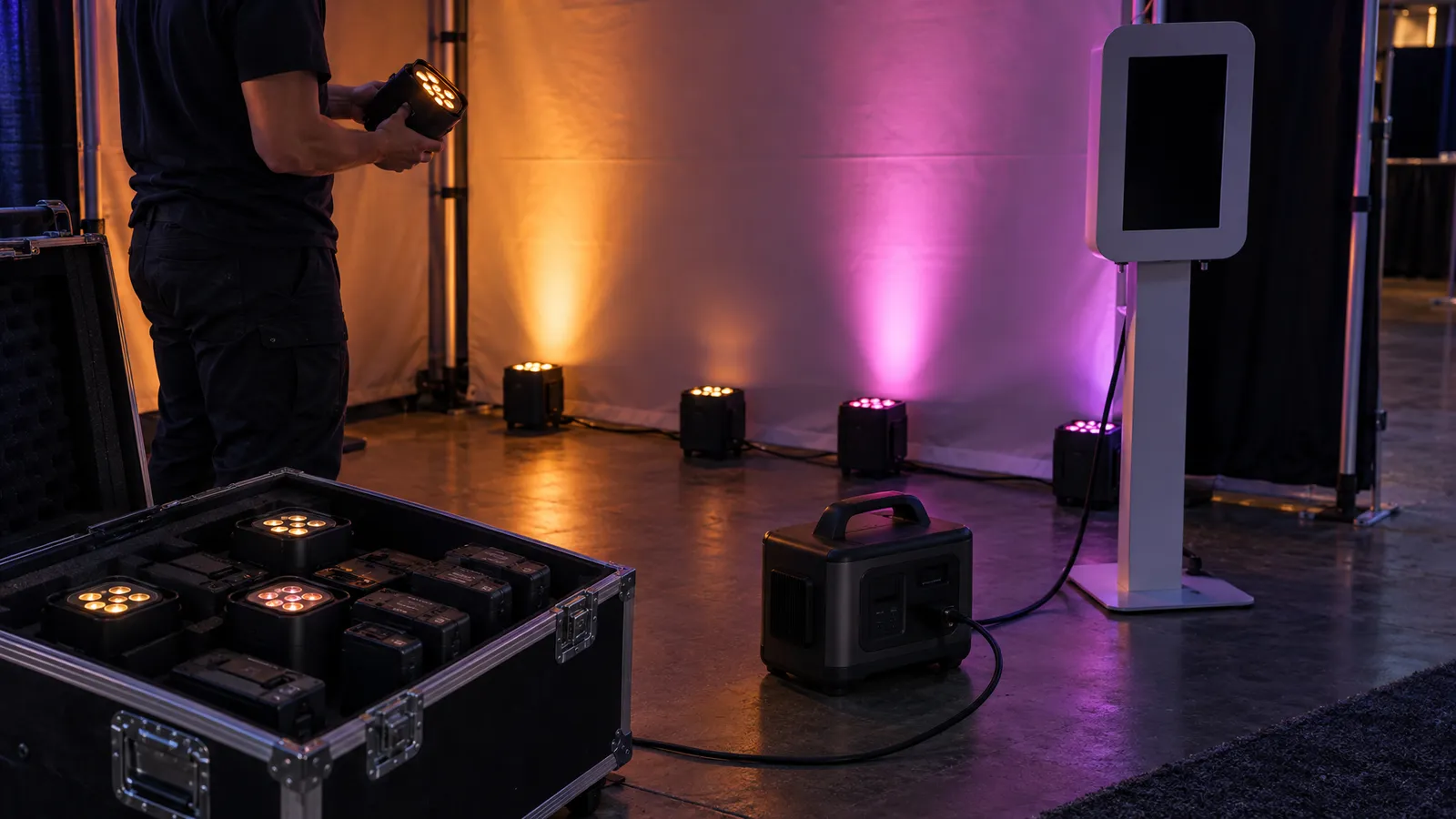
- Battery uplights for cordless setups in leased retail spaces or outdoor plazas where venue power is limited or charged separately
- Dimmable fixtures let you adjust as ambient light changes through the day; an outdoor pop-up is likely to need more output in bright afternoon light than an indoor space does
What color temperature makes attendees look best in activation photos?
It's a matter of taste. Many photographers like a warm white wash on faces, while a neutral or cooler white can look cleaner. What matters more is consistency: if the ambient light in the space is a different white from your wash, faces can pick up a mixed, off-color cast, so either match the ambient or make your wash bright enough to dominate it. If your activation includes a product that must look color-accurate (cosmetics, beverages, apparel), light the product with a neutral white and check it on camera against the physical product. Test the rig with phone cameras, not DSLRs, because that is what attendees will shoot on.
Atmospheric Haze for Product Reveals and Beam Effects
Haze makes light beams visible and adds depth to product reveals, but building management and fire authorities can restrict its use. Our Haze Machine (listed as a 1000W atmospheric haze generator, $25 per day) creates a thin atmospheric layer that shows up accent beams during a reveal. Whether it can run is a building question: ask building management well ahead whether haze is allowed, whether the smoke detectors need attention, and whether the space has adequate air exchange. Outdoors, wind disperses haze quickly; check the site's event rules before planning it.
- Ask which haze fluid the building accepts before you book; retail leases and malls set their own rules. Fog and haze fluid can be provided on request, with a quote
- Notify venue fire safety well before haze use; some buildings add conditions such as a fire watch, others prohibit haze entirely
- Set output from the machine's manual and the conditions on site: ventilation indoors, wind outdoors. Run a test at the venue, if the venue allows it, and adjust from what you see
- Narrow-beam lighting aimed at a product pedestal shows up best in haze; which fixture and how far away depends on the fixture and the haze density, so test the look on site
- Ask about placement relative to the LED wall and any electronics: follow the haze machine's and the screen's manuals, and keep the machine's output from blowing directly onto equipment
Battery-Powered Gear for Limited or Zero Site Power
Sidewalk activations, pop-ups in leased storefronts without dedicated circuits, and outdoor plaza events often mean little or no available power, or electrical fees from the venue. Battery gear can sidestep the power drop or the generator. Our Wireless Battery Uplights are listed at 12–15 hours of battery life; runtime depends on brightness and color, and charging instructions come with the fixtures, so ask about charge time when you book. The Bluetooth Speaker System (one controller, six speakers, two mics; $60 per day) covers ambient audio for a smaller footprint. For displays, check the screen's power draw against the capacity of any portable battery station before you rely on one, and plan the runtime in watt-hours.
- Plan power budgets in watt-hours: divide the station's usable capacity by the load, and leave a margin for inverter loss; check that the station's inverter can also handle the load's peak draw
- Charge battery fixtures before the event day; on-site charging mid-activation is often impractical
- Build in spare capacity, such as extra fixtures or batteries, for long activations so a unit that runs low can be swapped
- Interactive Photo Booth ($400 per day, listed with instant sharing): ask for its actual power requirement, peak draw and the hours it needs to run, and confirm whether a venue outlet or a battery station with a suitable inverter rating will cover it
- Test all battery gear under load before the event day so a weak pack shows up in time to swap it
Accent Lighting and Decorative Effects for Brand Environments
Beyond the photo moment and LED wall, brand activations use accent lighting to define zones, highlight product displays and set a mood. Battery uplights wash walls and booth backdrops in brand colors, while decorative effects like Firefly Projection Lights project a firefly effect onto blank surfaces without additional content creation (ask for the model details if you need to know how the effect behaves). For tech product launches in loft spaces or automotive pop-ups in warehouses, start with a rough spacing for wall uplights and one accent light per product pedestal, then walk the space with the lights on and fill any dark gaps or pull back hotspots. Too much light can flatten the space and wash out photo contrast; too little can make the activation disappear against bright retail surroundings. The goal is selective emphasis, not stage flood.
- Uplight spacing depends on the fixture, the wall surface and how even you want the wash; set a trial spacing, look at it, and adjust before the event
- Tighter beams on product pedestals help keep light off adjacent displays; check the spill on site
- Firefly or gobo-style projections on blank walls add texture (the Firefly Projection Light, a firefly effect projection, is $20/day) and fill dead space without video content costs
- Set ambient fixture levels by looking at the space and at phone photos of it; if photos look flat or overexposed, bring the ambient down
- Check color consistency across fixtures on camera; different LED fixtures can render the same programmed color differently
- Test lighting at the actual activation time of day, especially outdoors, where the look can change a lot as daylight changes
FAQ: Brand Activation Lighting
How much does a basic LED wall and lighting package cost for a two-day pop-up in San Francisco?
Starting day rates: LED Rental Screen $200, Full-Color LED Par $25, Bluetooth Speaker System $60; delivery, setup and technician services are scoped and quoted to your event. The Interactive Photo Booth rents from $400 per day. Daily rates cover a 24-hour period, so a two-day pop-up is two rental days per item unless you keep the gear for five or more consecutive days, when a discounted weekly rate applies. VENEGEEST designs a custom solution around each activation's space and requirements, multi-item packages are quoted per project, and a 25% non-refundable deposit secures the booking. These figures assume you handle content creation separately.
Can I run haze machines in a leased retail pop-up space?
It depends on the building's lease terms and local fire rules. Mall operators and landlords set their own rules, and some require advance notice or extra fire-safety conditions while others prohibit haze outright, so confirm in writing with building management before you book a haze machine. Ask specifically how the smoke detection system will be handled, since a false alarm can end the activation. Check the plaza's event permit terms for atmospheric effects; outdoors, wind disperses haze quickly.
What is the right pixel pitch for an LED wall if attendees will stand 8–10 feet away?
At 8–10 feet, a viewer with 20/20 vision is well inside the distance at which Planar says individual pixels can be distinguished on common rental pitches. Planar's Visual Acuity Distance formula (pixel pitch in millimeters times 3438) puts that distance at about 28 feet for a 2.5 mm pitch, and its Average Comfortable Viewing Distance for the same pitch is about 14 feet. A finer pitch brings the acceptable distance closer. If your activation includes fine text (ingredient lists, legal disclaimers, QR codes), make the text larger rather than relying on pitch alone, and test the real content on the real wall with the phones attendees will use, since cameras can show moiré or pixelation the eye doesn't notice.
How long do wireless battery uplights last during an all-day activation?
Our Wireless Battery Uplights are listed at 12–15 hours of battery life. Runtime depends on brightness and color, so running fixtures at full output shortens it. For multi-day activations, recharge fixtures between days following the charging instructions supplied with them. A couple of spare units lets you rotate in a fresh fixture if one runs low mid-event.
Do I need a permit for a sidewalk pop-up activation in San Francisco?
Occupying a public sidewalk in San Francisco needs city approval. Check with SF Public Works and, if you are sampling food or beverages, the Department of Public Health for current permit types, fees and lead times. Activations on private property (parking lots, privately owned plazas) need the owner's approval, and owners often ask for proof of liability insurance. Build permit lead time into your schedule before you book equipment.