
Rain Plan AV: Protecting Sound, Lighting & LED Gear
A rain-contingency framework for Bay Area outdoor events: weatherproofing AV gear, go/no-go call timelines, and what to ask your rental vendor.
Why Outdoor Events Need a Real Rain Plan, Not Just a Tent
Every Bay Area event planner has heard the same advice: "book a tent as backup." That's a start, but it's not a rain plan. A tent keeps water off people. It doesn't automatically protect a mixing console sitting on an open table, a lighting truss with exposed cabling, or an LED wall with vents designed for airflow.
A real rain plan for outdoor AV covers three separate risks: water damage to electronics, electrical safety around water and live power, and wind, which can arrive with rain and puts loads on lighting rigs, LED structures and tents. Treating these as one problem, "get a tent," misses two of the three.
Bay Area weather varies a lot by season and by location. San Francisco gets most of its rain in the cooler months and little in summer, and coastal and inland sites can see quite different conditions on the same day. Planners booking coastal venues, or anywhere exposed to wind off the water, should look at the forecast for that specific site rather than a regional one.
What separates a good rain plan from a bad one is that it's decided before the event, not improvised on-site when clouds show up. The National Weather Service's outdoor event guidance recommends identifying hazards and setting thresholds for each one before the event, knowing the wind limits of your tents, stages and portable buildings, and establishing a safety officer. Vendors and planners need a shared, written plan for what triggers action, who makes the call and what equipment moves where.
Weatherproofing Sound Equipment
Audio gear is often the most exposed part of an outdoor setup, because speakers may sit outside the tent line to cover the crowd. A few practical points help:
- Check the manufacturer's rating and instructions for every speaker placed outside cover. An IP rating describes the protection an enclosure was tested for against solids and water. On its own it doesn't tell you whether a given speaker, and its connectors, may be operated uncovered in rain, or under what conditions. Look at the exact model's manual for the exposure it permits, how its connectors must be protected and its operating limits, and cover anything that isn't rated for the conditions you expect.
- Keep mixing consoles and amp racks under cover. Mixers, amplifiers and DI boxes need a tent, a rack case or a weatherproof cover with cable ports, unless the manufacturer says otherwise. The console is central to the whole sound system, so protect it even when rain is only a possibility.
- Give cable runs drip loops. Water can follow a cable into a connector. A drip loop, letting the cable dip below the connection point before rising into it, helps keep water from running directly into XLR and power connectors.
- Treat rack gear and worn gear differently. Wireless mic receivers and in-ear monitor transmitters are rack equipment and can stay under the front-of-house or backstage cover. Bodypack transmitters and in-ear receiver packs are worn by performers, so they can't simply be kept inside; follow each device's instructions on moisture, and ask about protective pouches or covers where the manufacturer allows them.
Ask any vendor which outdoor speakers and fixtures are rated for exposure and what their manuals permit. That's a fair question to ask during booking, alongside the insurance and liability questions planners should already be asking rental vendors.
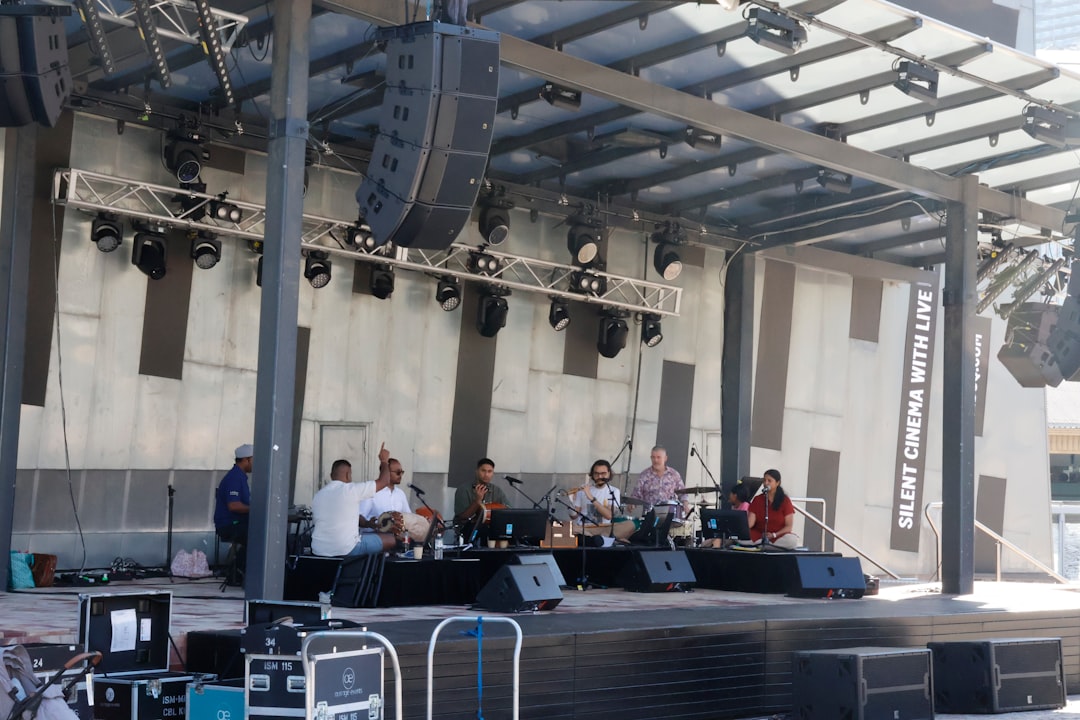
Photo: You Le / Unsplash
Protecting Lighting Rigs and Truss in Wind and Rain
Lighting carries risk in two directions: electrical exposure and wind load on the rig itself. Don't infer weather protection from the type of fixture. Some moving heads and pars are built for outdoor use and many aren't, and the cables, connectors, dimmers and control gear feeding them need checking too. Our catalog, for example, lists IP-rated variants such as IP65 LED par cans and IP66 hybrid moving heads alongside fixtures with no rating listed; check the rating and manual of each exact fixture you plan to put outside cover.
For power, have a qualified electrical plan for the site. OSHA's electrical rule for workplaces says that portable electric equipment and flexible cords used where people are likely to contact water "shall be approved for those locations." Use distribution equipment and connectors approved for the actual wet location, with the electrical protection the site requires, and keep dimmer racks and lighting consoles under cover like the audio gear.
Truss and rigging need a wind check, not just a rain check. Our truss and rigging safety checklist covers load ratings and inspection steps that apply here. Ground-supported towers and stands should be set up to the supplier's engineered support and ballast plan, and if rain softens the ground, ask the supplier to reassess rather than adding ballast or widening bases on the fly, since that can exceed what the ground or the components are rated for.
Practically, the lighting plan for an outdoor event should specify which fixtures are rated for direct exposure, where dimmer and control gear is housed, the wind action levels the rigging provider sets for lowering or shutting down truss-mounted fixtures, and who is authorized to make that call on-site. Decide who's in charge before the weather turns.
LED Screens and Video Walls: A Different Kind of Risk
Weather protection for LED walls varies by model. Some panels are built for outdoor use; ROE Visual's brochure, for instance, lists outdoor panels rated IP65. Others are indoor panels. And a wall is more than its panels: processors, power distribution and data cabling may sit outside the panel housing with protection of their own, or none.
Before an outdoor booking, ask for the front and rear rating of the exact panels, and the rating and placement of every ancillary piece: processors, power supplies and cabling. Covering or shrouding a wall for rain changes its airflow and its wind loading, and LED panels produce heat, so any enclosure, ventilation and wind-load design should come from the wall manufacturer's guidance and a qualified structural provider rather than a tarp improvised on the day. Some outdoor-rated walls may not need an enclosure at all; indoor panels outdoors need a proper solution or shouldn't go outside. If you're weighing whether to rent a wall for a one-off outdoor event versus buying one, our rental versus purchase comparison covers the cost tradeoffs.
Ground support matters here too. A large LED wall catches a lot of wind. Ask the provider for the engineered wind limits of the ground-support structure and for action levels, based on gusts as well as sustained wind, at which the wall is shut down, the area around it cleared and the wall lowered or struck, set well below the structure's limits so there's time to act safely.
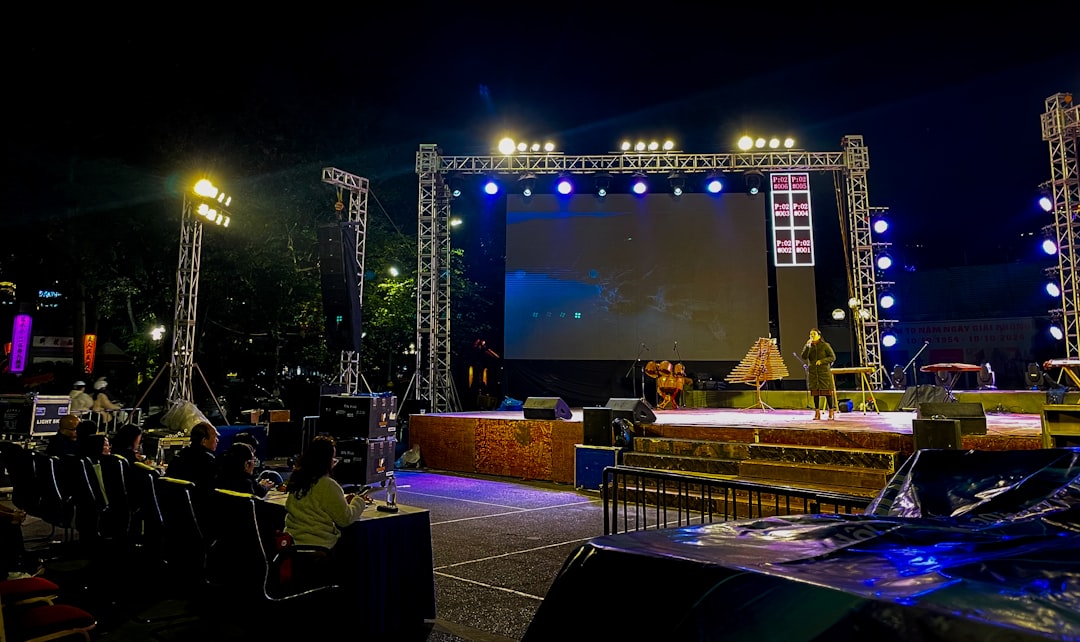
Photo: Bernd Dittrich / Unsplash
The Go/No-Go Timeline: Deciding Before the Sky Decides for You
Timing is where many rain plans fall apart. If planners wait to see what the weather does, by the time it's obviously raining there may be no time left to safely relocate gear, adjust the schedule or move an audience.
A go/no-go timeline for an outdoor event might look like this; adapt the checkpoints to your event:
- About a week out: check the extended forecast. If rain looks possible, confirm with your AV vendor what backup covered space exists at the venue, and confirm indoor capacity if the event might move entirely indoors.
- About 48 hours out: check the updated forecast and confirm tent orders, the supplier's support plan for lighting towers, and covers for any gear that will be exposed even under a tent (like a mixing position near an open side).
- Morning of, load-in: walk the site with your AV lead and identify every piece of gear outside cover. Confirm who has the authority to call a pause or a gear relocation, and make sure that person's phone number is in every vendor's hands.
- During the event: use the wind and rain action levels agreed in advance. For example: "at the rigging provider's first wind action level, moving lights are shut down and the area under the truss is cleared; if rain becomes steady, exposed speakers get covered or the show pauses for relocation."
Writing these thresholds down before the event removes the guesswork and the on-site argument about whether "it's just a little rain." It also protects the vendor relationship, since everyone agreed to the plan in advance rather than negotiating it under pressure.
Questions to Ask Your AV Vendor Before Booking an Outdoor Event
AV rental companies handle outdoor weather risk differently. Before booking, ask these questions directly:
- Which speakers, lighting fixtures and LED panels are rated for outdoor exposure, what do their manuals permit, and which pieces of the setup are NOT weather-rated?
- Do you provide or coordinate covered structures for consoles, dimmer racks and video processing gear, or is that the planner's responsibility?
- What are the engineered wind limits of the truss and LED ground support, what action levels do you set below them, and who makes that call on-site?
- Is weather-related equipment damage covered under your rental agreement, or does that fall to the renter? This overlaps directly with the insurance and liability questions every planner should be asking regardless of weather.
- Do you charge extra for last-minute rain contingency changes (additional covers, relocated cabling), and when's the cutoff to add them?
Clear, specific answers are a good sign. If a vendor seems unsure or treats these as edge cases, push for more detail or look elsewhere. For exposed sites, such as coastal venues or open-air venues near the water, it's worth weighting these questions more heavily and watching the site-specific forecast.
Under our rental terms, the client keeps equipment in a secure, dry environment during the rental, and weather cancellations are evaluated case by case. Ask us about rain protection and outdoor-rated fixtures when you book an outdoor event, and browse the rental catalog to see what is listed; equipment beyond the listed catalog is available on request, subject to availability, with a custom quote. Delivery, setup and technician services are scoped and quoted to your event.
FAQ: Rain Plans for Outdoor AV
Can outdoor speakers get rained on?
Only if the manufacturer says that model can be used that way. An IP rating tells you what an enclosure was tested for, but check the speaker's manual for the exposure it permits, how its connectors must be protected and its operating limits. A speaker not rated for the conditions should be covered or moved under cover.
Is an LED wall waterproof?
It depends on the panels. Some LED panels are built for outdoor use (ROE Visual, for example, lists outdoor panels rated IP65), others are indoor-only, and processors, power supplies and cabling may need separate protection. Ask for the rating of the exact panels and every ancillary piece, and have any cover or enclosure designed with the manufacturer's guidance, because covering a wall changes its cooling and wind loading.
What wind speed is dangerous for outdoor AV equipment?
There's no single number. It depends on the specific structure, rigging and ground support. The National Weather Service advises knowing the wind limits of your tents, stages and portable buildings; ask your provider for the engineered limits and for gust-aware action levels, set well below those limits, at which equipment is shut down, the area cleared and gear lowered or struck.
Who decides whether to pause an outdoor event for weather?
Agree this in writing before the event rather than deciding it in the moment. Typically it's a joint call between the event planner or producer and the lead AV technician on-site, using pre-agreed wind and rain thresholds. The National Weather Service also recommends establishing a safety officer for outdoor events.
How far in advance should I confirm my rain plan with my AV vendor?
Start the conversation at booking, then confirm specifics a day or two before the event once the forecast is closer. Waiting until the morning of the event leaves little time to add covers or structures; availability is confirmed for your date when you request a quote. Under our rental terms, changes to a rental order need at least 5 business days' notice, so raise rain contingencies early.