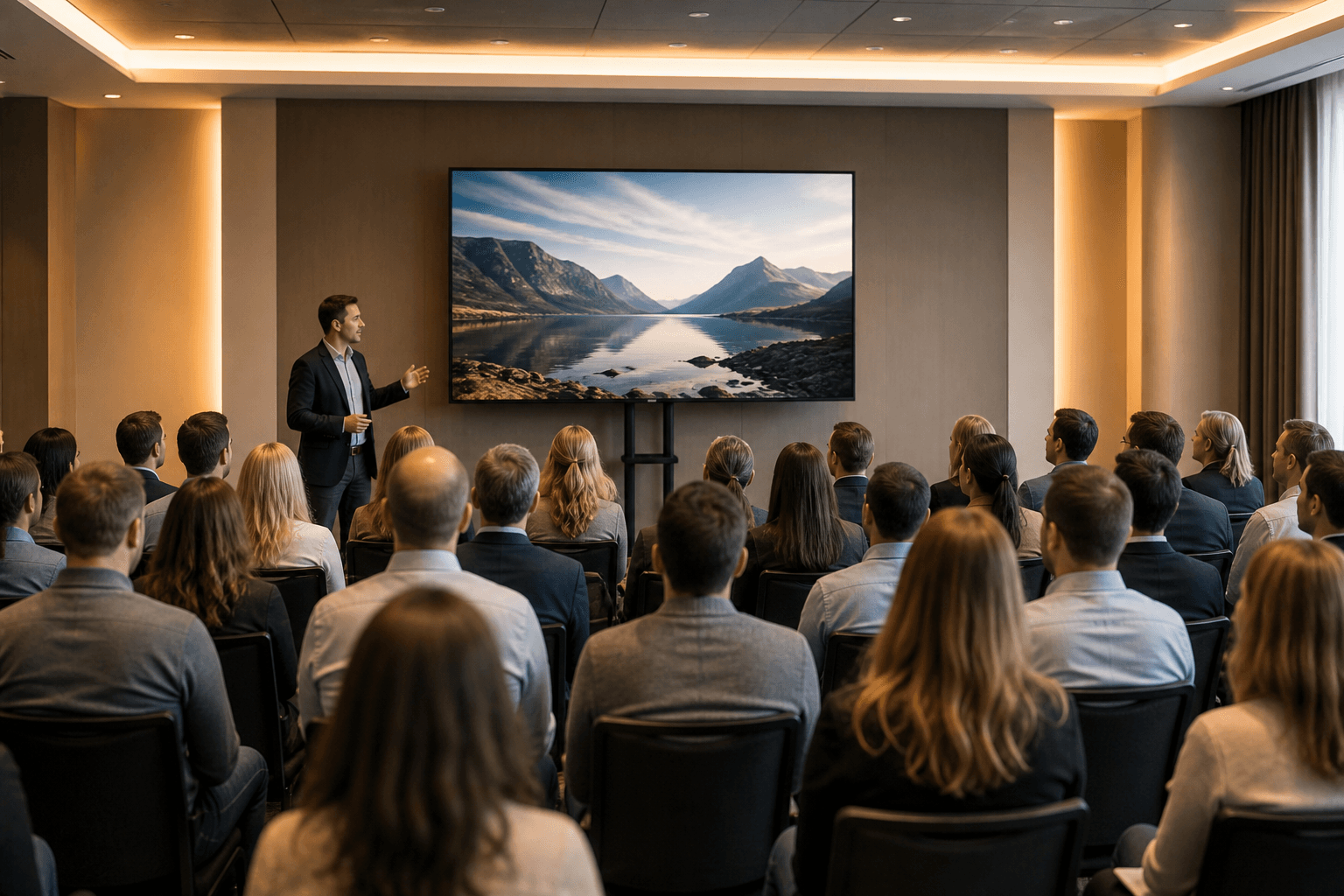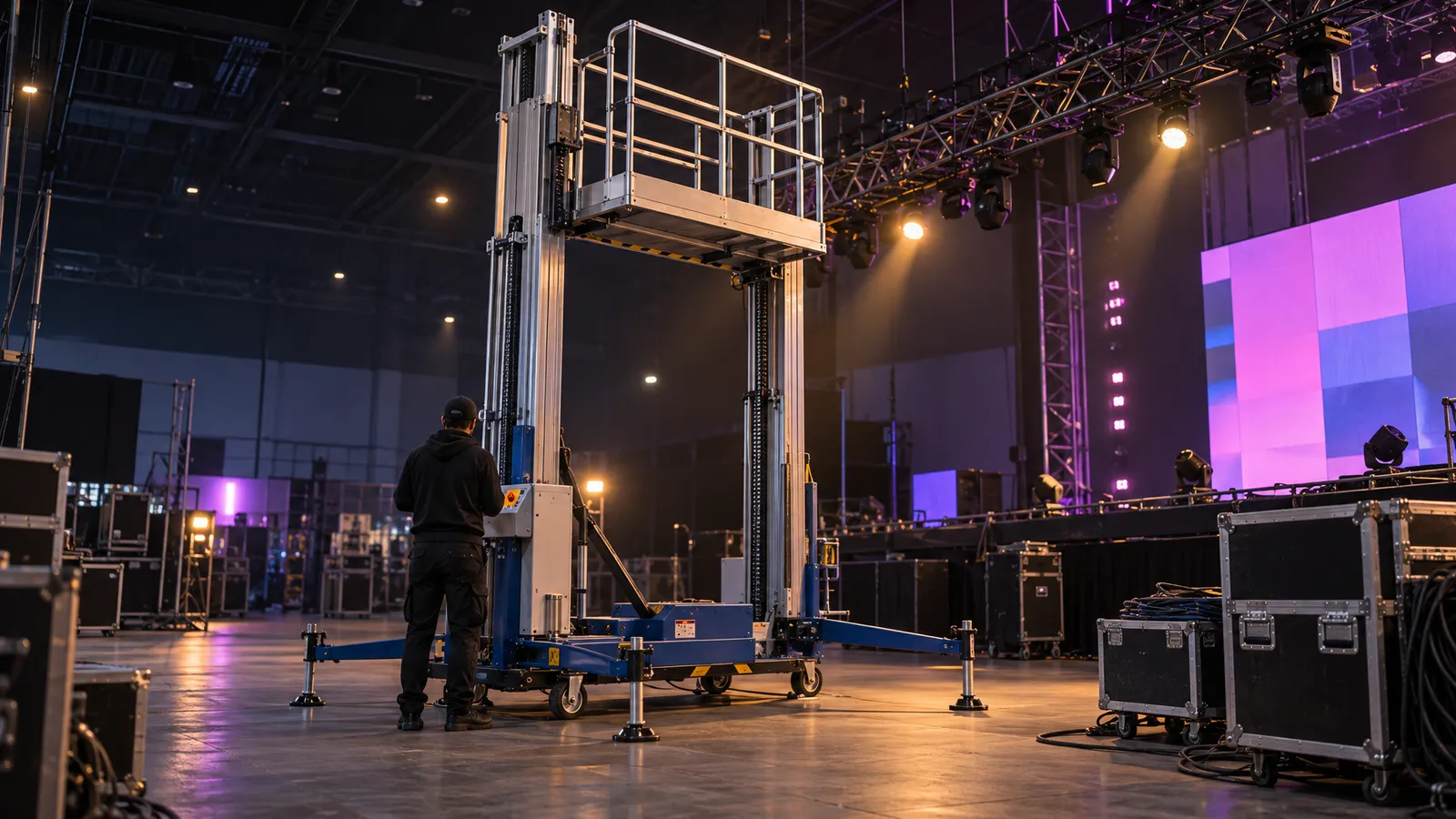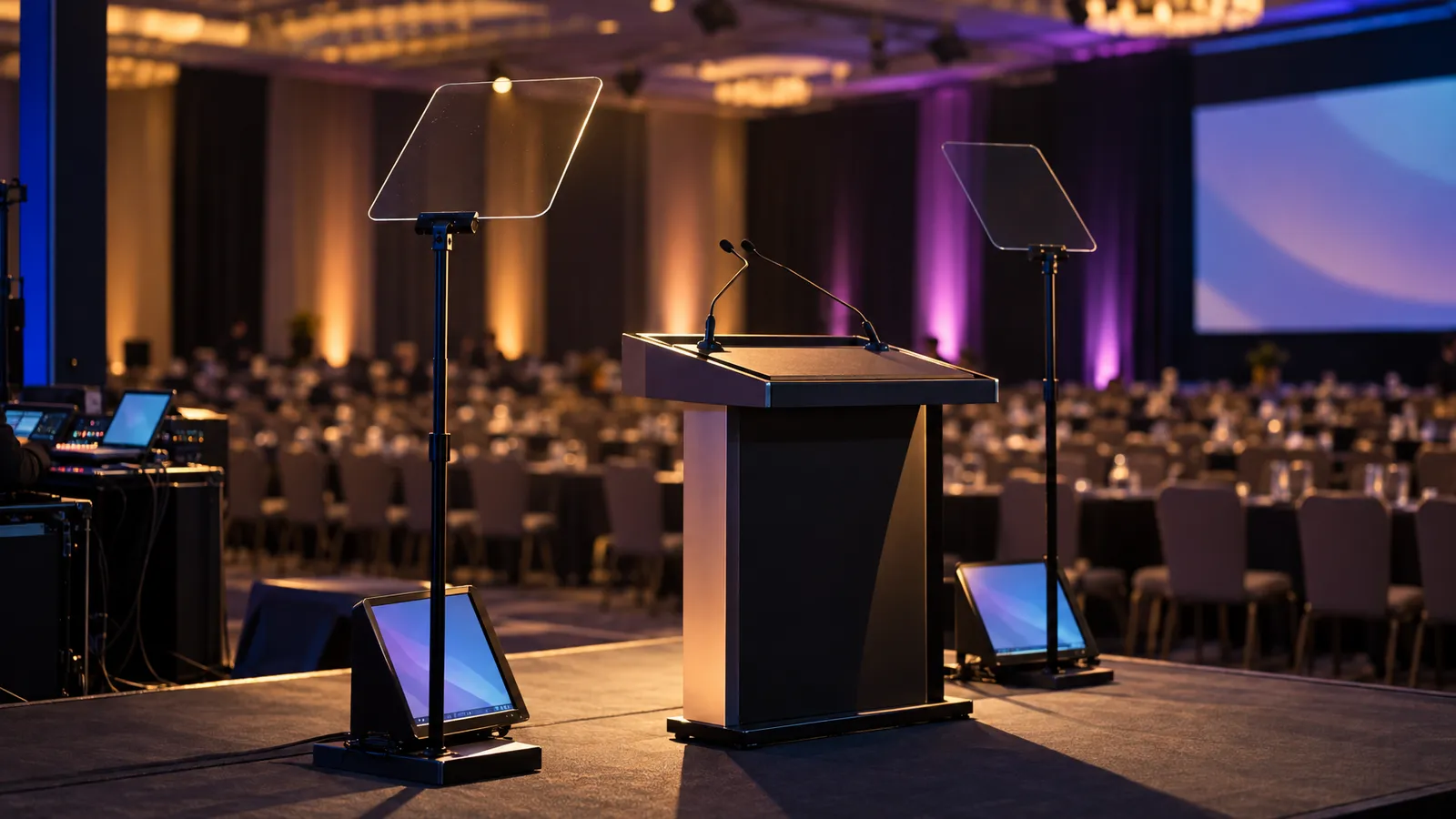
Why Event Planners Compare Orlando and Bay Area AV Markets
For a corporate event held in the San Francisco Bay Area, a local Bay Area AV vendor usually makes more sense than shipping gear from Orlando, because local delivery, on-site support and rehearsal access are simpler to arrange; compare full quotes before deciding. If you're planning a corporate event in the San Francisco Bay Area, you may have seen Orlando vendors pop up in your research. Orlando is one of the country's big convention towns: the Orange County Convention Center lists about 2 million square feet of exhibit space and hosts nearly 200 events a year with more than 1.5 million attendees, and a large AV rental industry has grown up around that. So should you ship equipment across the country, or work with a local Bay Area vendor?
The answer depends on your event type, timeline, and budget structure — and on what each quote actually includes. The real comparison is usually between a quote fulfilled from nearby and one that genuinely ships gear across the country. A vendor with a very large inventory may be used to multi-day expos; a supplier near your venue may be able to deliver on short notice, send technical support without a freight company in the loop, and already know the venue's loading rules. Neither is automatic: an out-of-market company may have a local office, a local partner or a crew that travels, and a local supplier may not have everything you need available for your date. Compare what each quote commits to.
This guide breaks down the logistics, cost structures, and vendor differences so you can make an informed decision. We'll cover shipping timelines, costs that don't show up in a day rate, technical support, and the scenarios where each option makes sense. Whether you're producing a 200-person product launch or a 2,000-person conference, understanding these trade-offs helps you compare quotes on the same basis.
Let's start with the most common question: when does it actually make financial sense to ship AV gear from Orlando to San Francisco?
Cost Comparison: Day Rates vs Total Cost
The day rate is the number vendors lead with, but it's only one line of the total. Before you compare markets, get every vendor's full delivered cost for your specific package, including everything below. Published per-panel or per-fixture rates vary widely by vendor and product, so treat any single "market rate" you read online with caution and compare real quotes instead.
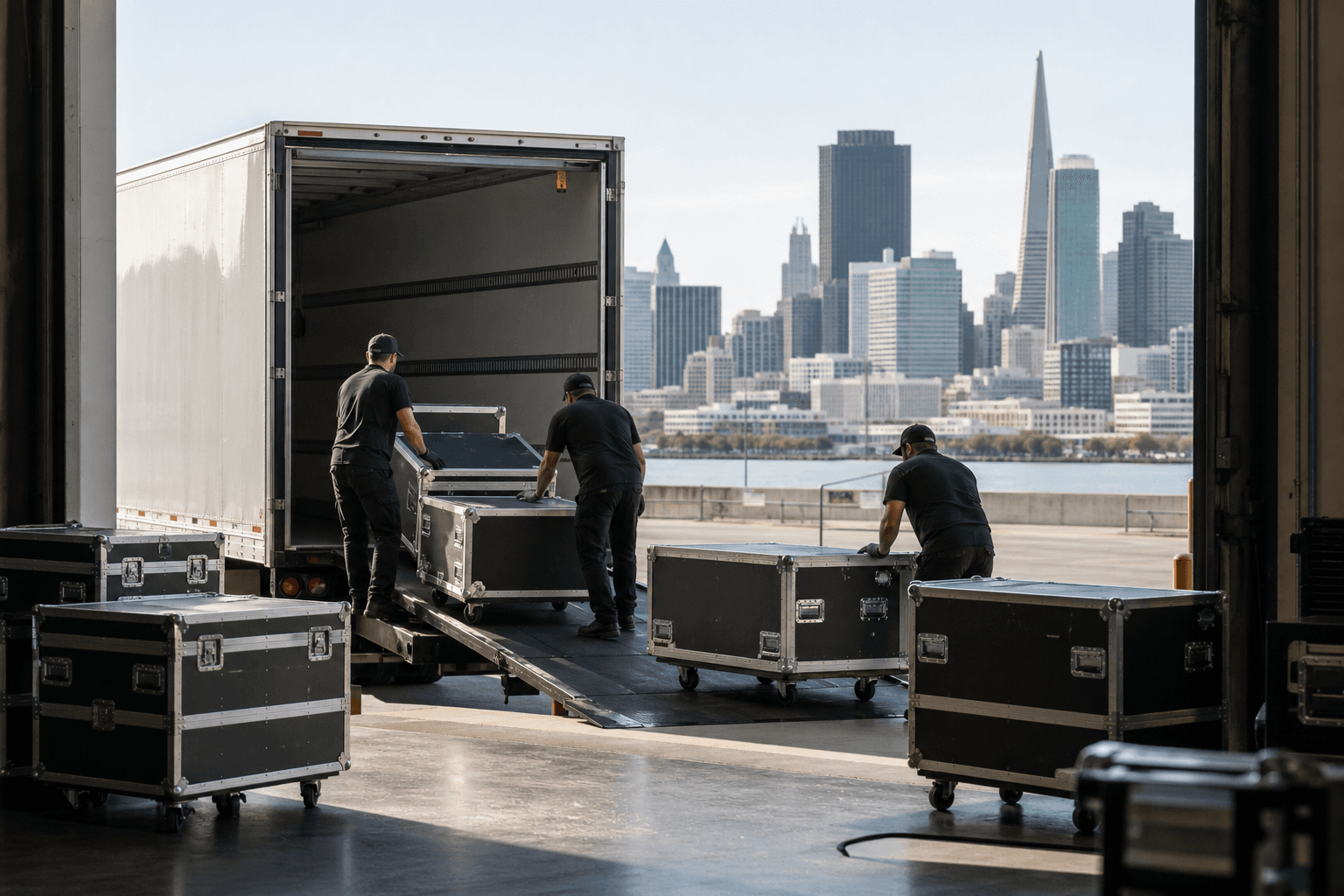
Here's where hidden costs change the equation. Shipping an LED wall, PA and lighting package across the country means freight in both directions, and rush freight costs more than standard. Road cases protect the gear but add weight and volume to the shipment.
Insurance is another line item that catches planners off guard. Ask the shipping vendor who carries the risk while the gear is in transit and on site, and what it costs. Our own terms put rented equipment in the client's care from delivery or pickup until return, strongly encourage event insurance, and offer an optional Equipment Protection Plan covering accidental damage (excluding negligence and theft). Compare that to what the remote vendor offers.
Then there's labor. If the gear ships from Orlando, ask the vendor how the event will be staffed: its own technicians traveling to the Bay Area (with flights, hotel and per diem on the quote, plus overtime if setup runs long), a local office or partner crew that already works with its equipment, or a local crew you hire yourself. Each has a different cost and a different level of familiarity with the equipment package, so compare the support plans in the quotes rather than assuming one.
A local vendor avoids long-haul freight and crew travel, but delivery, setup and technician time are still real costs. At VENEGEEST they are scoped and quoted to your event, so you can compare them against a remote vendor's freight and travel. For reference, here are some of our list prices per day:
- LED video wall: P1.9–3.9 LED Rental Screen, configurable 12–48 m², from $200
- PA speakers: Commercial PA Speaker, $200 each; Bluetooth Speaker System (controller, six speakers, two mics), $60
- Moving heads: Venegeest's 380W Beam Moving Head rents from $50 per fixture
- Cold spark machines: Venegeest's Cold Spark Machine rents from $35 per unit; the Rotating Cold Spark Machine is $90
- Displays: LED TV Display from $35 (43″) to $120 (120″); Wireless Screen Caster $60
Get the Orlando quote for the same list, add freight both ways, transit insurance, and crew travel, and compare the two totals.
Freight, transit insurance and crew travel are the costs a day-rate comparison leaves out.
Timeline and Logistics: Shipping vs Local Availability
Cross-country freight takes days, and faster service costs more. That sounds manageable until you factor in the coordination overhead. You're scheduling the pickup window with the Orlando vendor, tracking the shipment, coordinating with your San Francisco venue for its delivery window (venues may accept freight only at set times), and arranging for someone to receive and inspect the gear on-site.
If a road case arrives damaged or a panel isn't working, the fix depends on the vendor's support plan: a technician on site, a local partner, or phone support from across the country, with replacement parts possibly shipped too. Ask each vendor what happens if a critical component, such as a video processor, fails on site.
At VENEGEEST, same-week delivery is available across the Bay Area for most items, subject to availability. Our terms commit us to make every reasonable effort to provide a replacement if equipment malfunctions during your rental.
Timing matters most for events with tight schedules or last-minute changes. Corporate product launches can see agenda changes shortly before the event. If you suddenly need an additional confidence monitor or a second screen, a supplier near the venue may be able to add it to the delivery; our terms ask for order changes to be communicated at least five business days before the event, so if you need something added later than that, ask whether it can be accepted. Once gear is in transit from the other coast, adding to the shipment is harder, so ask a remote vendor how it handles late additions.
- Freight transit: ask the carrier for standard and expedited transit times, and book with a buffer before your load-in
- Expedited freight: costs more and still needs advance booking
- Bay Area local delivery: same-week delivery is available for most items; availability is confirmed for your date when you request a quote
- Venue delivery windows: ask each venue for its receiving hours and paperwork, and give them to the carrier
- Replacement parts: ask the remote vendor how fast a replacement reaches San Francisco, and what happens if it doesn't arrive in time
Technical Support and Venue Familiarity
Every venue has its own rules: certificate of insurance requirements, loading dock registration, elevator and door sizes, and quiet hours that affect sound checks. A vendor who regularly works in the area may already know those questions. If your vendor is shipping from Florida without anyone on the ground, you may become the liaison between the Orlando AV company and the San Francisco venue, fielding questions about loading dock hours, power distribution, and rigging requirements. That's manageable for experienced planners, but it adds coordination time and the risk of missing a venue-specific requirement.
On-site technical support is the other big question. With VENEGEEST, technician services are scoped and quoted to your event. With Orlando-shipped gear, support might come from the vendor's own traveling crew, a local branch or partner that knows its equipment, a local freelancer, or phone support — ask each vendor which, and compare what the support plans in the quotes actually cover.
Multi-day events amplify this. A three-day conference may need someone on site each morning for checks, available during sessions for adjustments, and handling breakdown. If that person travels in, the quote should include their travel, hotel and per diem for the full event.
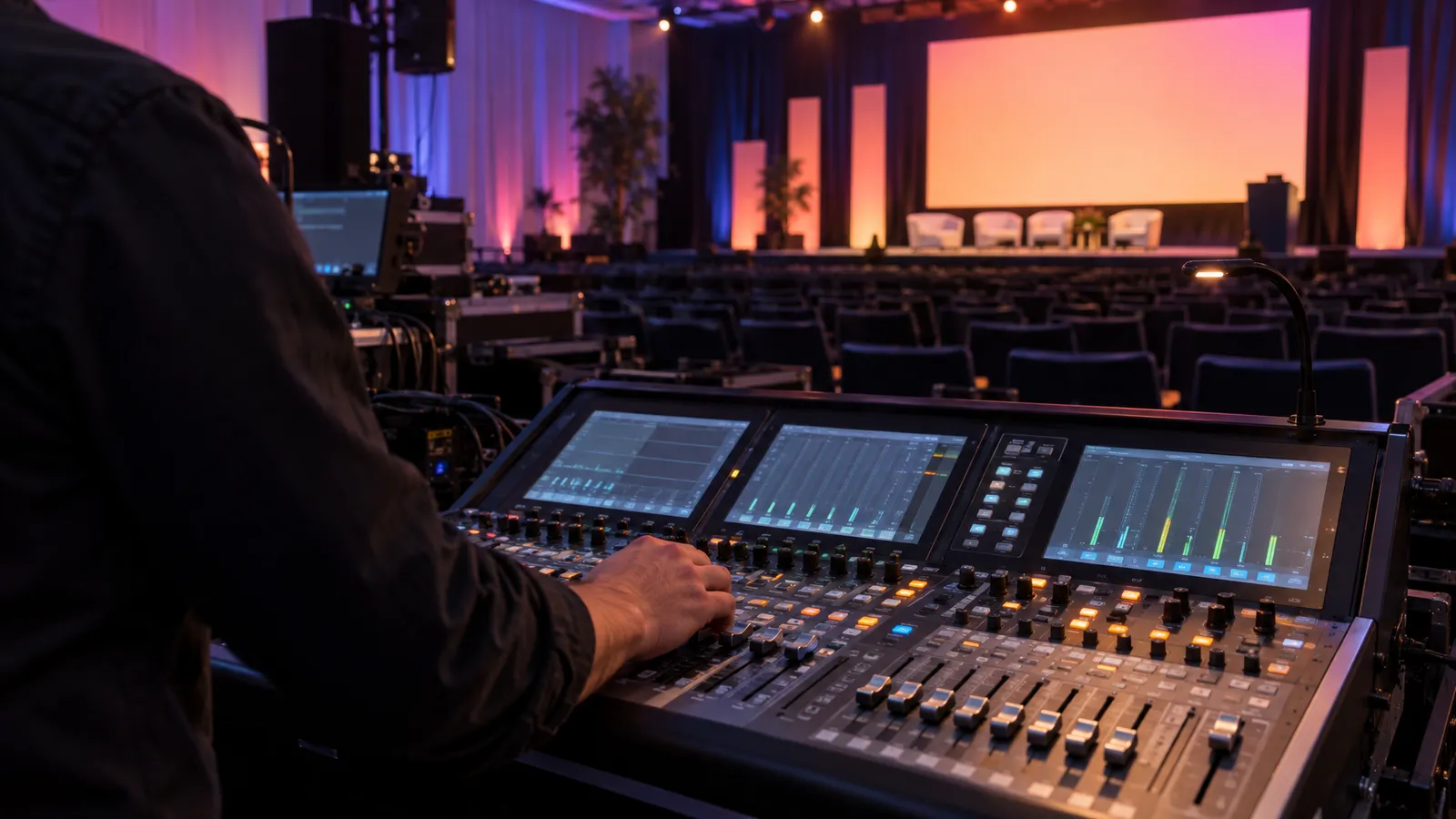
Who will be on site during the event is worth settling in every quote, local or remote. Photo: Frankie Cordoba / Unsplash.
When Orlando Makes Sense: Large-Scale Multi-Day Events
An out-of-market vendor can make sense for specific event profiles. If you're producing a multi-day conference with a very large LED wall, dozens of wireless mics, a distributed audio system and full stage lighting, and an out-of-market vendor quotes lower day rates, those savings can offset freight and coordination costs; at that scale, a vendor with deep inventory may also be the simplest single source. Whether the rates are actually lower is something only the quotes can show.
The math works better for multi-day events because the fixed costs (freight, insurance, tech travel) are spread across more rental days. For a one-day event, the same freight bill hits your budget in full.
It can also make sense when you need specialized gear that no local vendor can provide for your date; then you're not gaining the local availability advantage for that piece. At VENEGEEST, equipment beyond the listed catalog is available on request, subject to availability, with a custom quote, so ask before assuming an item has to ship in.
Finally, if you're already working with an Orlando-based production company that's coordinating multiple vendors (staging, rigging, décor), consolidating AV through that same company simplifies logistics. You're not managing separate contracts across time zones.
- Multi-day conferences: fixed shipping and travel costs spread across more rental days
- Very large LED walls: if the quoted day rates are lower, the difference adds up at scale, and one vendor may hold more panels than a single local supplier
- Specialized or rare gear: items no local vendor can provide for your date
- Coordinated multi-vendor production: if staging, rigging and décor already come from the same company, consolidating AV simplifies contracts
- Budget ceiling constraints: when a remote quote's total, including freight and coordination overhead, still comes in lower
When Bay Area Local Vendors Make More Sense
For many corporate events in the Bay Area (product launches, one-day conferences, award ceremonies, brand activations) a supplier near the venue can be the simpler choice. The clearest cases are short events and tight timelines, where long-haul freight and crew travel weigh most on the total and the schedule. On-site support matters here too, but it can come from either kind of vendor — compare what each quote commits to.
Venue knowledge matters most when your venue has strict or unusual requirements. Outdoor events at sites like the Presidio or Fort Mason bring generators, weather protection and permit rules into play, so ask any vendor how it handles them.
Budget predictability is another advantage. A local quote can itemize equipment, delivery, setup, technician time and teardown in one document, without estimating long-haul freight, transit insurance, or crew travel. For corporate finance teams that need a firm number months out, fewer variables help.
The last scenario: events where failure isn't an option. If you're live-streaming a product launch and your CEO is on stage, you want a technician in the room. Any vendor can provide that if its quote includes on-site staff, whether local, traveling or through a local partner; make sure the quote you choose does.
- Short events: freight and coordination costs don't spread over many days, so any day-rate difference has less room to offset them
- Tight timelines: same-week availability, where a supplier offers it, vs cross-country freight lead time
- Mission-critical live events: product launches, earnings calls, live broadcasts where on-site support matters — confirm it in the quote
- Outdoor or non-traditional venues: power, weather and permit questions to raise with any vendor
- Budget predictability: one itemized local quote vs estimating freight, insurance and travel
- Last-minute changes likely: agenda shifts that need added gear before the event
For a closer look at how local rental pricing is built, see our AV rental cost guide for San Francisco.
FAQ: Orlando vs Bay Area event AV
How much does it cost to ship AV equipment from Orlando to San Francisco?
It depends on the weight and volume of the package, the transit speed, and whether you need liftgate or inside delivery, so get a freight quote for your exact package in both directions. Add transit insurance and any crew travel to get the real total. For Bay Area AV rentals with local delivery, setup, and pickup scoped and quoted to your event, see the VENEGEEST event AV catalog or call +1-415-890-5555.
Can I hire local Bay Area AV techs to set up Orlando-shipped equipment?
Yes, and it is one of several ways to staff the event. Different LED processors, wireless systems and lighting control setups have their own quirks, so a local crew's familiarity with the vendor's specific equipment matters; ask the vendor whether it has a local partner or branch that already works with its gear, and how troubleshooting will work if something breaks. The alternative is flying the vendor's own techs in and paying their flights, hotel and per diem.
What happens if Orlando-shipped AV gear arrives damaged or doesn't work?
Before you sign, ask the vendor what happens if freight-damaged gear arrives at your venue: whether it replaces equipment, from where and how fast, whether it has a local backup, and who files the freight claim, documents the damage and arranges the return. A replacement that has to ship in is a delay you may not have if the damage is found the day before your event. If a critical component (video processor, main speakers, lighting console) fails and no replacement can be found in time, the event is affected. Some planners hedge by lining up a local backup for mission-critical gear, which eats into the savings.
Do Bay Area venues have restrictions on Orlando-shipped AV equipment?
Each venue sets its own requirements for outside vendors and for receiving equipment, and some are easy for out-of-town vendors to miss, such as certificates of insurance naming the venue, advance registration for the loading dock, receiving hours, and size limits for carts and cases in elevators. Ask each venue for its vendor and receiving requirements in writing and pass them to whoever is shipping and installing the gear.
How far in advance do I need to book Orlando AV for a Bay Area event?
Build your timeline backward from the venue's receiving window: freight transit, a buffer for delays, and time to replace anything damaged in transit. Booking late can mean paying for expedited freight. Locally, same-week delivery is available for most items, and availability is confirmed for your date when you request a quote.