For most houses of worship, renting AV makes sense when a service outgrows the permanent system: a larger crowd at Easter or Christmas, an outdoor service, a livestream that needs better light on the speaker, or a conference with breakout rooms. The decisions come down to screen size and placement, lighting for the platform and the camera, and sound coverage for the room — each worked out from your own room, your content and a test, not from a rule of thumb. This guide walks through each, with the questions to answer before you book.
It is written for church AV teams, ministry coordinators and volunteers in the Bay Area planning anything from a fellowship-hall event to a large special service.
Congregation Screens: How Big and Where
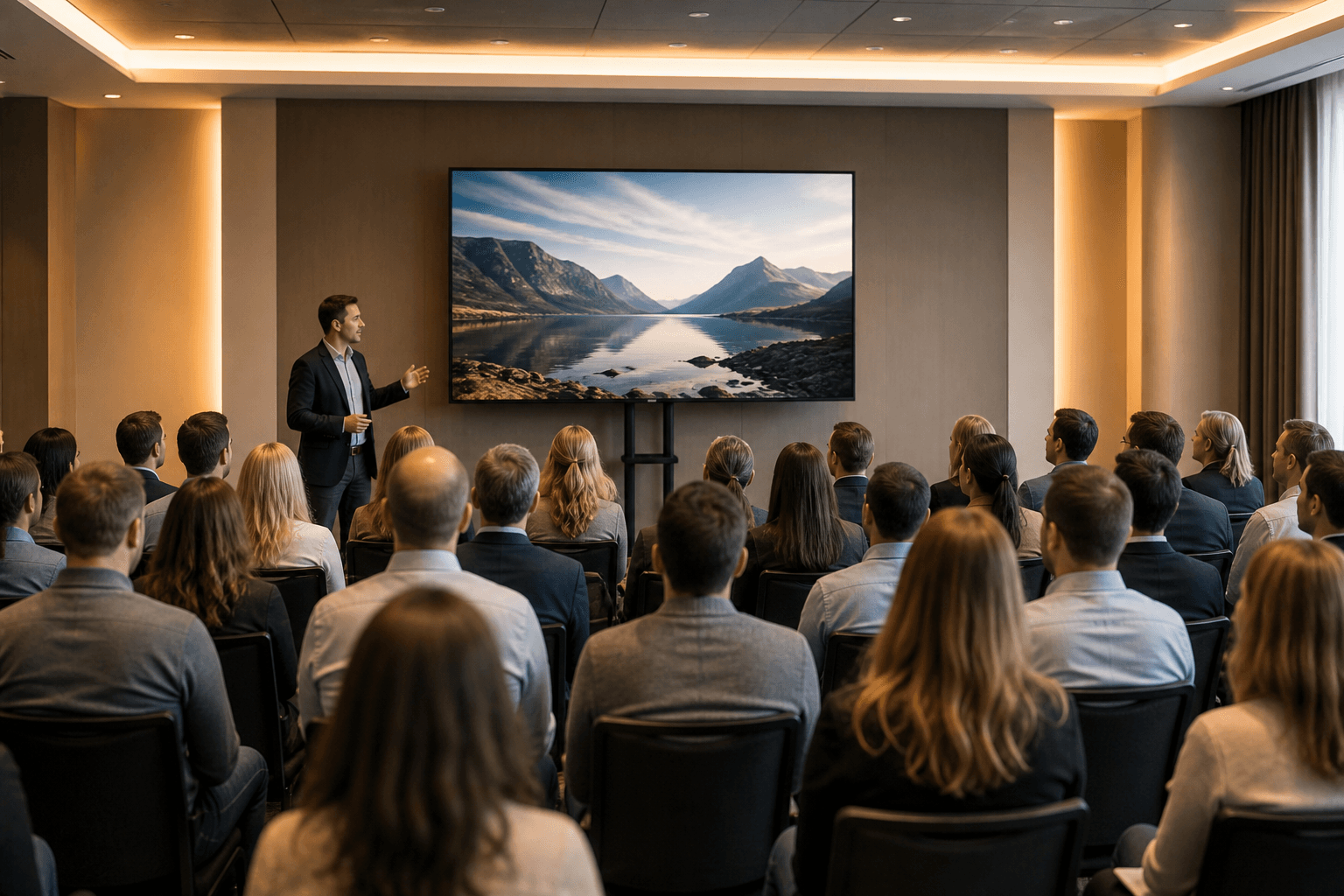
The right screen size depends on the farthest seat and on what you show on it. AVIXA's display image size standard (DISCAS) works from exactly those inputs: the distance of the farthest viewer and the height of the smallest element people need to read, with different factors for content that just needs to be recognized and content that needs to be read closely. Song lyrics in large type are more forgiving than sermon notes or scripture references in smaller text. AVIXA publishes a calculator for this; a quick check with it, using your own room dimensions and your real slides, is a better guide than any rule based on room depth alone.
Whether you need side screens as well as a center screen depends on your sightlines — balconies, columns, the height of the platform and how far people in the front rows have to look up. Walk the room, sit in the front row, the back row and the balcony, and check what each seat can see before deciding.
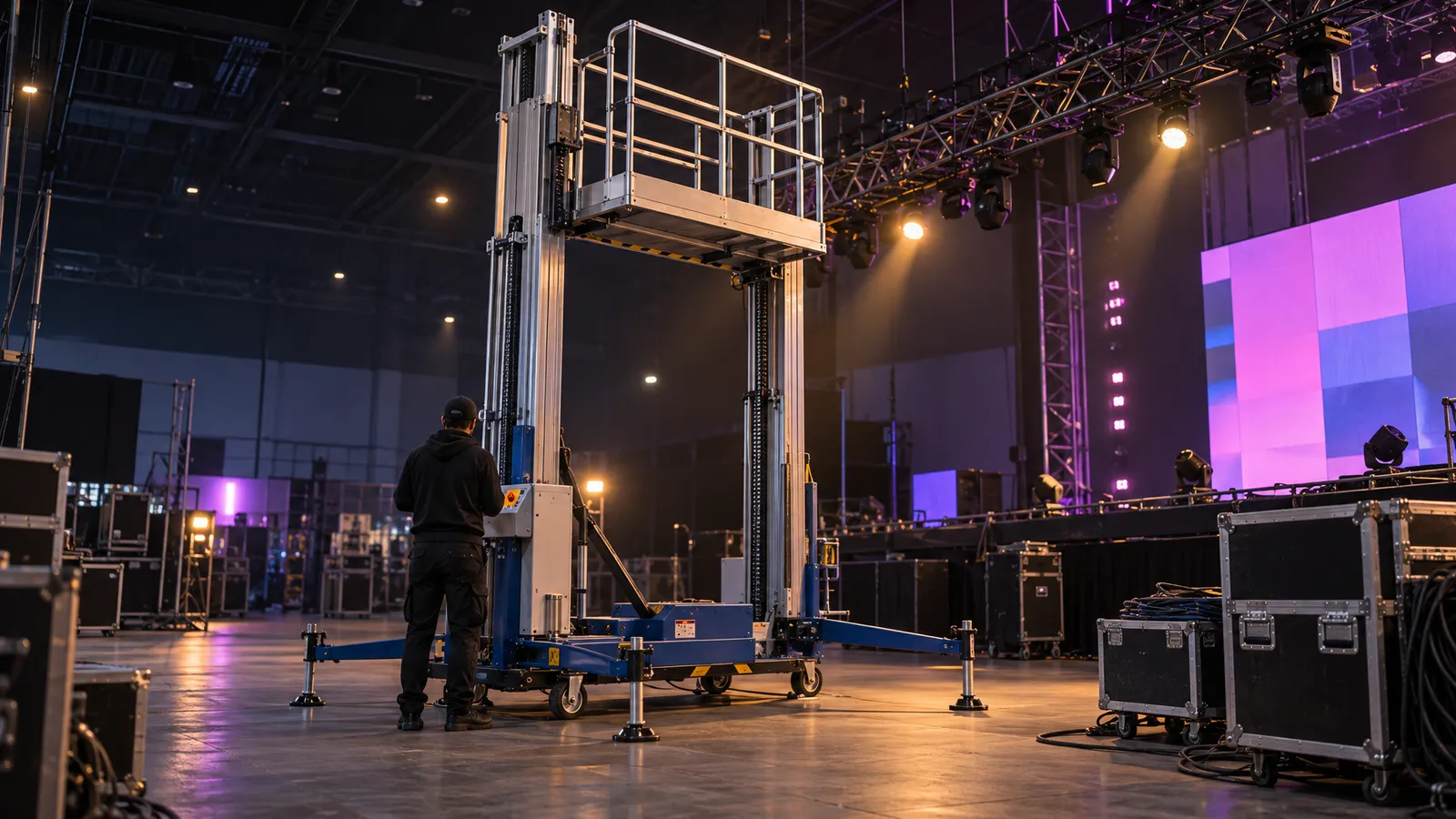
LED screens emit their own light, while projectors reflect light off a screen, so ambient light affects them differently. Even so, whether a particular screen stays readable in your room depends on its brightness and contrast, the daylight and stage lighting falling on it, and the content — confirm the screen's specifications and, if you can, see it in your room at the time of day the service runs. A P1.9–3.9 LED Rental Screen is configurable from 12 m² to 48 m². For an outdoor sunrise service, confirm the screen's weather rating and brightness for your site before you plan around it. For smaller fellowship halls or youth spaces, an LED TV Display (43″ to 120″; the floor stand fits 32″ to 85″ screens) on an adjustable TV floor stand can show lyrics without rigging anything overhead.
- Size screens from the farthest seat and the smallest text you will show; test with your own slides
- Decide on side screens from a sightline walk, including front rows and any balcony
- Check a screen's brightness and contrast against the actual light in your room
- Portable Foldable LED Ad Screen (2m²–12m², on casters) for lobby announcements, welcome signage or breakout rooms
- For long video runs, choose extenders rated for the distance and resolution you need, and test the signal before the service
Lighting the Speaker for the Room and the Livestream
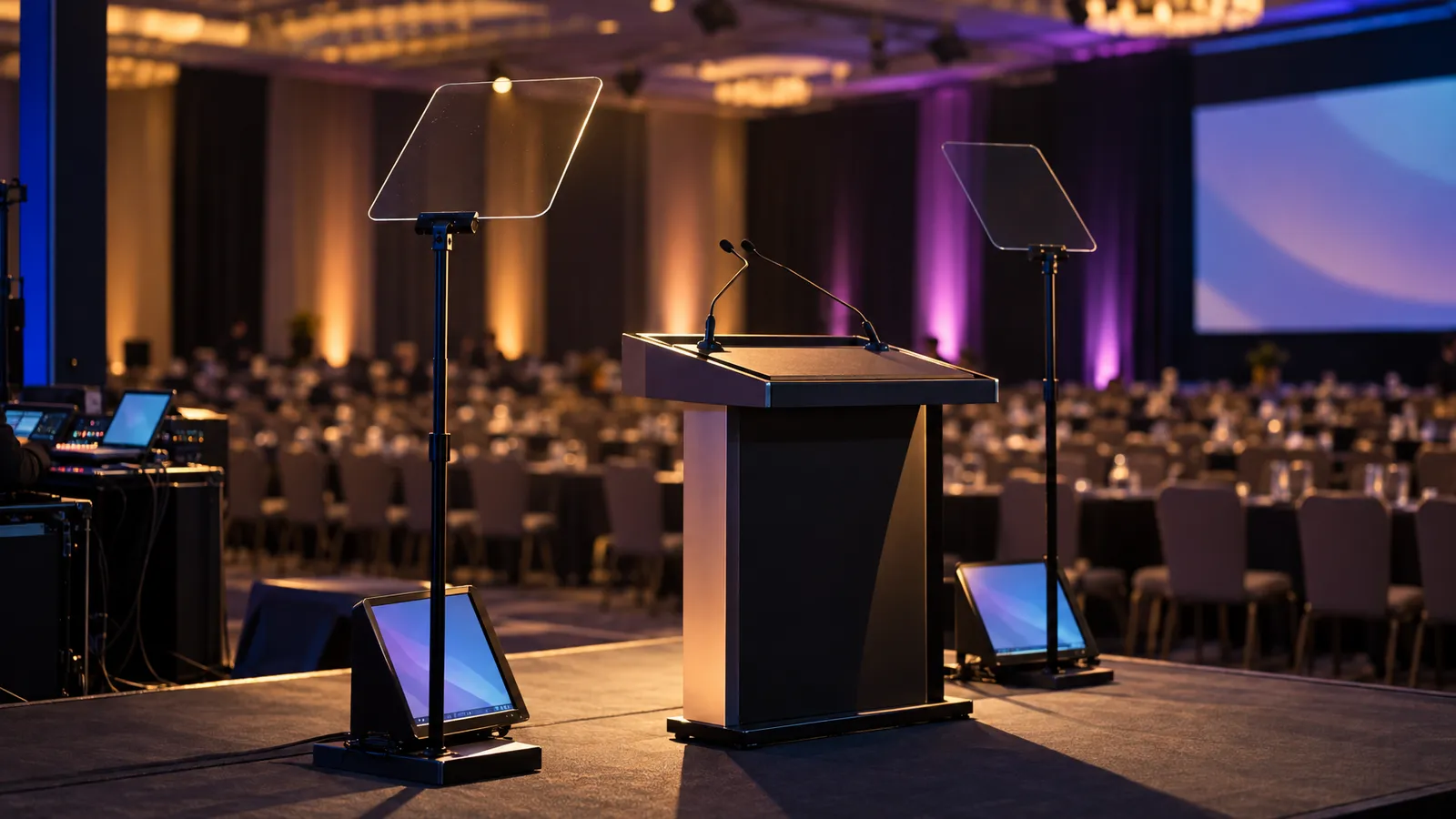
Overhead room lighting can leave shadows under the eyes that are more noticeable on camera than in the room. One common option for livestreamed services is three-point lighting: a key light from one side, a fill light to soften the shadows it leaves, and a back or edge light to separate the speaker from the background. It is an option, not a requirement; a single well-placed front light may be enough for a simple stream. A COB Front Light on a stand in front of the lectern can provide the front light; check its color temperature and color rendering against your camera settings during rehearsal so skin tones look right on the stream.
Special services often add theatrical cues — slow fades during prayer, color washes during worship sets, a spotlight for a soloist or testimony. Full-Color LED Par Lights (18-LED RGBW) provide DMX-controlled color wash across the platform. A Followspot Light (330W–440W, manual) can follow soloists and guest speakers from a balcony or rear position. A Haze Machine makes light beams visible in the air. Haze can set off smoke detection in any building, so get approval from the building's facilities staff — and the fire authority where required — before planning it in, and test the level during rehearsal.
- Three-point lighting (key, fill, back) is one option for livestream clarity; adjust while watching the camera image
- Keep color temperature consistent on the speaker so the camera's white balance holds through the service
- DMX-controlled RGBW wash fixtures for color cues during worship sets and prayer transitions
- Manual followspot from a balcony or rear position for soloists and guest speakers
- Haze only with facilities (and, where required, fire-authority) approval, tested in rehearsal
- Leave house lighting, emergency lighting and exit lighting under the control of the venue's qualified staff
How many front lights do I need for a 30-foot-wide platform?
It depends on each fixture's beam angle and throw distance. A common starting point is one light from each side, each aimed across the platform so their coverage overlaps in the middle; then walk the platform during setup and add a light if the edges or the center fall off. Put fixtures only on stands rated for their weight, ballasted and positioned as the stand's instructions require, and keep them out of walkways.
Sound for a Fellowship Hall vs. a Main Sanctuary
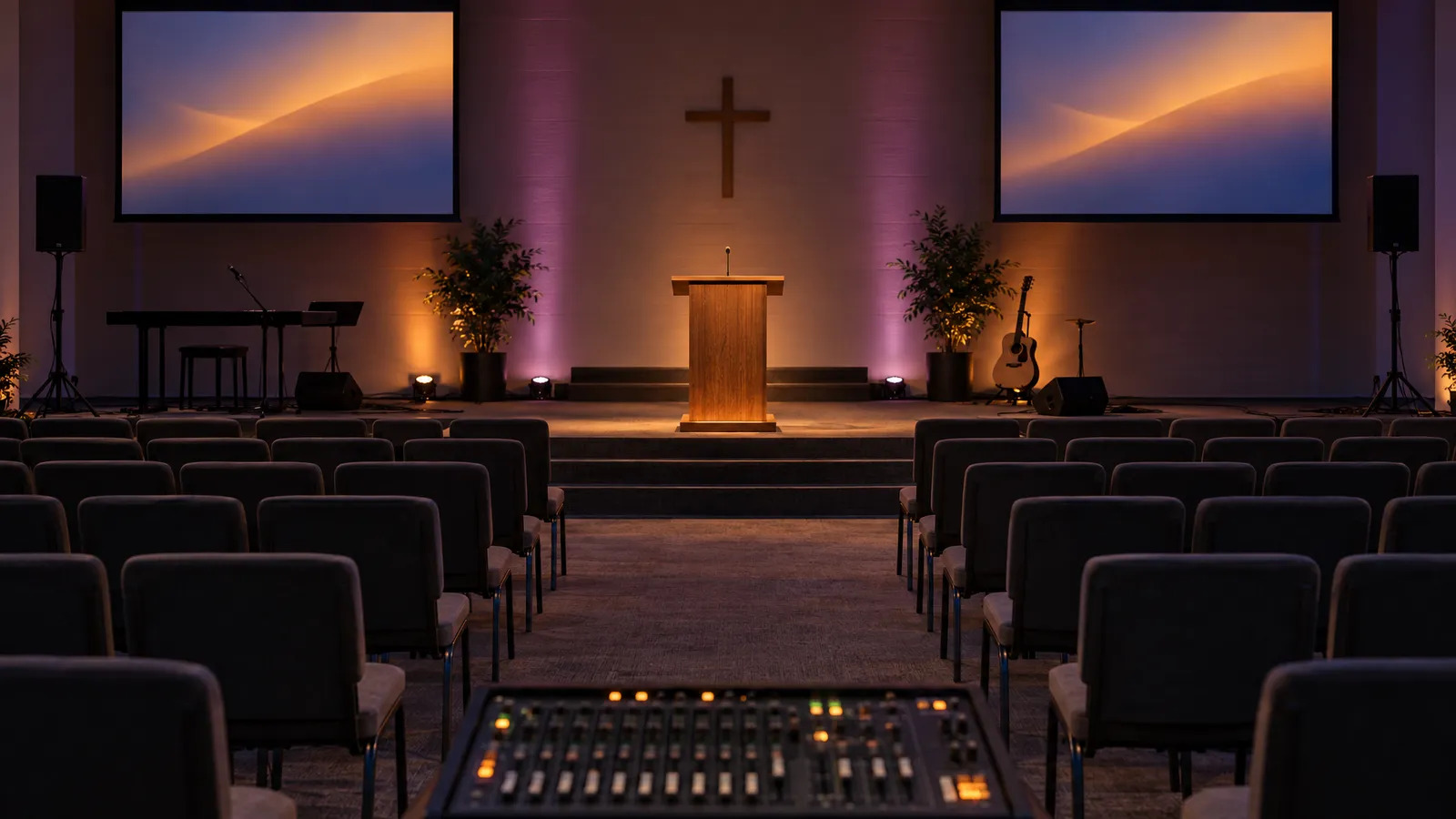
A small fellowship hall and a large, deep sanctuary need different approaches, and the right system for either depends on the room's size and shape, its acoustics, how loud the program is and how many people are there. In a deep room, one approach is to add speakers partway back — for example Commercial PA Speakers ($200 per day each) — with delay set on the rear speakers so their sound lines up with the sound from the front. For more on sizing speakers, see our sound system rental guide. Ask for a system designed for your room, then walk the room during sound check and listen from the front, the back, the sides and any balcony.
For youth events or breakout sessions where portability matters more than output, the Bluetooth Speaker System ($60 per day) comes with one controller, six speakers and two mics; check at setup that it covers your room for background music, announcements or small-group teaching.
Wireless microphones must run on frequencies that are legal and free of interference where you are using them. VENEGEEST can supply wireless microphone systems on request, subject to availability, with a quote. Ask whoever supplies your wireless systems to coordinate the frequencies for your venue and equipment, and scan and test them at the venue before the service. For handheld microphones, handling matters: Shure explains that feedback happens when amplified sound "is then picked up again by the same microphone or another open microphone in the system and re-amplified," advises keeping microphones and loudspeakers "far away from each other, as best managed within the environment," and notes that "covering or 'cupping' the microphone grille can alter that pickup pattern, reducing the microphone's ability to reject unwanted sound." Show speakers how to hold the microphone, keep gain sensible, and keep microphones away from the front of the speakers.
- Small halls: choose speakers for the room's size and program, and check coverage at sound check
- Large or deep sanctuaries: consider delayed speakers further back, designed for the room
- Outdoor services: plan for the distance to the back row and the background noise, and test levels on site
- Wireless mics: coordinate legal, open frequencies for your venue and equipment, then scan and test on site
- Handheld mics: coach speakers not to cup the grille, and keep microphones away from loudspeakers
Special Services: Easter, Christmas and Outdoor Events
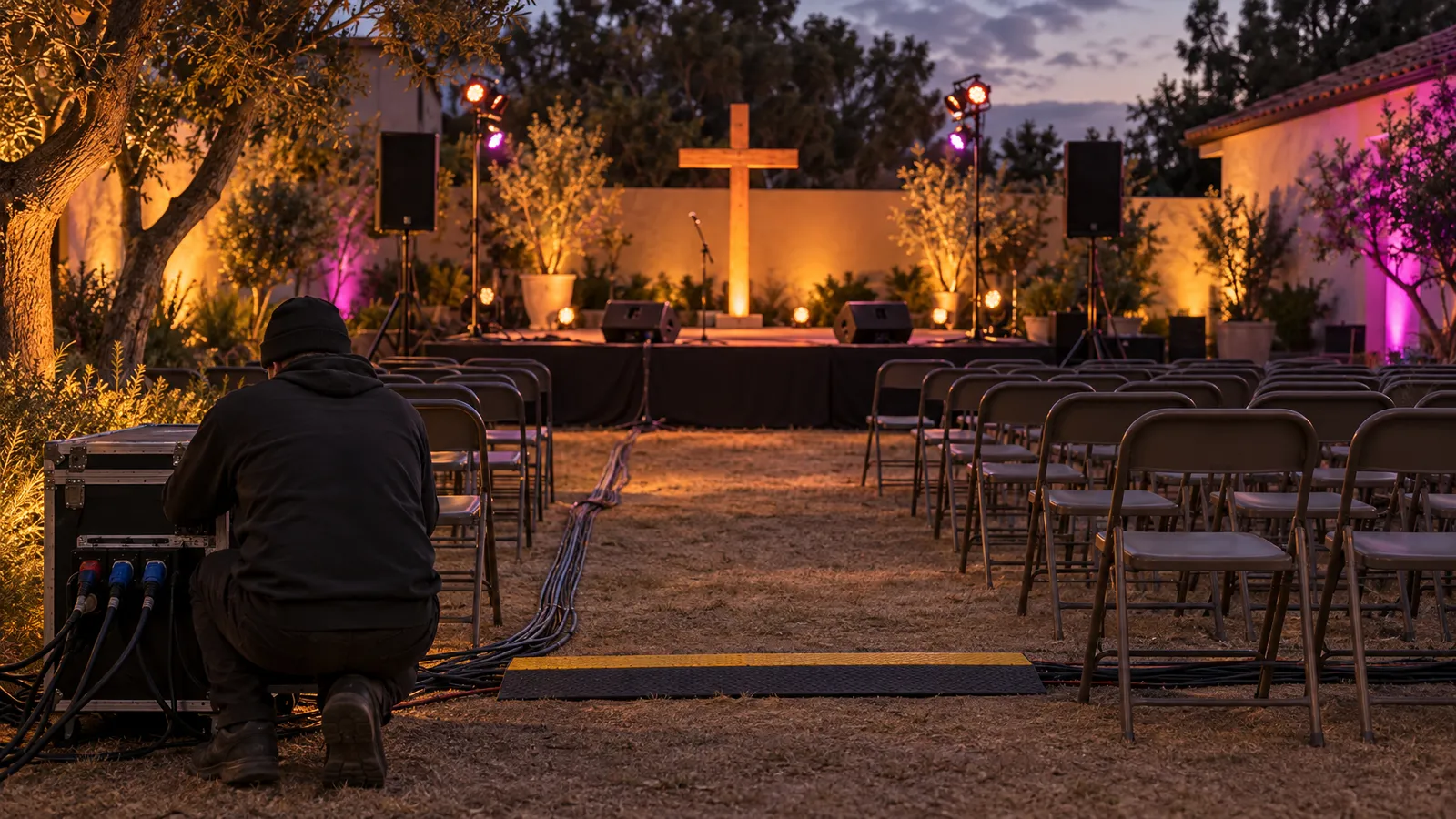
An Easter sunrise service in a parking lot needs power, screens that are readable in morning light, sound that reaches the back, and possibly lighting where there is no outlet. Plan power first — a generator or a safe cable run — and for lighting where there is no outlet, wireless battery uplights are listed in the catalog with a 12–15 hour battery, wireless DMX and an IP65 rating; they are quoted on request. Christmas productions may add atmospheric haze, a followspot for soloists and headset microphones for performers. Outdoor baptisms and other services near water raise their own electrical and safety questions; plan them with the venue and qualified electricians, and keep power and cabling clear of the water.
Budgets scale with the production, so build them from item day rates. From our catalog: Full-Color LED Par Lights are $25 per day, the Followspot Light $80, the Haze Machine $25, Commercial PA Speakers $200 each, and LED TV Displays $35 to $120 depending on size. Delivery, setup, technician services and overtime are scoped and quoted to your event, a daily rate covers 24 hours from delivery or pickup, and rentals of 5 or more consecutive days get a discounted weekly rate.
- Outdoor services: plan power (generator or a safe cable run) before anything else
- Christmas productions: haze with facilities approval, followspot for soloists, microphones for performers
- Services near water: plan electrical safety with the venue and qualified electricians
- Rental budgets: built from item day rates plus quoted delivery, setup and technician time
- Booking: availability is confirmed for your date when you request a quote
- Operator time: quoted per event for lighting and video technicians when a production needs more than your volunteers can run
FAQ: House of Worship AV Rentals
How far in advance should we book rental gear for a special service?
As soon as the date and the plan are firm. As a planning suggestion, allow several weeks for Easter, Christmas and other large services so there is time to confirm equipment, do a site visit and rehearse. Availability is confirmed for your date when you request a quote. Same-week delivery is available across the Bay Area for most items, so smaller services and youth events can book closer in — but confirm the delivery window for a Sunday-morning service when you book. Under our terms, changes to an order need to reach us at least 5 business days before the event.
What's the difference between a projector and an LED screen for sanctuary use?
A projector reflects light off a screen, so room light falling on the screen reduces contrast; an LED screen emits its own light. Which works better in your sanctuary depends on the specific products' brightness and contrast, the light in the room during the service and your content, so compare specifications and, if you can, see the option in your room. Projectors are available on request, subject to availability — contact us for a quote; the listed LED options are the configurable P1.9–3.9 LED Rental Screen (12m² to 48m², from $200 per day) and LED TV Displays from $35 to $120 per day.
Do we need a lighting operator for a one-day conference?
If your volunteer team can program cues in advance and run them reliably, you may not. If the event needs live followspot tracking, real-time color changes during worship sets, or coordinated lighting-and-video cues, ask for operator time in the quote; technician services are scoped and quoted to your event. Rehearsal time helps either way — an operator or volunteer who walks the venue beforehand can program cues ahead of time and spend the event day on adjustments instead of setup.
What speaker power do we need for an outdoor parking-lot service?
It depends on the crowd, the distance to the back row and the background noise: a service beside a busy road needs more headroom than one on a quiet street. Plan the system for the farthest listener, test sound levels at the farthest seating position during setup, and confirm your city's noise rules for amplified sound. If there is no suitable power nearby, battery-powered speakers may be one option once you have confirmed their output and runtime cover the service; otherwise plan a generator or a safe cable run.
Can we use our in-house sound system for a 500-person special service?
Possibly. Assess it before deciding: does it cover every seat, including any overflow or balcony areas, does it have enough headroom for the loudest part of the program without distorting, and how does the room sound when full? For a livestream, the stream may use a separate mix from the room, so check that too. If you find gaps in coverage or headroom, additional speakers can be added and fed from your existing mixer so volunteers keep familiar controls; set them up and test them at sound check.