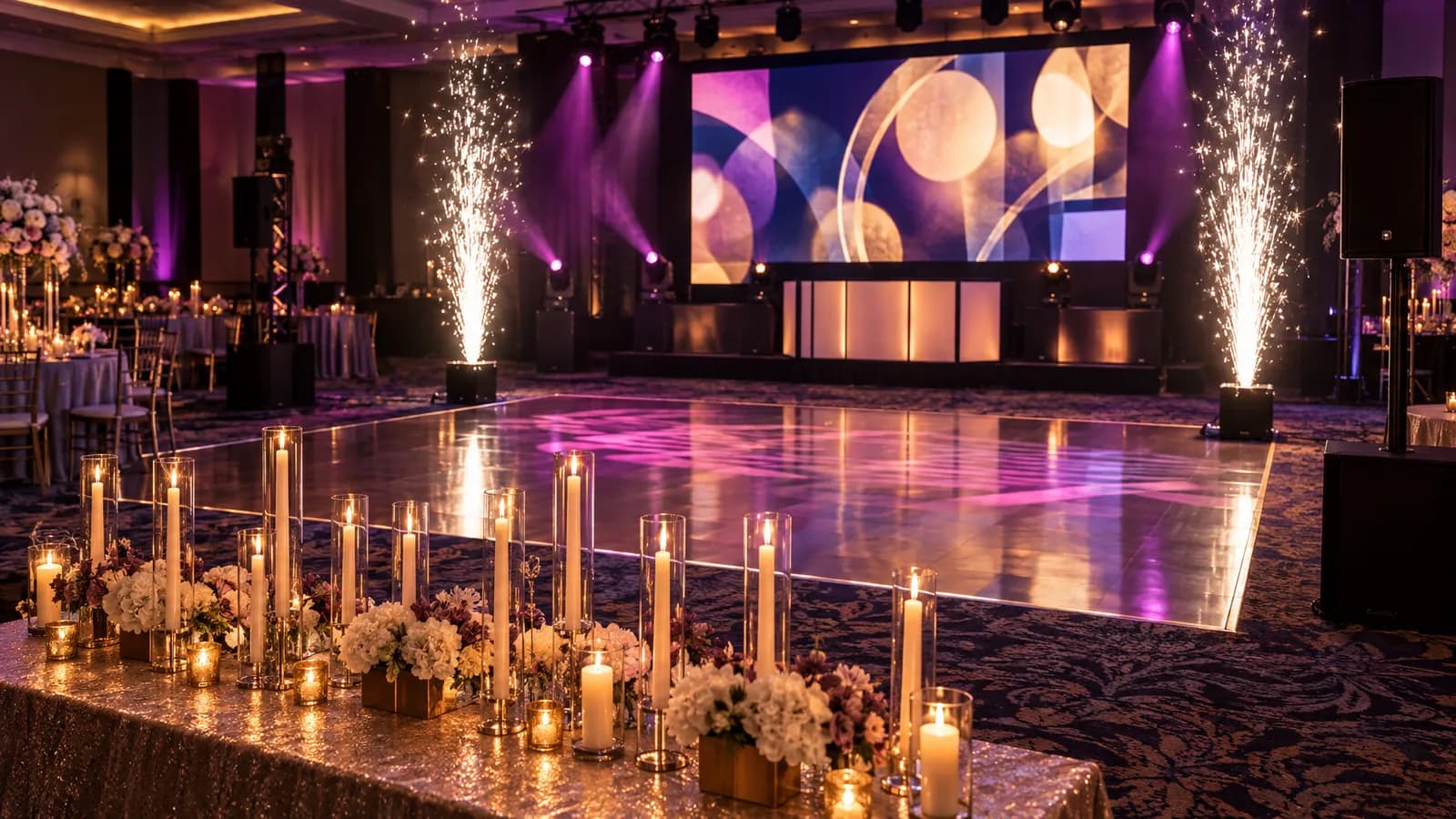
Bar and Bat Mitzvah celebrations in the Bay Area range from intimate gatherings at a community center to large receptions in a synagogue social hall or hotel ballroom. Whether you're working with a Mitzvah planner or coordinating directly with the venue, the production checklist breaks into four zones: the ceremony presentation, the candle-lighting moment, the dance floor energy shift, and the teen entertainment. If the program moves from a quiet candle-lighting slideshow to the hora and a teen dance set, the lighting has to handle both moods, so plan it around the family's own run of show. This checklist walks through the gear decisions to raise with synagogues, hotel ballrooms and private event spaces across the Peninsula and San Francisco.
Ceremony Presentation and Slideshow Display
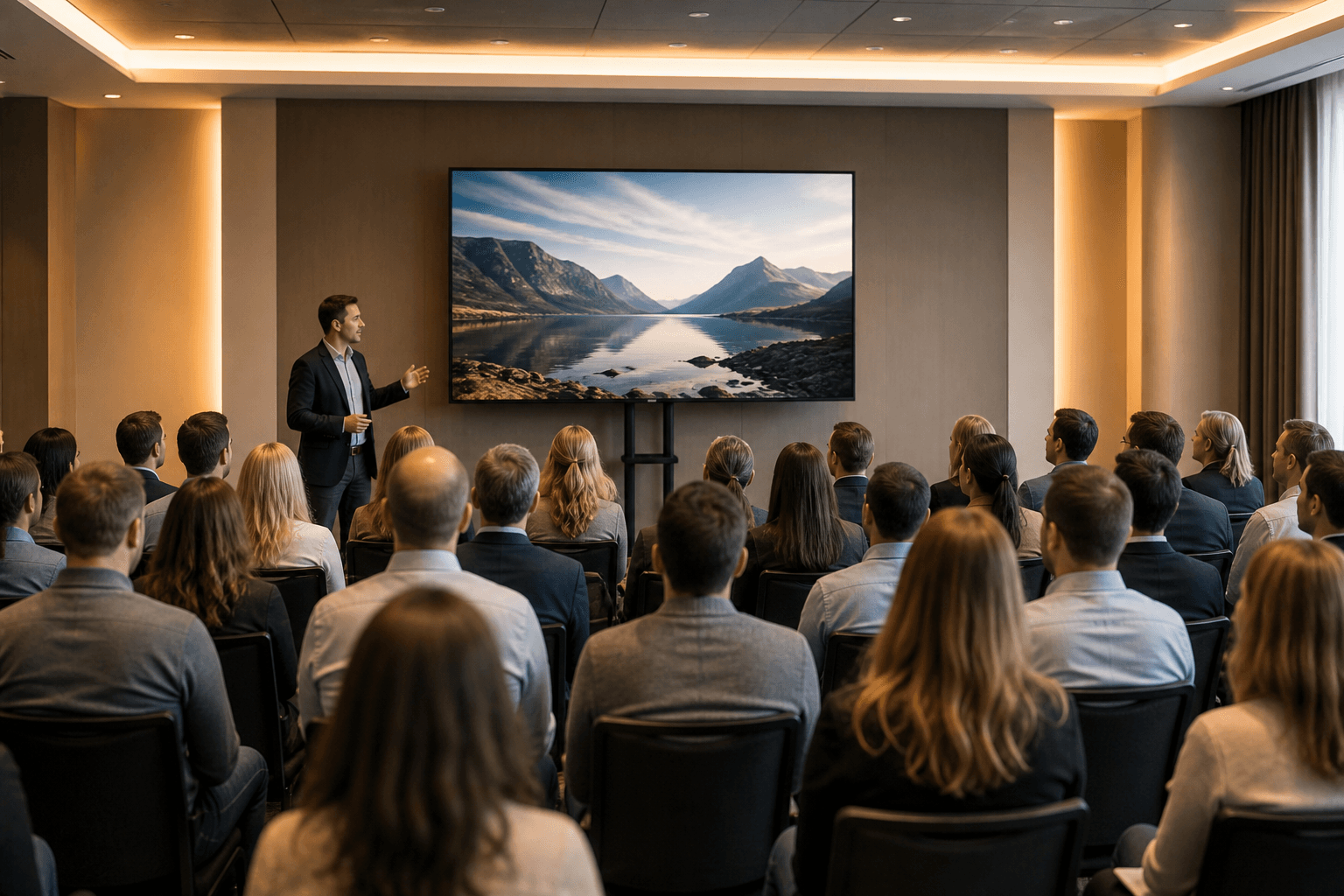
The ceremony often includes a montage or family slideshow projected during the candle-lighting or displayed on loop during cocktail hour. In a sanctuary you may be working with lighting that washes out a projection. An LED TV Display in the 65–85-inch range ($55–$95 per day) is a common size range for a room like this, but how well it reads depends on the room lighting and viewing distance, so check it in the room when you quote. If the venue allows freestanding displays, position the screen stage-left of the bimah so the Mitzvah child and family remain the visual focus while guests can glance at the slideshow without turning their backs to the action.
For hotel ballroom receptions, a dual-screen setup places one display near the entry for cocktail-hour looping content and a second screen beside the dance floor for the candle-lighting. Confirm HDMI or wireless casting compatibility (a Wireless Screen Caster is $60 per day); ask the family or planner early what format the slideshow will arrive in and when, and test it on the actual display. Audio sync matters if the montage includes voiceover or music—route the display audio through the house PA so the soundtrack reaches the back rows.
- 65–85-inch LED display for ambient-lit ballrooms and sanctuaries, with brightness checked in the room
- Freestanding or truss-mounted bracket to position the screen at sightline height for seated guests
- HDMI and wireless casting inputs to accommodate last-minute content handoff from the family or planner
- Dedicated audio channel routed to the house PA for montage music and voiceover sync
- Content cue operator if the slideshow transitions coincide with live candle-lighting readings
Candle-Lighting Atmosphere and Montage Moment
The candle-lighting ceremony, where the family includes one, is often an emotional high point of the reception. Families usually want soft, flattering light on the candle table and a visual separation from the rest of the room. A wash of Wireless Battery Uplights placed behind the table in warm amber or soft lavender adds depth without overpowering the candles themselves. How many fixtures you need and how far apart they go depends on the beam angle of the specific model and the width of the wall or riser, so place them on site and adjust until the wash looks even. Battery operation (the catalog lists 12–15 hours per charge) helps wherever power drops are limited, since extension cords across the dance floor are a trip hazard during the hora.
Haze is optional here. A light haze makes lighting beams visible in the air and can add dimension to the uplight wash; it is a lighting effect, not a way to improve a screen's picture. Smoke detectors work by sensing particles in the air — NIST notes that even particles from ordinary cooking can set them off — and haze puts particles in the air, so it goes ahead only with the venue's and fire authority's approval, run according to the machine and fluid manufacturer's instructions. Output settings and run times depend on the specific machine, fluid, room and ventilation, so there is no universal "safe" setting to copy from a checklist. Ask the venue in advance, and if any guests have respiratory concerns, that is a reason to skip it.
- Wireless uplights in warm white or amber to frame the candle table without competing with the flame glow, placed and spaced on site
- Optional haze for visible beams, only with venue and fire-authority approval and per the machine's instructions
- Dedicated spotlight or Full-Color LED Par Light on the Mitzvah child during the reading, controlled separately from the dance-floor wash
- Audio cue for the montage music fade-in, timed to the first candle-lighting call by the emcee
- Blackout capability on all dance-floor wash fixtures so the candle table becomes the visual focus during the ceremony
How should haze be handled at a synagogue or hotel reception?
Start with permission, not settings. Ask the venue whether haze is allowed at all and how its fire-detection system is managed during effects; some venues require their own staff or the fire authority to be involved, and some say no. If it is approved, use the fluid the machine's manufacturer specifies and follow the machine's manual and the venue's conditions. Fluid type or an intermittent run does not by itself guarantee the effect won't reach detectors or leave residue, so test it with the venue's facilities contact before guests arrive. If the venue forbids haze, rely on tightly focused backlighting and a well-placed display to separate the candle moment visually.
Grand Entrance and Cold-Spark Walk-In
The Mitzvah child's grand entrance onto the dance floor sets the energy for the teen party segment. A Cold Spark Machine positioned at each side of the entry aisle produces a spark fountain that reads dramatically in photos, where the venue and fire authority allow it. Check the electrical specification of the specific spark machine on your order (our cold spark machines range from 350W to 1,700W models) and have whoever plans the event power allocate it to a suitable circuit near the dance-floor entry. Note that Central County Fire prohibits cold spark in Burlingame, Millbrae and Hillsborough; at venues there, use CO2 jets or lighting cues instead.
Fire-code rules and venue policies vary across the Bay Area, so start with the local fire authority. Central County Fire, which serves Burlingame, Millbrae and Hillsborough, prohibits the possession and use of cold spark devices in all three cities; its notice explains that the machines use powdered titanium or zirconium, that the sparks are cooler than a sparkler's but still hot enough to ignite nearby materials, and that California Health and Safety Code section 12505 classifies these compounds as dangerous fireworks, which, where they are allowed at all, must be used by a pyrotechnic operator licensed by the State Fire Marshal with the matching permits. Houses of worship and hotels often set their own rules for effects on top of that; ask the facilities manager and the local fire marshal before planning cold spark, and keep any spark effect well clear of fabric such as a chuppah, ark curtains and wall hangings. Some families substitute a CO2 Jet burst for the spark effect; a CO2 discharge is loud, can startle younger guests, needs the DJ to time the music to the valve release, and also needs the venue's sign-off.
- Two cold-spark machines, positioned on either side of the entry aisle for a symmetrical fountain, only after venue and fire-authority approval
- Machine electrical specification checked on the order and allocated to a circuit in the event power plan
- Written sign-off from the venue and the local fire authority, plus whatever notice, insurance certificate and licensed-operator requirements they set
- Rabbi or facility manager approval if the event takes place in a sanctuary or social hall with textile wall coverings
- Rehearsal cue with the DJ and emcee to synchronize the spark trigger with the music downbeat and spotlight hit
Dance Floor Lighting for Teen and Adult Energy Windows
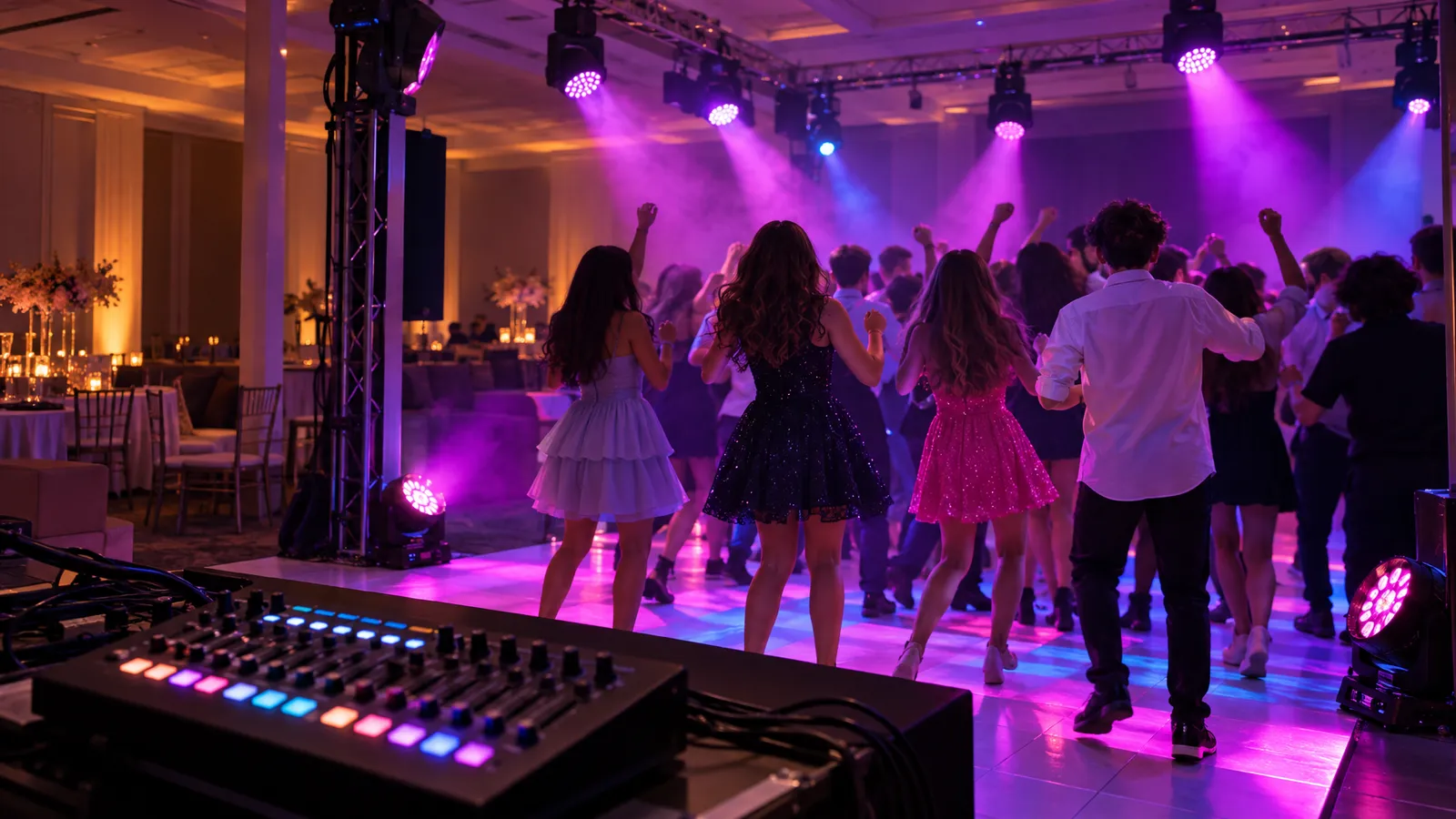
A Bar or Bat Mitzvah reception often has two lighting moods: the adult hora and dinner service, and the teen dance party. Both share the same dance floor, but the first usually calls for warm, even wash lighting for the circle dance, while the second calls for color-changing effects and movement. An LED Pixel-Wash Moving Head mounted on a center truss can cover both: a soft warm wash with slow movement for the hora, then pixel-mapped color blocks for the teen set. How many fixtures you need depends on the fixture's output and beam angle, the mounting height and the floor size, so size the rig to the actual room rather than a rule of thumb.
Supplement the moving heads with Full-Color LED Par Lights on floor stands at the perimeter. Pars provide a base wash that keeps light on the floor when the moving heads tilt upward for aerial effects. For the hora, a warm, even look is a common choice so the dance circle photographs well; for the teen party, saturated colors. The exact color and intensity for each scene is a matter of taste, so agree it with the family and the photographer, and confirm what the fixtures and controller can actually do — for example, whether the controller can follow the DJ's music. A base wash also gives the photographer more light to work with than moving heads alone.
- LED pixel-wash moving heads for color effects and aerial movement during the teen dance set, sized to the room
- Full-color par lights on floor stands to provide a base wash under the moving heads
- DMX control integration with the DJ's lighting console or a standalone controller programmed with hora and teen-party presets
- A warm scene for the hora and a saturated-color scene for the teen segment, agreed with the family in advance
- Blackout override so the emcee can kill all dance-floor lighting for moments like the candle ceremony or parent speeches
Teen Entertainment and Photo Booth Strategy
Plan entertainment around the run of show. An Interactive Photo Booth ($400 per day) with instant sharing can sit near the entry or dessert station, where early arrivals and parents waiting for the program to start pass by. If the booth supports custom overlays, you can include the Mitzvah child's name and the event date.
Other ideas for teens include a Bubble Machine run during high-energy dance tracks, or games set up in an adjacent lounge. Bubble fluid can make floors slippery indoors or outdoors — Chauvet's bubble machine guide warns that "bubble fluid leaves a slippery surface" and says not to aim bubbles directly at faces or over heavy traffic areas — so place the machine away from walkways and the dance floor, and check the surface with the venue. For venues that prohibit bubble effects, a second Bluetooth Speaker System in the lounge lets teens play their own playlist away from the main DJ without competing with the program audio.
- Interactive photo booth, positioned near the entry or dessert station for early-arrival traffic
- Instant sharing so guests can post content during the event; ask which delivery options suit your event
- Bubble machine placed away from walkways and the dance floor, only where the venue has approved the floor and the fluid
- Secondary Bluetooth speaker system in a teen lounge or adjacent room for self-curated music away from the main program
- Games or interactive stations in a side room for the adult program segments
FAQ: Bar and Bat Mitzvah Production
Do I need separate lighting for the hora versus the teen dance party?
You can use the same fixtures for both segments if you program distinct scenes: a warm, even look for the hora and saturated color and movement for the teen party. A pixel-wash moving head and a set of full-color pars can deliver both looks when controlled through a DMX console with scene presets. How long programming and testing take depends on the rig and the operator, so ask for that time to be included in the quote and the load-in schedule. If you're renting a package without a dedicated operator, ask for a simple controller with clearly labeled scenes so the DJ can trigger the transition.
What fire-code restrictions apply to cold spark at Bay Area synagogues?
It depends on the city and the building, so ask the congregation's facilities manager and the local fire marshal before you plan it. Some fire authorities ban the effect outright: Central County Fire prohibits cold spark devices in Burlingame, Millbrae and Hillsborough. California's Health and Safety Code section 12505 classes the titanium and zirconium compounds the machines use as dangerous fireworks, and the sparks can still ignite nearby materials, so expect any approval to come with conditions about operators, permits and distance from fabric like a chuppah or ark curtains. If the venue says no, CO2 jets or a lighting cue deliver the entrance moment instead, though a CO2 discharge is loud and can startle younger guests.
How large a screen do I need for a slideshow in a ballroom?
Start from the room layout rather than the guest count: find the farthest seat that needs to see the screen and the smallest detail in the content (captions, names on photos). Larger screens or a second screen closer to the back of the room help when that distance is long. Raise the screen so seated guests see it over heads in front of them, and check brightness against the room's lighting during the part of the evening when the slideshow will run. The LED TV Displays in our catalog run from 43 to 120 inches. Confirm the display supports HDMI and wireless casting, and test the family's actual files on it before guests arrive.
Can I run a photo booth and a bubble machine at the same time?
Yes, but keep them well apart. Bubble fluid that lands on the photo booth's camera or screen means wiping down equipment during the event. Run the bubble machine during high-energy dance tracks, then shut it down during quieter moments when traffic shifts back to the photo booth. Bubbles travel with air movement indoors and wind outdoors, and the fluid can leave slippery surfaces either way, so plan placement with the venue's layout and airflow in mind.
What's the power requirement for a full production package at a hotel ballroom?
Ask for it to be worked out by whoever provides the event power, from each item's electrical specification — spark machines, moving heads, par lights, the LED display and the photo booth. They will calculate the current each item draws and allocate the loads to the venue's rated circuits with headroom. Request circuit locations and ratings from the venue during the site visit. If the venue cannot provide enough dedicated circuits, ask about a generator or power distribution arranged through the venue. Battery-powered uplights run on their own batteries, which reduces the number of items that need a power drop.