
LED Screen Rental for Pet Adoption Events & Expos
Planning LED video displays for pet adoption events: screen sizes, content strategies, and rental logistics for animal shelters and expos.
Pet adoption events and animal expos rely on emotional engagement to connect animals with new families. LED video screens transform how organizers present adoptable pets, stream shelter stories, and showcase sponsor content. A 12-panel LED wall displaying rotating photos of available dogs and cats draws 40–60% more foot traffic to adoption booths compared to static posters, according to event organizers at Petfinder Foundation meetups.
The challenge is choosing the right screen size, pixel pitch, and content strategy for venues ranging from indoor shelter open houses to outdoor community festivals. Too small and attendees walk past without noticing. Too large and you're paying $2,500–$4,000 for capacity your event doesn't need. This guide covers screen sizing for common pet event formats, content that drives adoptions, and logistics for nonprofits working with tight budgets.
Bay Area animal shelters and rescue organizations run 200+ adoption events annually, from small weekend meetups at PetSmart to large expos like SF Pet Expo at Cow Palace and the East Bay SPCA's annual fundraiser. LED screens serve three functions: showcasing available animals with photos and videos, displaying real-time adoption updates to create urgency, and providing sponsor recognition to fund future events. The right setup balances visibility, budget, and ease of operation for volunteer-run teams. For a deeper dive into LED video wall pixel pitch and sizing fundamentals, that guide covers the technical details.
Screen Sizes for Different Pet Event Formats
Indoor shelter open houses (50–150 attendees) work best with 6- to 9-panel LED configurations. A 6-panel wall measures roughly 1.9m × 1.1m (6.2ft × 3.6ft), visible from 20–25 feet away. This fits comfortably in shelter lobbies or community center rooms without dominating the space. You're showing profile photos of 4–6 adoptable animals at once, with each photo displayed for 8–10 seconds on a looping slideshow. Total rental cost runs $800–$1,200 for a weekend, including delivery and setup within 30 miles of your shelter.
Mid-size adoption events at pet stores or outdoor farmers markets (150–400 people) need 12- to 16-panel setups for proper visibility. A 12-panel wall (2.8m × 1.6m or 9.2ft × 5.2ft) is readable from 40–50 feet, critical when attendees are browsing vendor booths or walking past on the sidewalk. You can display a 3×2 grid of pet profiles, or dedicate the full screen to a single large-format "Pet of the Day" feature with name, age, breed, and personality description. Outdoor events require LED panels rated for daylight brightness (2,500+ nits), which cost 20–25% more than indoor-only models. Weekend rental: $1,600–$2,400.
Large expos and fundraising galas (500+ attendees) justify 20- to 30-panel LED walls. At SF Pet Expo scale, a 24-panel wall (4.2m × 2.4m or 13.8ft × 7.9ft) creates the visual anchor for your organization's booth. You can run a mixed content loop: 60% adoptable animal profiles, 20% sponsor logos, 20% video testimonials from families who adopted in previous years. Large walls also handle live content — plugging in a laptop to show real-time adoption updates ("Buster just found his forever home!") creates urgency and celebration. Rental cost: $2,800–$4,500 depending on panel count and whether you need techs on-site for content updates.
Pixel pitch matters for readability. P2.6 panels work well for indoor events where viewing distance is 8–25 feet. P3.9 panels are fine for outdoor festivals where most viewers are 30+ feet away and the lower resolution saves 25% on rental cost. P1.9 panels are overkill unless you're displaying fine text (like detailed adoption bios) that attendees will stand directly in front of to read.
- Small indoor events (50–150 people): 6–9 panels (6.2ft × 3.6ft), P2.6 pixel pitch, $800–$1,200 weekend rental
- Mid-size outdoor events (150–400 people): 12–16 panels (9.2ft × 5.2ft), P3.9 outdoor-rated, $1,600–$2,400 weekend rental
- Large expos (500+ people): 20–30 panels (13.8ft × 7.9ft or larger), P2.6 or P3.9 depending on venue, $2,800–$4,500 weekend rental
- Viewing distance rule: Screen height × 8 = maximum readable distance (e.g., 5ft tall screen readable from 40ft away)
- Brightness for outdoor events: 2,500+ nits required for daylight visibility; indoor panels at 800–1,200 nits wash out in direct sun
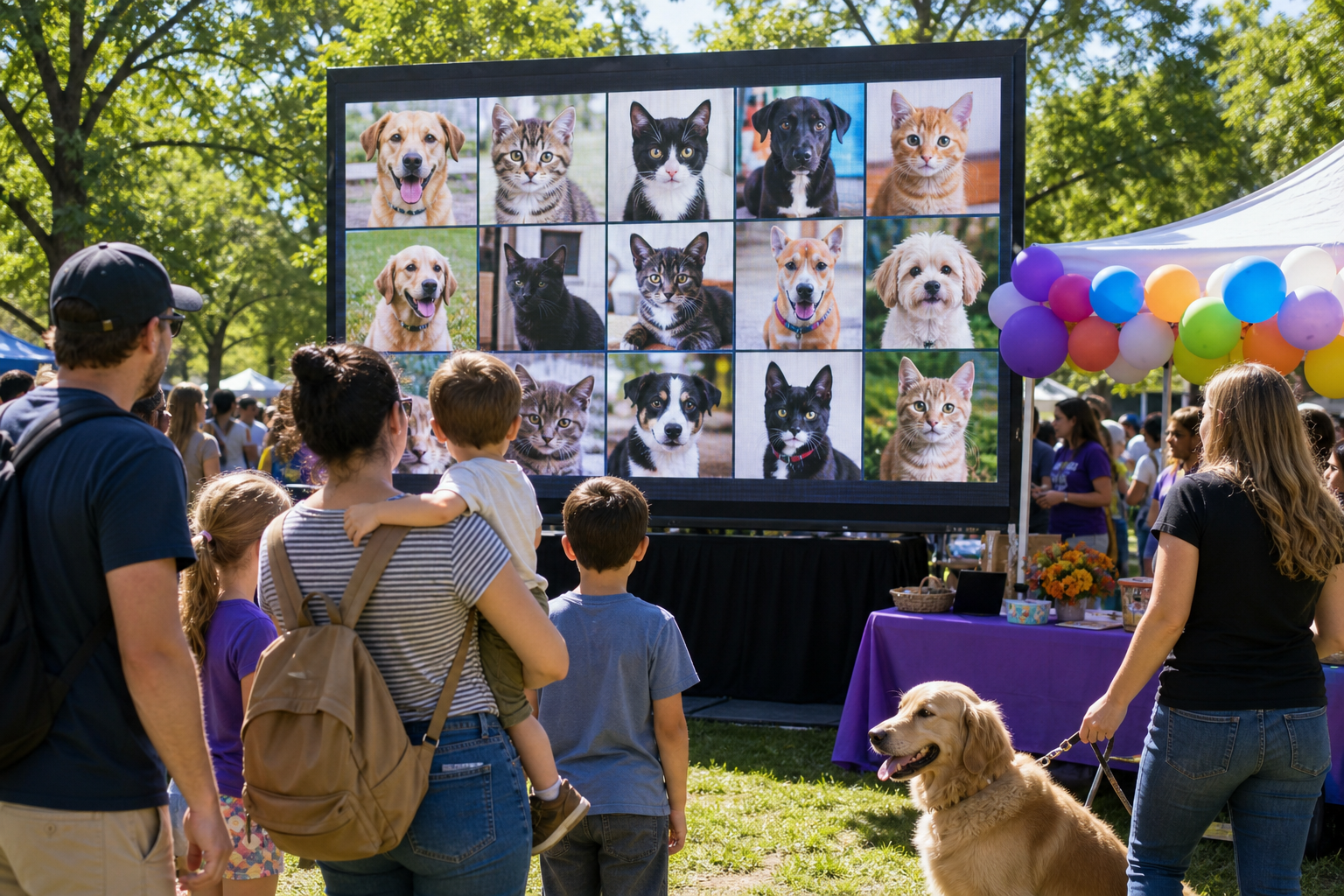
A 12-panel LED wall at an outdoor adoption event displays multiple pet profiles simultaneously, readable from 40–50 feet away.
Content That Drives Adoptions
The most effective LED content follows the 8–10 second rule. Each pet profile stays on screen long enough for attendees to absorb the photo and basic details, but not so long that foot traffic slows down. Successful formats include a large photo (filling 70% of the screen), the animal's name in 80pt+ font, and 3–4 bullet points: age, breed/mix, personality trait, and a single standout fact ("Great with kids!" or "Already house-trained").
Video content outperforms static photos for emotional connection. A 15-second clip of a dog playing fetch or a cat purring in someone's lap generates 2.5× more booth visits than a slideshow of still images, based on tracking data from Peninsula Humane Society events. Keep videos short — attention spans at busy expos run 10–20 seconds. Splice together 4–5 clips of different animals into a 60-second loop, with each animal's name and adoption fee overlaid on screen.
Real-time adoption updates create urgency. When you display "3 adoptions so far today!" or "Bella just found her forever home!" on the LED screen, it signals social proof and momentum. This works best at multi-hour or full-day events where adoption volume justifies updates every 30–45 minutes. You'll need a volunteer with laptop access to the screen content system, or a tech package that includes remote updates via phone or tablet.
Sponsor recognition content balances fundraising needs with adoption messaging. The standard mix is 70% adoptable animal content, 20% sponsor logos, and 10% event information (schedule, booth map, next dog demonstration time). Sponsors paying $500–$1,000 for logo placement expect 8–12 seconds of screen time per loop cycle. Over-indexing on sponsor content drives attendees away from your booth — they're there for the animals, not advertising.
Avoid common content mistakes. Text-heavy slides with 6+ bullet points are unreadable from 15+ feet away. Low-resolution photos from volunteers' phones look pixelated on LED screens — request 1920×1080 minimum resolution for any photo or video. Auto-advancing slideshows that change every 3–5 seconds feel frantic and give viewers no time to process. Stick to 8–10 seconds per slide, 15–20 seconds for video clips.
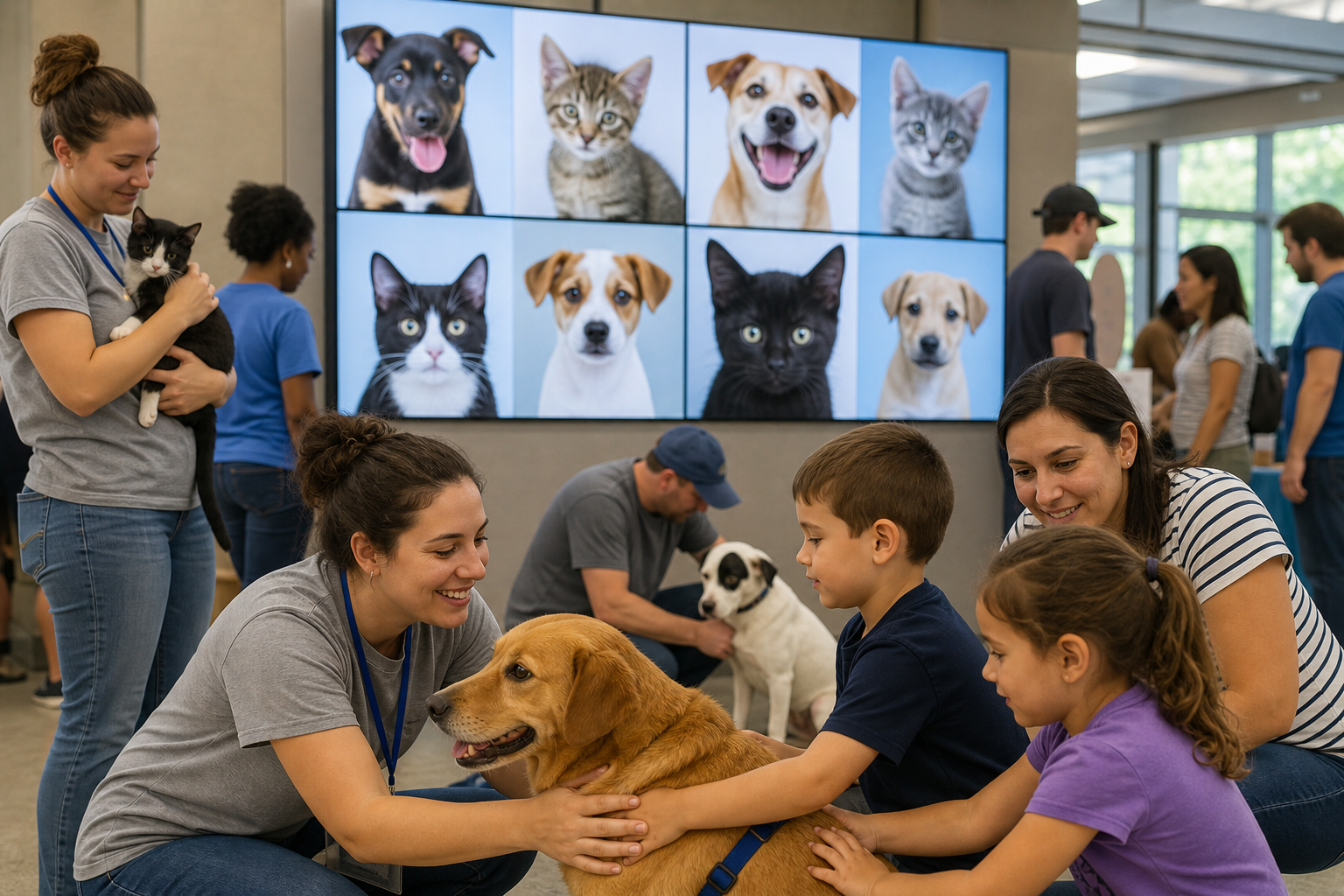
Indoor shelter events use 6–9 panel LED configurations to showcase adoptable animals with profile photos and personality details.
Rental Logistics for Nonprofit Budgets
Most Bay Area AV rental companies offer nonprofit discounts of 10–20% on LED screen packages when you provide 501(c)(3) documentation upfront. A standard 12-panel LED wall rental that costs $2,000 for a corporate event drops to $1,600–$1,700 for a shelter or rescue organization. Always ask about nonprofit pricing at quote time — it's not always advertised but nearly every rental house has a program. To see current pricing for different LED configurations and browse the full event AV catalog, check the equipment listing.
Delivery and setup fees eat into tight budgets. Standard delivery within 30 miles runs $150–$250 each way, and professional setup (frame assembly, panel mounting, power and signal wiring) adds another $300–$500. For small events, pickup and self-setup saves $600–$1,000 total. You'll need a truck or large SUV to transport panels (each 20×20 inch panel weighs 12–15 lbs) and the frame structure. Most rental companies provide a 30-minute phone walkthrough for first-time self-setup teams, and panels use tool-free magnetic edge connectors that volunteers can handle.
Content creation support varies widely. Some AV rental companies include basic content formatting — taking your PowerPoint slide deck or folder of pet photos and converting them into a looping video file. Others charge $150–$300 for this service. If you're tech-savvy, you can build content yourself using free tools like Canva (for static slides) or iMovie (for video loops). Export as 1920×1080 MP4 or MOV files. Load content onto a USB drive, plug it into the LED controller box, and it plays automatically on loop. No laptop or tablet required.
Multi-day rentals offer the best per-day value. A 12-panel LED wall that costs $1,600 for a Saturday-only rental drops to $2,200 for Friday–Sunday (three days), or about $733 per day. If your shelter is running a weekend adoption marathon, the three-day rental is 37% cheaper per day than single-day pricing.
Sound and Noise Considerations at Pet Events
LED screens run silent, but audio content (background music, narrated videos, event announcements) requires speakers. The challenge at pet events is keeping sound at a volume that engages humans without stressing animals. Dogs react to frequencies above 20kHz that humans can't hear, and sudden loud noises trigger anxiety in shelter animals already in unfamiliar environments.
For indoor events with dogs and cats present, cap speaker volume at 65–70dB measured at 10 feet from the booth. That's loud enough for attendees standing near your booth to hear clearly, quiet enough that animals 20–30 feet away aren't affected. Use directional speakers (cone-style PA speakers, not omnidirectional Bluetooth speakers) aimed at the human traffic flow, not toward animal holding areas.
Outdoor events allow slightly higher volume (75–80dB) because ambient noise from crowds, traffic, and other vendors masks speaker output. But avoid bass-heavy music or sound effects — low frequencies (under 100Hz) travel further and penetrate animal crates and pens. Stick to mid-range frequencies: spoken narration, light acoustic background music, or upbeat pop tracks with minimal bass.
If you're running video content with audio (testimonials, shelter tours, instructional clips), use closed captions instead of relying on sound. Attendees at busy expos can't always hear audio clearly, and captions ensure your message lands even at low volume. Most video editing tools (iMovie, Canva Video, Adobe Premiere) auto-generate captions from spoken audio in 2–3 clicks.
- Indoor events with animals present: Cap volume at 65–70dB measured 10 feet from speakers; use directional PA speakers aimed at human traffic zones
- Outdoor events: 75–80dB acceptable; avoid bass-heavy music (frequencies under 100Hz stress animals); mid-range acoustic tracks work best
- Safe frequency range for dogs: Humans hear 20Hz–20kHz; dogs hear up to 65kHz. Keep speaker output under 85dB to avoid triggering anxiety in sensitive animals
- Cats and loud sounds: Cats startle at sudden noises above 70dB. Use gradual volume fade-ins for video narration instead of abrupt starts
- Closed captions on video: Auto-generate in iMovie, Canva Video, or Adobe Premiere. Ensures message delivery even when audio is muted or inaudible in noisy expo environments
Setup Tips to Minimize Pet Stress
LED screens generate less heat than older projection systems, but the back of LED panels and the controller box still vent warm air. Position these components at least 6–8 feet away from animal holding pens or crates. Dogs and cats regulate body temperature through panting and behavior (seeking shade, moving away from heat sources), and a warm electronics enclosure nearby limits their comfort zone.
Cable management matters for safety. Exposed power cables and signal cables running across floors are tripping hazards for attendees and chew targets for loose dogs. Use cable covers or adhesive cord channels to secure cables along walls or under tables. If your booth allows dogs to roam freely (common at "meet and greet" adoption events), elevate cables 3+ feet off the ground or run them behind barriers.
Screen placement affects animal behavior. Avoid positioning the LED wall directly above or behind animal pens where the bright, changing visuals are in the animals' line of sight. Dogs and cats track movement on screens the same way they track real-world motion, and a looping video of a running dog on the LED screen can agitate animals in nearby crates. Place the screen facing outward toward foot traffic, not inward toward your animal holding area.
Brightness settings need adjustment. LED panels at full brightness (2,500+ nits) are jarring in dim indoor spaces and can cause animals to squint or turn away. Most LED controllers allow brightness adjustment from 30% to 100%. For indoor shelter events, run at 50–60% brightness. For outdoor daylight events, 80–100% is necessary for visibility. If animals seem agitated (excessive barking, pacing, hiding in the back of crates), dim the screen 10–20% and observe behavior changes.
Setup timing reduces stress. Arrive 90–120 minutes before animals are brought into the event space to complete LED wall assembly, power testing, and content loading. The noise of frame assembly, panel clicking into place, and volunteers moving equipment creates an unsettled environment. Once the screen is operational and stable, allow 15–20 minutes of quiet time before bringing animals in. This lets the space settle and removes the chaos of simultaneous setup and animal introductions.
- Heat management: Position LED panel backsides and controller boxes 6–8 feet from animal pens; warm air vents can raise crate temps 3–5°F
- Cable safety: Use adhesive cord channels or cable covers; elevate cables 3+ feet or behind barriers if dogs roam freely in booth area
- Screen placement: Face LED wall outward toward foot traffic, not inward toward animal holding areas. Moving video content in animals' sightline can trigger agitation
- Indoor brightness: Run LED panels at 50–60% brightness in shelter lobbies or community centers (full brightness is jarring and causes squinting)
- Setup timing: Complete assembly 90–120 minutes before animals arrive; allow 15–20 minutes of quiet operation before introducing animals to the space
Venue-Specific Considerations: Indoor vs Outdoor
Indoor pet adoption events at shelters, pet stores, or community centers have controlled environments. You're working with standard 120V outlets (LED walls draw 6–12 amps depending on panel count), stable temperatures, and no weather concerns. The main limitations are space and ceiling height. A 12-panel LED wall needs a 10ft × 6ft footprint for the frame and 3–4 feet of clearance in front for optimal viewing distance. Low ceilings (under 9 feet) make wall-mounted installations impractical — you'll need a free-standing frame on the floor or a tabletop mount for smaller 6-panel setups.
Outdoor events introduce power, weather, and logistics variables. Most farmers markets, park festivals, and parking lot adoption events don't provide electrical outlets near your booth space. You'll need a generator (2,000–3,000 watt portable unit runs $150–$250 per day rental) or a battery-powered LED system (higher rental cost, limited to 4–6 hours runtime). Weather-proof outdoor LED panels resist rain and dust but cost 20–25% more than indoor-only models. If your event forecast shows rain, request panels rated IP65 or higher — they'll operate in wet conditions without damage.
Wind is the hidden outdoor risk. LED panels mounted on free-standing frames act as sails in 15+ mph wind. Most rental companies provide frame weights or sandbags (25–50 lbs per corner) to stabilize the structure. For large walls (20+ panels), request ground stakes or tie-down straps if the venue allows them. If wind speeds exceed 25 mph, most AV companies recommend postponing setup or moving to a sheltered location — the risk of the wall tipping over outweighs the visibility benefit.
Sunlight and glare affect outdoor LED readability. Panels rated 2,500+ nits maintain visibility in direct sun, but if your booth faces west and the sun sets behind your LED wall, attendees looking at the screen are staring into backlight. Position the screen with the sun at attendees' backs (screen facing east in the afternoon, west in the morning). If that's not possible, request a canopy or pop-up tent to create shade over the screen area. For more tips on managing outdoor AV setups, the guide on indoor vs outdoor LED video wall logistics covers venue-specific considerations.
Venue power rules vary. San Francisco parks (Golden Gate Park, Dolores Park) require generator use permits filed 14 days in advance through SF Rec & Park. East Bay parks (Lake Merritt, Alameda Beach) allow generators under 65dB without permits. Santa Clara County parks restrict generator hours to 9 AM–6 PM on weekends. Check with your venue 3–4 weeks before the event to confirm power rules and permit requirements — missed permits mean no power and a non-functional LED screen.
Frequently Asked Questions
How much does it cost to rent an LED screen for a pet adoption event?
LED screen rental for pet adoption events ranges from $800–$1,200 for a small 6-panel indoor setup (weekend rental), $1,600–$2,400 for a mid-size 12-panel outdoor-rated wall, and $2,800–$4,500 for large expo configurations (20–30 panels). Nonprofit organizations receive 10–20% discounts when providing 501(c)(3) documentation at booking. Delivery within 30 miles costs $150–$250 each way, and professional setup adds $300–$500 if you're not self-installing. Multi-day rentals offer per-day savings — a three-day rental costs about 35% less per day than single-day pricing. For Bay Area LED screen rentals and nonprofit pricing, visit VENEGEEST event equipment or call +1-415-890-5555.
Can LED screens stress out dogs and cats at adoption events?
LED screens themselves don't inherently stress animals, but improper setup can. Bright, rapidly changing visuals in an animal's direct line of sight can cause agitation (excessive barking, pacing, hiding). To minimize stress, position the LED wall facing outward toward attendees, not inward toward animal holding areas. Run indoor LED panels at 50–60% brightness instead of full intensity. Keep audio volume at 65–70dB for indoor events, avoiding bass-heavy music that travels through crates. Place the screen's heat-venting components (back panels, controller box) at least 6–8 feet from animal pens. Complete setup 90–120 minutes before animals arrive so the space is calm and stable when they enter.
What content format works best for showing adoptable pets on LED screens?
The most effective format is 8–10 seconds per pet profile: a large photo filling 70% of the screen, the animal's name in 80pt+ font, and 3–4 bullet points (age, breed, personality, standout fact like "Great with kids"). Video clips (15–20 seconds) of animals playing or interacting with people generate 2.5× more booth visits than static photos, according to Peninsula Humane Society tracking. Export content as 1920×1080 resolution MP4 or MOV files. Load onto a USB drive and plug into the LED controller — no laptop required. Mix 60–70% adoptable animal content, 20% sponsor logos, and 10% event info. Update content with real-time adoption announcements ("Buster just found his home!") to create urgency.
Do I need a generator for outdoor pet adoption events, or can I use battery power?
Most outdoor pet adoption events require a generator unless your booth is within 100 feet of a building with accessible outlets. A 12-panel LED wall draws 720–1,200 watts (6–10 amps at 120V), so a 2,000–3,000 watt portable generator handles the screen plus small speakers or a laptop. Generator rental costs $150–$250 per day. Battery-powered LED systems exist but run 4–6 hours maximum and cost 20–25% more to rent. For full-day events (6+ hours), generators are more reliable. Check venue rules — SF parks require generator permits 14 days ahead, and some venues restrict generator hours or decibel levels. Generators rated under 65dB meet most park noise ordinances.
How do I transport and set up a rented LED screen if I don't have a large vehicle?
Small 6–9 panel LED setups fit in an SUV or minivan — panels are 20×20 inches and weigh 12–15 lbs each, plus a lightweight aluminum frame. Rental companies provide foam-padded road cases to protect panels during transport. For 12+ panel walls, you need a pickup truck or cargo van. If your organization doesn't have one, rental companies offer delivery and setup services: $150–$250 delivery each way within 30 miles, plus $300–$500 for professional setup (frame assembly, panel mounting, power/signal wiring). Self-setup with a phone walkthrough from the rental company is manageable for volunteer teams — panels use tool-free magnetic connectors and snap together in 20–30 minutes for a 12-panel wall. Budget 45–60 minutes for first-time setup, 20–30 minutes for experienced teams.