Cold Spark Machine Rental SF: Safety, Pricing, Setup
Rent cold spark machines in San Francisco. Fire marshal rules, venue approval steps, rotating vs standard, and pricing from $650.
What Cold Spark Machines Are and Why SF Venues Care
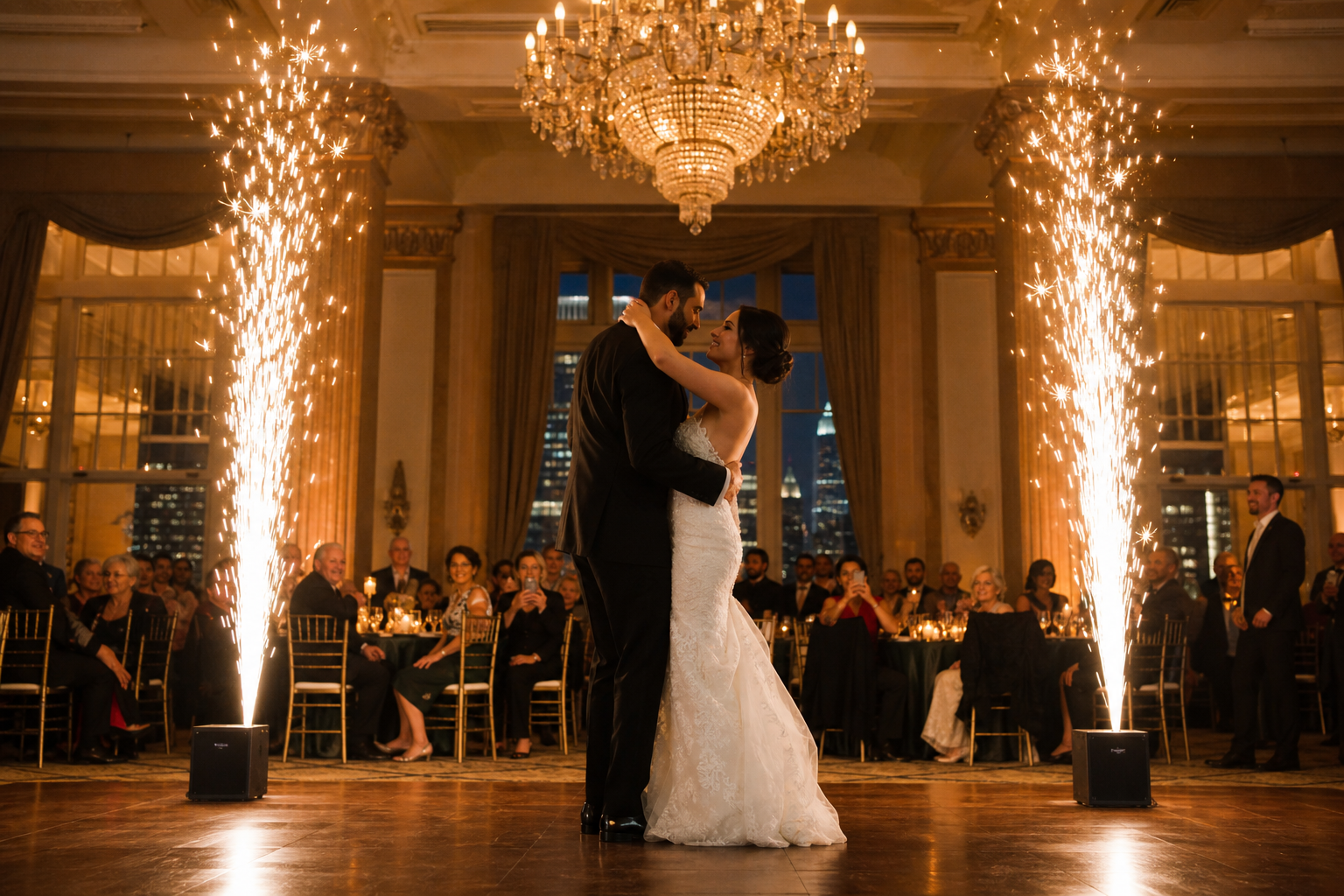
Cold spark machines shoot streams of bright, gold sparks 10 to 15 feet into the air. They look like fireworks, but they aren't pyrotechnics. The sparks come from titanium-zirconium granules heated inside a controlled chamber. The output temperature sits low enough that you can pass your hand through the stream without a burn. No open flame, no gunpowder, no residual smoke that triggers fire suppression systems.
That distinction matters in San Francisco more than most cities. SF Fire Department classifies traditional sparklers, Roman candles, and any open-flame effect as pyrotechnics, which require a full pyrotechnic operator license (CSFM-issued), a fire watch, and venue-specific permits that can take 30 to 60 days. Cold spark machines don't fall under that classification. They're categorized as special-effects equipment, which means the approval path is shorter: a safety data sheet (SDS) for the granules, a certificate of insurance (COI) naming the venue, and a one-page setup diagram showing machine placement relative to ceiling height, sprinkler heads, and exit paths.
Most SF venues that would refuse a sparkler send-off or a pyrotechnic display will approve cold sparks once they've reviewed the paperwork. Hotels like the Westin St. Francis, Fairmont, and Palace Hotel have signed off on cold spark setups multiple times. We've run machines at tech product reveals in SoMa warehouses, wedding receptions at the Julia Morgan Ballroom, and corporate galas at the Asian Art Museum. The approval process typically takes one email thread and a 15-minute call with the venue's engineering contact.
SF Fire Marshal Rules for Cold Sparks: What You Actually Need
San Francisco's fire code doesn't have a specific "cold spark machine" category. Instead, these units fall under SFFD's special-effects equipment guidelines, which means the approval requirements are less about the machine and more about how and where you set it up. Here's the checklist we work through for every SF booking:
- Minimum ceiling clearance: 10 feet. The sparks reach 10-15 feet depending on the unit's output setting. We spec the throw height to stay at least 3 feet below the lowest ceiling obstruction (sprinkler heads, chandeliers, draped fabric). In rooms with 12-foot ceilings, we dial the output to 8-9 feet. Rooms under 10 feet are a no-go for standard units, but our low-profile machines work in 8-foot spaces with a reduced throw.
- Safety Data Sheet (SDS) for granules. The venue's engineering or safety team will ask for this. It confirms the granule composition (titanium-zirconium alloy), output temperature (under 120°F at the spark tip), and that no hazardous residue remains after firing.
- Certificate of Insurance (COI). Your vendor's general liability policy naming the venue as additional insured. Venegeest carries $2M general liability, which satisfies every SF venue we've worked with.
- Setup diagram. A floor plan showing machine placement, distance from the nearest exit, distance from the nearest sprinkler head, and operator position. We create this for every booking and email it to the venue 2 weeks before the event.
- On-site operator. SFFD doesn't explicitly require a licensed pyrotechnic operator for cold sparks (since they're not classified as pyro), but every SF hotel and event space we've worked with requires a trained operator from the rental company to be present during all firings. That's standard with every Venegeest cold spark booking.
One thing to watch: outdoor events in SF parks (Golden Gate Park, Crissy Field, Presidio) fall under the National Park Service or SF Rec & Parks, which have their own permit layers on top of the fire code. Budget an extra week of lead time for outdoor city-managed venues.
Rotating vs Standard Cold Spark Machines
Venegeest rents two types: standard cold spark machines and 360° rotating cold spark machines. They use the same granules and produce the same safe, low-temperature sparks. The difference is the visual effect and the use case.
Standard Cold Spark Machine
Fires a single vertical column of sparks straight up. Output height is adjustable from 3 to 15 feet depending on the model. This is the go-to for flanking a dance floor, lining a stage edge, or creating an entrance archway (2 machines facing each other across a doorway or aisle). Standard machines are smaller (roughly 12" × 12" × 18"), lighter (about 22 lbs each), and easier to hide behind décor or under tables. Most wedding setups use 2 or 4 standard units.
Rotating Cold Spark Machine
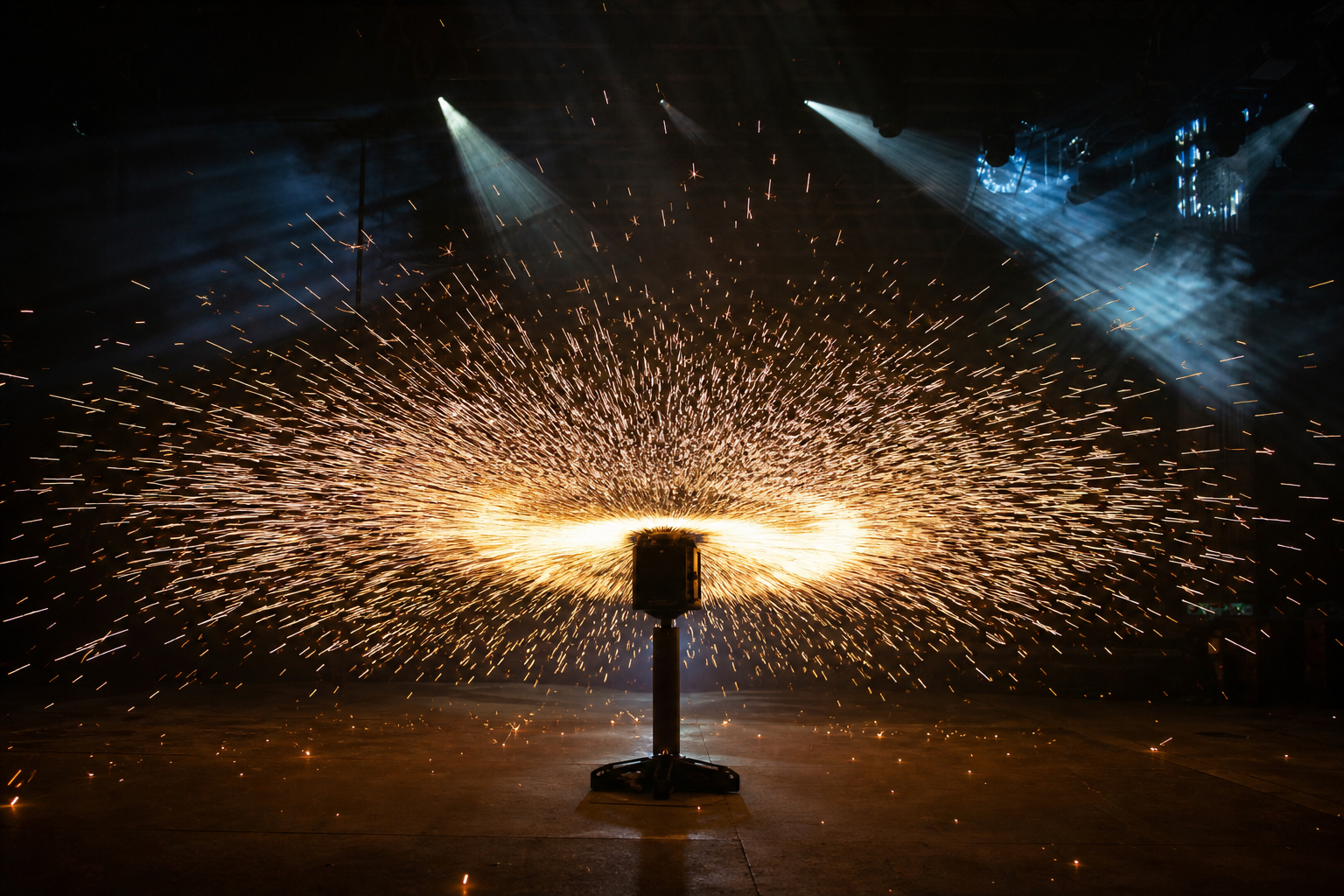
Same spark output, but the nozzle rotates 360° while firing, throwing sparks in a full circle rather than a single column. The visual effect looks like a spinning fountain or a Catherine wheel lying on the floor. Rotating units are bigger (roughly 16" × 16" × 24") and heavier (about 35 lbs). They command more floor space — you need a 6-foot radius of clear area around the machine, and ceiling clearance should be at least 12 feet because the rotating motion spreads sparks wider than a straight column.
Which One Should You Pick?
| Factor | Standard | Rotating |
|---|---|---|
| Visual effect | Vertical column, focused | 360° spinning fountain |
| Best for | Dance floor flanks, stage edges, aisles | Center-stage reveals, concert drops, large open areas |
| Min ceiling height | 10 feet | 12 feet |
| Floor clearance needed | 3-foot radius | 6-foot radius |
| Weight per unit | ~22 lbs | ~35 lbs |
| Typical quantity | 2-4 per event | 1-2 per event |
| Price range (SF delivery) | $325-$400 per unit/event | $450-$550 per unit/event |
Most SF events use standard machines. We rent rotating units for concert stages, large corporate reveals, and outdoor festivals where the wider spark spread fills more visual space. If you're unsure, tell us the venue and the moment you want the sparks for, and we'll recommend the right type.
Cold Spark Rental Pricing in San Francisco
Pricing depends on three things: how many machines you need, how many times you want them to fire during the event, and whether the venue is inside or outside our standard SF delivery zone. Here's what real bookings look like as of 2026:
- 2 standard machines, 1 firing (first dance or entrance): $650-$900 all-in. This includes delivery, setup, a trained operator on-site, all granules for the contracted firing, teardown, and the paperwork package (SDS, COI, setup diagram) sent to your venue in advance.
- 4 standard machines, 2-3 firings (entrance + first dance + send-off): $1,100-$1,600. The per-machine cost drops when you book 4+, and the additional firings use extra granule cartridges at about $40-$60 each.
- 4 standard + 1 rotating, full-evening corporate reveal: $1,800-$2,400. Corporate setups usually want tighter coordination with AV cues (DMX-triggered to match a video countdown or music drop), which adds programming time.
- 6-8 machines, concert stage or outdoor festival: $2,200-$3,500+. Large-scale setups may need a second operator and additional power distribution.
Travel surcharges: venues within San Francisco, Oakland, San Jose, and the Peninsula are in our standard delivery zone. Napa, Sonoma, Marin, and Monterey add $150-$300 depending on distance. We quote the exact number before you book — no hidden fees at load-in.
One important note: anyone quoting you under $300 for a cold spark setup without a technician is either dropping off the machine and leaving (most SF venues won't accept that) or skipping insurance. Both are red flags. The tech isn't optional — they're the reason your venue says yes.
Indoor vs Outdoor Cold Sparks in San Francisco
Most cold spark rentals in SF happen indoors: hotel ballrooms, event halls, warehouses, and corporate conference spaces. Indoor setups are the bread and butter because the controlled environment means predictable spark height, no wind interference, and a dark room that makes the gold sparks pop.
Outdoor setups work well too, but they come with two extra considerations specific to San Francisco:
Wind
SF's afternoon wind (especially in neighborhoods like the Embarcadero, Crissy Field, and Ocean Beach) can scatter sparks sideways instead of letting them fall straight back down. This doesn't create a fire risk — the sparks are still low-temperature — but it changes the visual. Instead of a clean vertical column, you get a wind-swept arc. We solve this by positioning machines in wind-sheltered spots (behind a stage riser, under a tent canopy, or flanked by pipe-and-drape) and timing firings for calmer moments. For outdoor weddings, we usually recommend firing during the first dance under a tent rather than on an exposed lawn.
Park and City Permits
Any outdoor event on SF public land (Golden Gate Park, Marina Green, Civic Center Plaza) requires an event permit from SF Rec & Parks or the Presidio Trust. Cold sparks aren't specifically called out in these permits, but you'll need to disclose "special effects equipment" on the application. The permit reviewers will ask for the same SDS + COI package the indoor venues want, plus a site plan showing where the machines go relative to trees, grass, and public foot traffic. Budget 3-4 weeks for outdoor city-managed venues. Private outdoor venues (restaurant patios, rooftop bars, winery grounds) are faster — usually the same 2-week timeline as indoor bookings.
How to Book Cold Sparks for Your SF Event
Lead time makes or breaks a cold spark booking. The machines themselves are available same-week in most cases — we stock enough units to cover multiple events per weekend. The bottleneck is your venue's approval timeline.
For SF hotels and established event venues, 2 weeks is usually enough. We send the SDS, COI, and setup diagram to the venue's engineering or events team within 24 hours of your booking. They review, ask any questions (usually about ceiling height and sprinkler proximity), and sign off. We've done this enough times that most SF hotels have our paperwork on file from previous events.
For first-time venues (a gallery, loft, or private space that hasn't hosted cold sparks before), add an extra week. The venue manager may want to loop in their insurance provider or do a walkthrough with us before the event.
For outdoor city-managed venues, add 3-4 weeks for the permit layer.
Here's the booking process:
- Tell us the venue, date, and the moment you want sparks. First dance? Grand entrance? Keynote reveal? Stage finale? The "when" determines how many machines and how we position them.
- We send a quote within 4 hours. Itemized: machine count, operator fee, granules, delivery, and any travel surcharge.
- You confirm and pay a 50% deposit. We lock your date and start the venue paperwork immediately.
- We handle venue approval. SDS, COI, setup diagram — all sent directly to your venue contact. You CC us on the email thread and we handle the back-and-forth.
- Day-of: we arrive 90 minutes before the effect window, set up, test-fire, and coordinate timing with your DJ, planner, or AV team.
Call us at 415-890-5555 or email info@venegeest.com with your venue and date. We'll reply with an exact quote and tell you whether the venue has approved cold sparks before.
Cold Spark Machine Rental SF: FAQ
Do cold sparks set off fire alarms or sprinkler systems?
No. Cold spark machines don't produce smoke, and the spark output temperature is too low to trigger heat-based fire suppression. We position machines with at least 3 feet of vertical clearance below the nearest sprinkler head. In 500+ events, we've never triggered a fire alarm or sprinkler system. That said, some older buildings with extremely sensitive photoelectric smoke detectors may need the nearest detector temporarily covered during the firing window — your venue's engineering team will flag this during the approval process if it applies.
Are cold sparks allowed at SF City Hall?
The City Hall rotunda itself doesn't permit special effects of any kind during standard ceremony hours. However, many couples book a separate reception venue nearby (Julia Morgan Ballroom, Asian Art Museum, City Hall's own Light Court for private events) where cold sparks are approved. If you're doing a City Hall ceremony followed by a reception elsewhere, we set up the cold spark moment at the reception. For more details, see our guide to cold spark permits at SF City Hall.
Can I rent a cold spark machine without a technician?
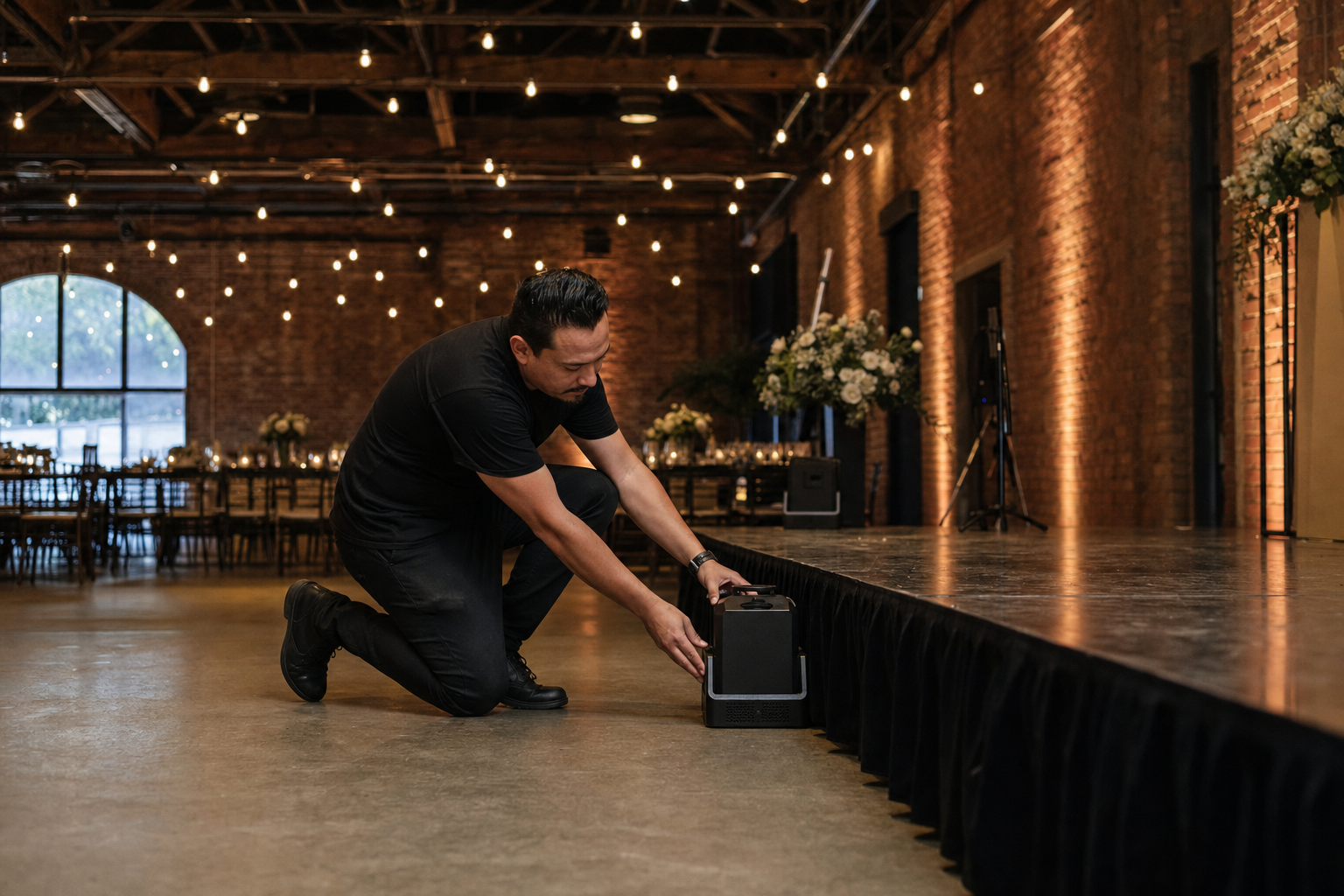
We don't offer dry-hire (machine-only) rentals. Every booking includes an on-site operator. This isn't just our policy — it's what SF venues require. The operator handles setup, test-firing, timing coordination with your DJ or AV team, and teardown. They're also the person who holds the COI and SDS that the venue approved. Removing the operator breaks the insurance chain and puts your venue approval at risk.
How far in advance should I book cold sparks for an SF wedding?
Two weeks is the minimum for venues we've already worked with. Four weeks is safer for first-time venues or outdoor city-managed locations. Peak wedding season (May through October Saturdays) fills up faster — booking 4-6 weeks out guarantees your date. We've pulled off same-week bookings at familiar venues, but the venue's paperwork review is usually the limiting factor, not our availability.
What's the difference between cold sparks and traditional sparklers?
Traditional sparklers burn at 1,200-1,800°F, produce an open flame, and leave hot metal debris on the ground. They're classified as consumer fireworks and most SF indoor venues ban them outright. Cold spark machines produce sparks at under 120°F with no open flame, no combustion byproducts, and no debris. They're classified as special-effects equipment, not pyrotechnics. For a full comparison, read our post on cold sparks vs sparklers: indoor safety.