
LED Wall Rental San Jose: Professional Display for Events
Modular LED wall rentals for San Jose corporate events and conventions. Starting at $200/day with setup and delivery. Call (408) 831-7696.
Why San Jose Events Need Professional LED Walls
San Jose hosts 1,200+ corporate events annually, from SAP Center conferences to Santana Row product launches, and LED walls have become table stakes for presentations that hold attention. A decade ago, you could get away with a projector and a pull-down screen. In 2026, if your keynote speaker is backlit by a washed-out projector image while the startup two booths over is running a 12-foot LED wall with live social media feeds, you've lost the attention war before anyone opens a laptop.
The difference comes down to brightness and flexibility. A standard projector outputs 3,000-5,000 lumens, which looks acceptable in a dark auditorium but turns ghostly pale under convention center lighting or in a hotel ballroom with windows. LED walls produce 1,000-1,500 nits (roughly 10-15x brighter), so your slides stay vivid even under full stage lighting or next to a wall of floor-to-ceiling windows at the Fairmont San Jose. That brightness matters for daytime events—the San Jose Convention Center's exhibit halls have 18-foot ceilings and massive skylights, and projectors simply can't compete.
Flexibility is the other advantage. An LED wall is modular—you build it from individual panels that lock together like LEGOs. Want an 8-foot-wide by 4.5-foot-tall screen for a boardroom presentation? Use 12 panels. Need a 20-foot-wide by 11-foot-tall backdrop for a product launch stage? Use 80 panels. The same hardware scales from intimate executive briefings to full-arena concerts. Projectors lock you into a fixed aspect ratio and throw distance. If your venue has a low ceiling or an odd-shaped stage, you're fighting physics. LED walls adapt. VENEGEEST rents modular LED panels throughout San Jose and Silicon Valley, with delivery and setup for corporate events, trade shows, and private celebrations. Call (408) 831-7696 for same-week availability.
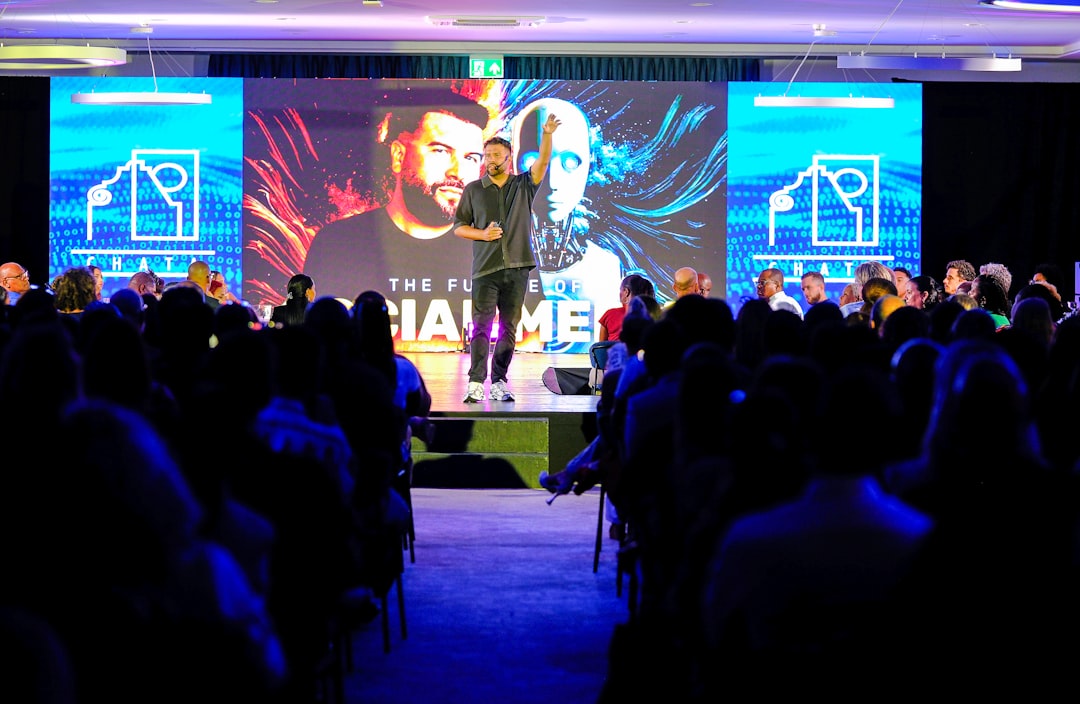
Photo by Carlos Gil on Unsplash
Popular San Jose Venues and LED Wall Configurations
The San Jose Convention Center's exhibit halls seat 2,500-6,500 attendees depending on configuration, and the standard LED wall size for a main-stage keynote is 16-20 feet wide by 9-12 feet tall. That's large enough to be readable from the back row (200+ feet away) but not so large that it overpowers the speaker. For breakout sessions in the 300-500 person range, an 8-10 foot wide by 4.5-6 foot tall wall works. The venue's rigging points support up to 2,000 pounds per point, so weight isn't an issue—but you'll need advance coordination with venue AV staff (most convention centers require 72-hour notice for rigging changes).
The SAP Center (capacity 17,500) hosts tech summits, user conferences, and product launches, and LED walls here compete with arena-scale videoboards. If you're presenting on the main floor, you'll want a 24-foot-wide by 13.5-foot-tall wall minimum—anything smaller looks like a postage stamp against the arena's permanent 40-foot scoreboard. SAP Center charges a venue AV fee if you bring in outside equipment, typically $1,500-$2,500, so factor that into your budget. VENEGEEST coordinates directly with SAP Center's production team for load-in and power distribution.
Hotel ballrooms (Fairmont San Jose, Hayes Mansion, DoubleTree) present a different challenge: low ceilings (10-12 feet) and minimal rigging options. For these venues, ground-supported LED walls on rolling bases are the norm—8-12 feet wide, 4.5-7 feet tall, with a 6-8 foot base to keep the screen stable. The advantage is quick setup (2-3 hours instead of 6-8 hours for a rigged wall), but the disadvantage is footprint—the support structure takes up 4-6 feet of stage depth, so if your stage is only 12 feet deep, you've eaten half of it. For tight spaces, consider a rear-projection LED wall, which mounts flush against the back wall with no base structure visible.
Outdoor venues (Santana Row events, Guadalupe River Park festivals, City Hall plaza gatherings) require high-brightness LED panels rated for 2,500+ nits—double the brightness of indoor panels. Direct sunlight washes out standard 1,000-nit panels within minutes. San Jose averages 300 sunny days per year, so if your event runs midday (10am-3pm), budget for outdoor-rated panels. They cost 40-60% more than indoor panels, but they're the only option that works. Weather sealing matters too—San Jose gets light rain November through March, and IP65-rated panels (fully dust/water sealed) let you run through drizzle without shutting down.
Rental Pricing and What's Included
A standard indoor LED wall for corporate presentations (8 feet wide by 4.5 feet tall, 3.9mm pixel pitch) rents for $200-$280 per day in San Jose, or $650-$850 per week, or $1,400-$1,900 per month. That's the panel rental only. Add $300-$500 for delivery, setup, and strike if you want the rental company to handle installation and teardown. Most corporate clients opt for full-service setup because LED walls require precise alignment (if panels are off by even 1-2 millimeters, the seams show on camera), and the time investment to DIY it isn't worth it for a one-day event.
Larger walls (16 feet wide by 9 feet tall, suitable for 500+ attendee events) rent for $450-$650 per day, $1,500-$2,100 per week, or $3,200-$4,500 per month. At this scale, you're also paying for a video processor (the computer that manages inputs and scales content to fit the wall), which adds $150-$250 to the daily rate. Video processors let you do picture-in-picture (e.g., slides on the left, live camera feed on the right), seamless transitions between content sources, and color calibration. If you're running a multi-speaker event with live polling or social media feeds, you need a processor—trying to manually switch HDMI cables between a laptop and a camera is amateur hour.
Outdoor-rated walls with high-brightness panels (12 feet wide by 6.75 feet tall, 2,500+ nits) rent for $550-$800 per day, $1,800-$2,600 per week, or $4,000-$5,500 per month. The premium reflects the specialized panels and additional rigging (outdoor walls need weighted ballast or ground stakes to resist wind—San Jose gets 10-15 mph winds regularly, and an unsecured LED wall acts like a sail). Include $400-$700 for outdoor setup, which takes longer due to weather sealing and cable management (all connections must be taped and wrapped to prevent moisture intrusion).
Week-long and month-long rentals save 30-50% compared to daily rates. If you're running a 5-day conference, a weekly rental is almost always cheaper than 5 separate daily rentals. Monthly rentals make sense for extended installations (lobbies, showrooms, long-running exhibitions) where the wall stays in place. VENEGEEST offers San Jose delivery within 48 hours for standard configurations, and same-day delivery (4-8 hour turnaround) for emergencies at a $300-$500 surcharge. Call (408) 831-7696 to check real-time inventory and lock in pricing.
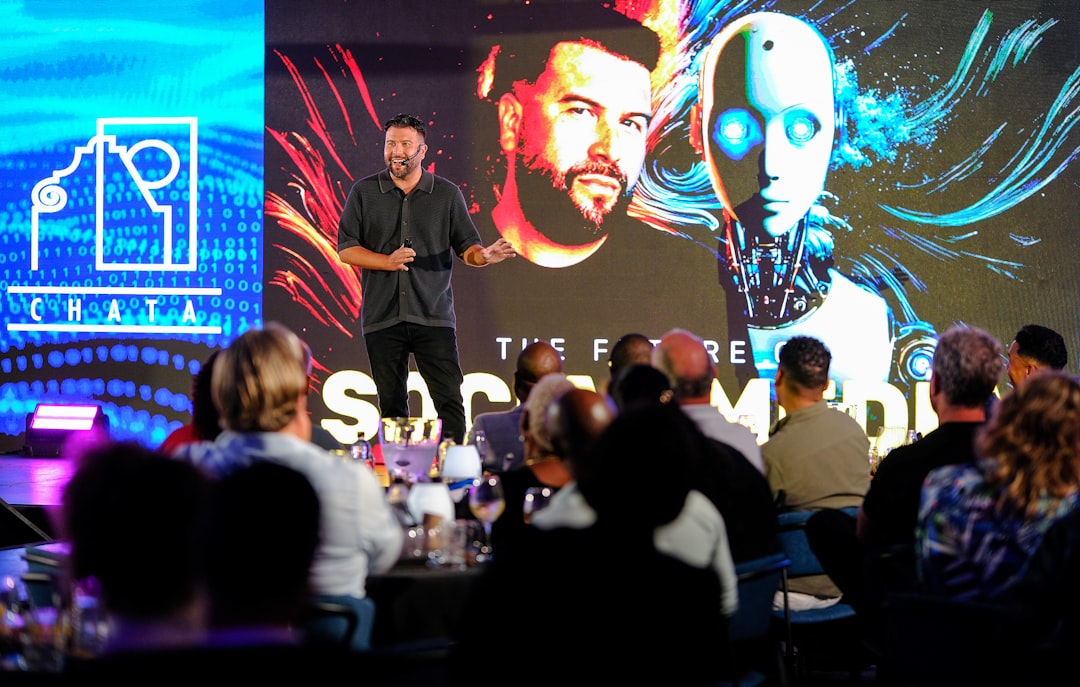
Photo by Carlos Gil on Unsplash
Technical Setup and Logistics for Event Planners
LED walls ship as individual panels in road cases, with each panel weighing 8-15 pounds depending on size. An 8-foot-wide by 4.5-foot-tall wall uses 12 panels, which fit in 2-3 cases. A 16-foot-wide by 9-foot-tall wall uses 48 panels and requires 8-10 cases. If you're coordinating load-in at a venue with limited dock access or a freight elevator, account for 20-30 minutes of cart-and-carry time to get cases from the truck to the event space. Most San Jose hotels and convention centers have service elevators and loading docks, but older venues (like the California Theatre downtown) have narrow staircases and no freight elevator—rental companies charge a surcharge ($200-$400) for multi-floor walk-ups.
Power requirements are straightforward: a standard 8x4.5-foot LED wall draws 800-1,200 watts at full brightness, which means you can run it off a single 15-amp circuit (1,800-watt capacity). Larger walls (16x9 feet) draw 2,500-3,500 watts and need a dedicated 20-amp circuit. If you're setting up in a ballroom or exhibit hall, confirm power capacity with the venue beforehand—older buildings may have 15-amp limits, and you'll need to rent a power distribution unit to split the load across multiple circuits. LED walls don't dim or flicker when power is shared, but if you trip a breaker mid-presentation, it takes 30-60 seconds to reboot the panels, and that's a credibility-killer for a keynote.
Content formatting matters more than most event planners realize. LED walls have native resolutions based on panel count—an 8x4.5-foot wall with 3.9mm pixel pitch is 1920x1080 pixels (standard 1080p). A 16x9-foot wall is 3840x2160 pixels (4K). If your PowerPoint slides are 1280x720 or 1920x1080 and you're driving a 4K wall, the processor will upscale them, which works fine for text and logos but makes photos look soft. Export slides at the native resolution of your wall, or provide vector graphics (SVG, EPS) that scale cleanly. Video files should match the wall's resolution and frame rate (24fps or 30fps—60fps introduces judder on some processors). Most rental companies offer content formatting as an add-on service ($100-$200 per event) if you don't want to deal with it.
Live camera feeds add complexity. If you want to show a live speaker on the LED wall (common for large venues where the back half of the audience can't see the stage clearly), you'll need a camera with HDMI or SDI output, a video processor that accepts camera input, and a technician to operate the switcher. Budget $500-$800 per day for a camera operator and switcher tech. Alternatively, use a confidence monitor setup—put the LED wall behind the speaker for slides and graphics, and mount two 50-65 inch monitors on either side of the stage for live camera shots. This costs less (monitors rent for $100-$150 each per day) and eliminates the need for a live switcher, but it's less visually dramatic.
Common Mistakes Event Planners Make With LED Walls
The #1 mistake is ordering a wall that's too small for the viewing distance. The rule of thumb: for every 10 feet of viewing distance, you need 1 foot of screen height. If your back row is 100 feet from the stage, you need a 10-foot-tall screen minimum. A 4.5-foot-tall screen is readable from 45 feet, but beyond that, text starts to blur. Planners regularly book an 8x4.5 wall for a 300-person ballroom where the back row sits 80+ feet away, then wonder why attendees complain they can't read the slides. When in doubt, go one size larger—a slightly oversized screen never hurts, but an undersized one kills engagement.
The second mistake is forgetting about aspect ratios. Standard PowerPoint slides are 16:9 (widescreen). If you rent a 4:3 aspect ratio LED wall (older configuration, less common in 2026 but still available), your 16:9 slides will either be letterboxed (black bars on top and bottom, wasting 20% of the screen) or stretched (making circles into ovals and people look squat). Always confirm the wall's native aspect ratio matches your content. Most modern LED walls are 16:9, but custom builds (e.g., a 12-foot-wide by 6-foot-tall wall) end up at 2:1, which requires reformatting all your slides.
The third mistake is underestimating setup time. LED walls aren't plug-and-play—panels must be locked together, aligned, color-calibrated, and tested. For an 8x4.5 wall, expect 2-3 hours of setup. For a 16x9 wall, 4-6 hours. If your event starts at 8am, the rental company needs access by 5am. Some venues restrict overnight access or charge premiums for early load-in, so coordinate with the venue 7-10 days in advance. Last-minute bookings (48-72 hours before the event) often pay a 20-30% surcharge because rental companies have to shuffle inventory and prioritize your job over scheduled maintenance.
The fourth mistake is ignoring ambient light. LED walls are bright, but they're not magic. If you're setting up in a ballroom with floor-to-ceiling windows and your event runs 10am-2pm with full sunlight streaming in, even a 1,500-nit wall will look washed out. Request blackout curtains from the venue, or plan your LED wall placement away from direct window light. For outdoor daytime events, there's no workaround—you need 2,500+ nit outdoor-rated panels, period. Standard indoor panels will fail in direct sunlight, no matter how you position them.
Choosing Between Pixel Pitch Options
Pixel pitch is the distance in millimeters between the centers of two adjacent pixels—the smaller the number, the sharper the image. Common pixel pitches for corporate LED walls are 2.6mm, 3.9mm, and 5.2mm. A 2.6mm panel delivers 4K-level sharpness and is ideal for close viewing (boardrooms, trade show booths where attendees stand 6-10 feet from the screen). A 3.9mm panel is the workhorse for corporate events—sharp enough for text-heavy presentations but affordable enough for 8-16 foot walls. A 5.2mm panel is budget-friendly and works fine for large-venue applications where the nearest viewer is 15-20+ feet away, but text under 24-point font starts to look pixelated at closer distances.
The trade-off is cost versus viewing distance. A 2.6mm panel costs 40-60% more per square foot than a 3.9mm panel, so an 8x4.5-foot wall that rents for $200/day at 3.9mm would rent for $320-$400/day at 2.6mm. If your audience is sitting 20-50 feet from the screen, the extra sharpness is wasted—they can't perceive the difference. But if you're running a product demo where customers will stand 8-12 feet from the wall to read fine-print specs, 2.6mm is worth the premium. For San Jose tech conferences where live coding or detailed dashboards are shown, 2.6mm or 3.0mm is the standard.
Outdoor panels use wider pixel pitches—5.9mm, 6.25mm, or 10mm—because viewing distances are longer (50-200+ feet). A 10mm panel looks like a grid of individual LEDs up close, but from 100 feet away, it resolves into smooth imagery. The wider spacing also makes panels lighter (fewer LEDs = less weight) and cheaper, which matters when you're building a 20-foot-wide by 11-foot-tall outdoor wall that weighs 800+ pounds. For Santana Row outdoor events or Guadalupe River Park festivals, 6.25mm or 10mm is sufficient—nobody's standing closer than 30 feet, so the extra pixels of a 3.9mm panel would go unused.
VENEGEEST stocks 3.9mm panels for standard corporate rentals, 2.6mm panels for high-resolution applications, and 6.25mm outdoor-rated panels for festivals and plaza events. If you're unsure which pixel pitch fits your event, call (408) 831-7696—we can calculate the optimal spec based on your venue dimensions, audience size, and content type. The wrong pixel pitch wastes money (overpaying for resolution you don't need) or damages credibility (attendees squinting at blurry text).
Frequently Asked Questions
What's the difference between an LED wall and a projector screen?
An LED wall is self-illuminated (each pixel emits its own light), so it stays bright under stage lighting or in rooms with windows. A projector screen reflects light from a projector bulb, so it washes out in bright environments. LED walls also offer modular sizing—you build the screen to fit your exact space. Projectors lock you into fixed aspect ratios and throw distances. For daytime events or venues with ambient light, LED walls are the only practical choice.
Can I run an LED wall off standard power outlets?
Yes. A typical 8-foot-wide by 4.5-foot-tall LED wall draws 800-1,200 watts, which fits comfortably on a single 15-amp circuit (1,800-watt capacity). Larger walls (16 feet wide or more) need a dedicated 20-amp circuit. If you're setting up in a hotel ballroom or convention center, confirm power availability with the venue. Most rental companies provide all cables and power distribution equipment—you just need to point them to the nearest outlet or power drop.
How far in advance should I book an LED wall for a San Jose event?
For standard configurations (8x4.5 to 16x9 feet), 2-4 weeks' lead time is ideal. VENEGEEST can often accommodate rush requests within 48-72 hours, but last-minute bookings may incur a 20-30% surcharge and limit your choice of pixel pitch or size. For large-scale events (20+ foot walls, custom builds, or outdoor installations), book 6-8 weeks out to ensure availability and allow time for site surveys and power coordination with the venue.
Do I need a technician on-site during the event?
Not usually. Once the LED wall is set up and tested, it runs hands-off for most corporate presentations—just plug in your laptop via HDMI and present. If you're doing live switching between multiple content sources (camera feeds, laptops, video playback), or if your event has complex cue-based content changes, a technician makes sense. Budget $400-$600 per day for on-site tech support. Most single-speaker events or panel discussions don't need this—setup and strike crews handle installation and teardown, and the wall runs unattended during the event.
What happens if an LED panel fails during the event?
LED walls are built with redundancy—if a single panel fails, the surrounding panels keep working, so you'll see a small dark square (typically 2-3 feet wide) but the rest of the wall stays live. Most rental companies carry spare panels in the truck and can swap a failed panel in 5-10 minutes. Panel failures are rare (less than 0.5% failure rate per event), but when they do happen, they're fixable without shutting down your presentation. VENEGEEST includes spare panels for all rentals over 12 panels at no extra charge.